

Soul music is defined by emotional authenticity, the quality of transmitting genuine human experience through voice, melody, and rhythm. That authenticity is precisely why soul music suits mixed audiences at weddings and events. No shared language or cultural background is required to feel the pull of a raw vocal performance or a gospel-rooted chord progression. Brownsugarmusic has witnessed this effect firsthand across more than two decades of live performance in Sydney and beyond, watching rooms of strangers become a single, unified crowd.
Why soul music suits mixed audiences: the core elements
Soul music creates emotional connection across cultural divides through three interlocking features: expressive vocal delivery, call-and-response interaction, and harmonic richness. Each one works on a listener regardless of their background. Together, they produce a communal experience that few other genres can match.
Vocal delivery and emotional honesty
Emotional authenticity is soul’s defining attribute. Singers transmit genuine experience rather than polished performance. That directness bypasses cultural filters. A listener who has never heard a particular artist before still registers the emotion within seconds. Music historian Leïla Benkacem describes this quality as the reason soul sustains relevance across generations and trends.
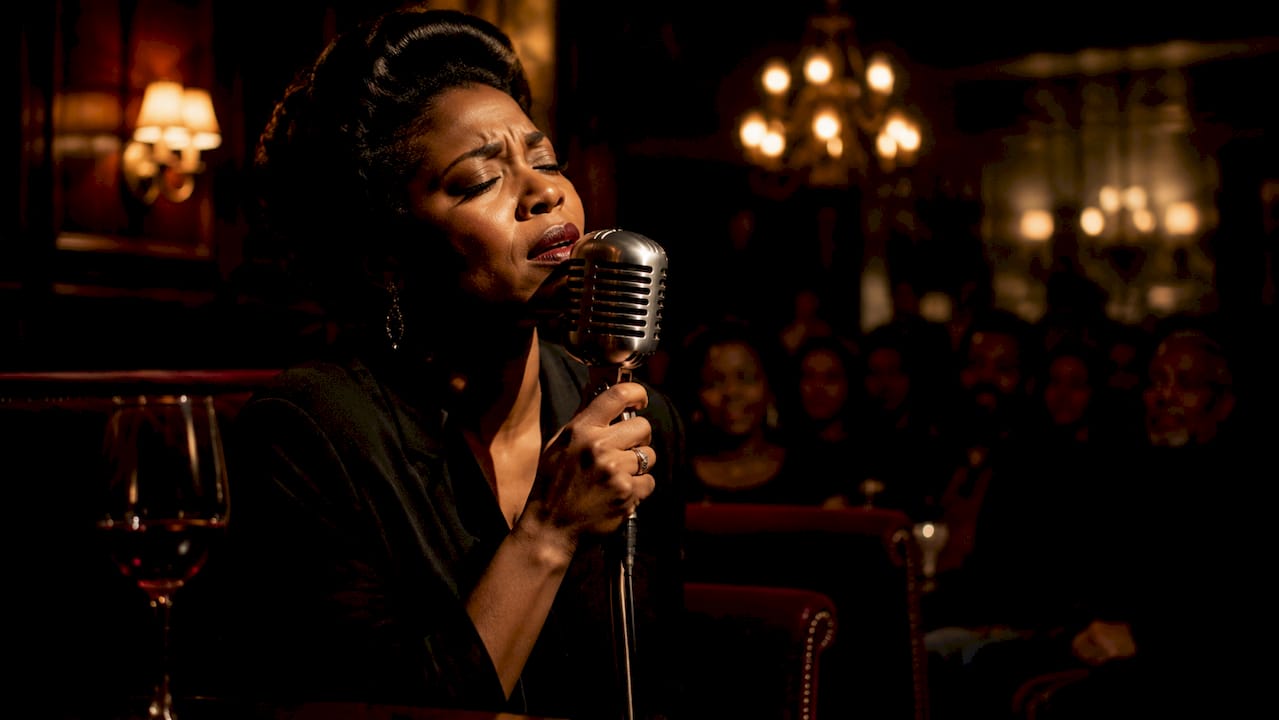
Artists like Marvin Gaye and Al Green shaped a vocal style that prioritises emotion over polish. The result is a harmonic and vocal vulnerability that listeners across demographics respond to instinctively. This is not a stylistic accident. It is the genre’s central design principle.
Call-and-response as communal participation
Call-and-response is the structural mechanism that turns a soul performance into a group event. Rooted in gospel tradition, it invites the audience to answer the performer, either literally or physically. Industry experts describe this technique as transforming solo acts into communal journeys.
The effect is immediate at live events. Guests who arrived as strangers begin responding to the same musical cues at the same moment. That synchrony creates a sense of shared identity, which is exactly what a wedding or corporate function needs from its entertainment.
Pro Tip: When booking a live soul act for a mixed event, ask specifically whether the performers use call-and-response techniques. A band that actively invites audience participation will unite a diverse room far faster than one that simply plays through a set list.
Soul music also fuses gospel fervour with blues and R&B rhythms, a combination that generates participatory dynamics no single tradition could produce alone. The genre is, structurally, built for crowds.
- Expressive lyrics address universal themes: love, loss, joy, and resilience
- Vocal runs and melisma signal emotional intensity without requiring lyrical comprehension
- Syncopated rhythms encourage physical response across cultural movement traditions
- Harmonic progressions draw on gospel and blues, two of the most emotionally direct musical languages in existence
- Call-and-response creates a live feedback loop between performer and audience
How does neuroscience explain soul music’s appeal?
Neuroscience confirms what live audiences already know. Soul music triggers oxytocin and dopamine release, two neurochemicals central to social bonding and pleasure. Oxytocin is the same chemical released during physical touch and shared laughter. Its presence during a soul performance explains why strangers in a crowd begin to feel connected.
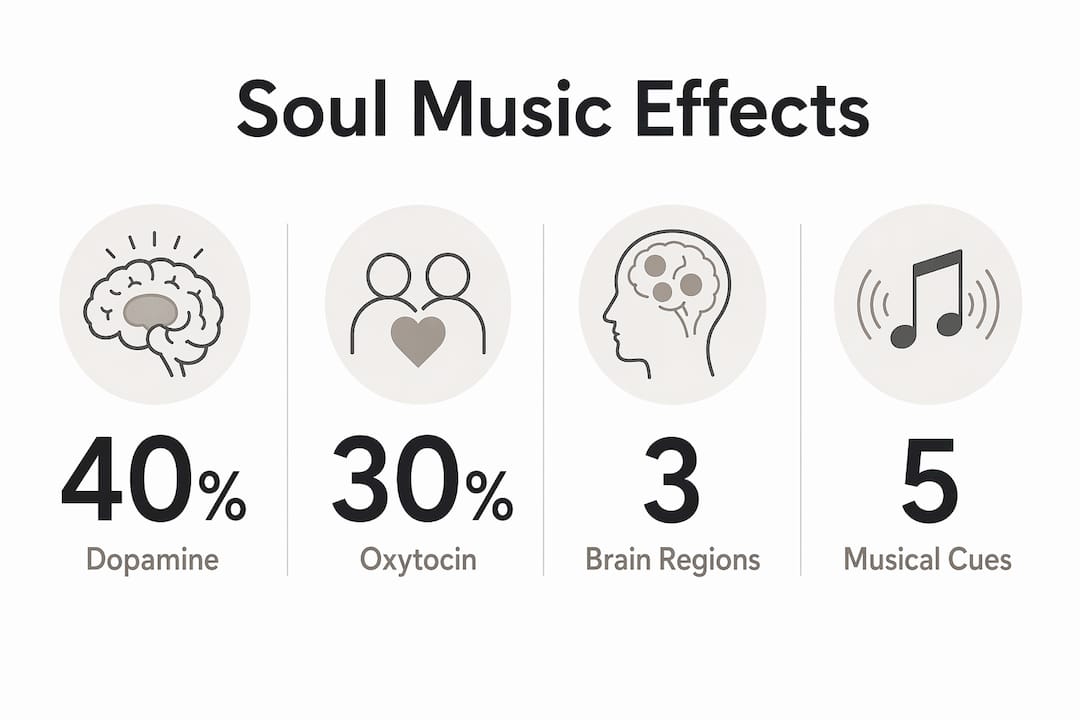
Music activates brain regions responsible for memory, reward, and emotional processing simultaneously. That multi-region activation is rare. Most sensory experiences engage one or two areas. Soul music, with its layered vocal, harmonic, and rhythmic cues, fires across the brain in a way that produces a full emotional response.
| Brain response | Trigger in soul music | Effect on audience |
|---|---|---|
| Dopamine release | Melodic resolution and vocal climax | Pleasure and anticipation |
| Oxytocin release | Shared rhythmic synchrony | Social bonding and trust |
| Memory activation | Familiar chord progressions | Emotional recall and nostalgia |
| Motor cortex engagement | Syncopated rhythm and groove | Physical movement and participation |
The synchronisation effect is particularly relevant for mixed audiences. When a room of people responds to the same musical cue at the same moment, their emotional states align. This is not metaphorical. Brain imaging studies show that shared music listening produces measurable neural synchrony between listeners. Soul music, with its strong rhythmic pulse and expressive peaks, is especially effective at producing this alignment.
Instrumental and vocal cues work together to sustain the effect across an entire performance. A brass stab, a gospel organ chord, or a held note at the end of a phrase each signal emotional intensity. Audiences from different cultural backgrounds read these signals consistently, because the underlying neurological response is human rather than cultural.
How has soul music historically united mixed audiences?
Soul music has crossed cultural boundaries since its origins in 1950s and 1960s America. Its roots lie in African-American gospel and blues traditions, but its reach extended rapidly beyond those communities. During the civil rights era, soul music enabled white audiences to access black culture at a time when social segregation made most other forms of cultural exchange impossible. That early cross-cultural penetration was not incidental. It was a direct result of the music’s emotional power.
The genre’s historical role as a social connector gives it a credibility that newer genres lack. Audiences sense the weight of that history, even without knowing the details. Soul carries cultural authority.
Contemporary festivals confirm that this capacity has not diminished. The Soul Beach Music Festival, held in Curaçao, unites thousands of attendees from South America, Europe, and North America across six days of live performance. The 2026 edition demonstrated again that soul music functions as a universal emotional language at scale. Geographically and culturally diverse crowds respond to the same performances with the same intensity.
- Soul’s gospel roots gave it an emotional directness that crossed racial lines during segregation
- Motown’s commercial strategy in the 1960s deliberately targeted racially mixed radio audiences
- The civil rights movement used soul music as a shared cultural reference across communities
- International festivals now draw multicultural crowds unified by soul’s emotional vocabulary
- The genre’s stylistic evolution, from classic soul to neo-soul and R&B, has kept it accessible to successive generations
Soul’s stylistic flexibility is a further factor. The genre has absorbed influences from funk, jazz, hip-hop, and electronic music without losing its emotional core. That adaptability means a soul set list can satisfy guests with very different musical backgrounds, all within a single performance.
Why is soul music effective for weddings and mixed-culture events?
Weddings are the most demanding test for any live music act. The room contains guests of different ages, nationalities, and musical tastes, all of whom need to feel included. Soul music meets that challenge because its emotional themes are universal. Love, celebration, and shared joy are the subjects of the genre’s most enduring songs. Those themes resonate at a wedding regardless of where the guests grew up.
Soul music at weddings also benefits from the genre’s physical quality. The groove in a soul performance invites movement. Guests who might hesitate to dance to other genres find themselves on the floor during a well-delivered soul set. That physical participation creates shared memories, which is the primary goal of wedding entertainment.
Practical selection matters as much as genre choice. A soul set list for a mixed event should balance classic and contemporary material to serve different age groups. Classic soul from artists like Aretha Franklin and Otis Redding connects with older guests. Neo-soul and contemporary R&B material reaches younger audiences. A skilled band moves between these registers without breaking the room’s energy.
- Open with an uptempo classic soul track to establish the genre’s identity and invite early participation
- Follow with a mid-tempo groove to sustain energy without exhausting the dance floor
- Include at least one call-and-response moment to actively involve the audience
- Use a ballad to create an emotional peak, particularly effective during key wedding moments
- Close with a high-energy number that sends guests away with a physical memory of the night
Pro Tip: For multicultural weddings, ask your band to include soul tracks that have been recorded in multiple languages or that have strong international recognition. Songs with global chart histories cross cultural lines more reliably than deep cuts, however good those cuts may be.
Brownsugarmusic has performed at weddings across Sydney and internationally since 2003, accumulating direct experience of what works for diverse wedding crowds. The consistent finding is that soul music produces the most inclusive dance floors of any genre, across every demographic combination.
Key takeaways
Soul music suits mixed audiences because its emotional authenticity, call-and-response structure, and neurological effects create shared experiences that transcend cultural and linguistic differences.
| Point | Details |
|---|---|
| Emotional authenticity | Soul’s core quality bypasses cultural filters, connecting listeners regardless of background. |
| Call-and-response | This participatory technique actively unites diverse crowds during live performance. |
| Neurological bonding | Soul music triggers oxytocin and dopamine, producing measurable social bonding in mixed audiences. |
| Historical credibility | Soul has crossed cultural divides since the civil rights era, giving it earned authority with diverse crowds. |
| Event versatility | A well-structured soul set list serves multiple age groups and cultural backgrounds within a single performance. |
Soul music at events: what 20 years of live performance taught me
The most striking thing about playing soul music to a mixed room is how quickly the divisions disappear. I have watched wedding receptions where guests from four different countries arrived looking uncertain about each other. Within three songs, they were on the same dance floor, responding to the same musical cues. No other genre produces that result as reliably or as quickly.
The neuroscience explains part of it. But the lived experience adds something the research cannot fully capture. There is a moment in a soul performance, usually during a call-and-response section, when the audience stops being a collection of individuals and becomes a single entity. You can feel it from the stage. The room changes. That moment is what music at events is ultimately for.
What surprises people is that soul’s inclusivity is not passive. It is not simply that the music offends no one. The genre actively recruits its audience. The call-and-response tradition, the physical groove, the emotional peaks in the vocal, all of these are mechanisms for pulling people in. A skilled soul band does not perform at an audience. It performs with one.
My observation after more than two decades is that the couples and event planners who choose soul music for mixed gatherings make that choice instinctively. They sense that the genre is built for exactly this situation. The science and the history confirm what they already feel.
— Deni
Brownsugarmusic: soul music for your wedding or event
Planning a wedding or event with guests from different backgrounds requires music that works for everyone in the room. Brownsugarmusic has delivered exactly that across Sydney and internationally since 2003, as the resident band at Marble Bar in the Hilton Sydney every Friday night for over 20 years.

The band’s R&B and soul wedding guide covers everything from set list structure to audience engagement techniques for mixed crowds. For couples planning their reception, the soul band reception tips page offers practical guidance drawn from hundreds of live events. Brownsugarmusic is available for weddings, corporate functions, and private events across Sydney and beyond.
FAQ
Why does soul music work for culturally diverse crowds?
Soul music’s emotional authenticity and call-and-response structure create shared experiences that do not require a common language or cultural background. The neurological response to soul’s vocal and harmonic cues is consistent across demographics.
What makes soul music different from other genres at weddings?
Soul music actively recruits audience participation through call-and-response and physical groove, producing inclusive dance floors more reliably than genres that do not use these techniques. Its universal themes of love and celebration also align directly with wedding occasions.
How does soul music affect the brain during live events?
Soul music triggers dopamine and oxytocin release, activating brain regions linked to memory, reward, and social bonding simultaneously. This produces measurable emotional synchrony between audience members during live performance.
Can soul music suit both older and younger wedding guests?
A well-structured soul set list balances classic material from artists like Aretha Franklin with contemporary neo-soul and R&B, serving multiple age groups within a single performance. The genre’s stylistic range is one of its practical strengths for mixed audience events.
What is the call-and-response tradition in soul music?
Call-and-response is a performance technique rooted in gospel tradition where the performer invites a direct response from the audience, either vocal or physical. Experts describe it as the mechanism that transforms a solo act into a communal experience.