

Music is the single most powerful tool for shaping wedding atmosphere, directing guest emotions from the moment they arrive to the final dance of the night. Unlike décor or catering, music works subconsciously. It tells guests how to feel before a single word is spoken. Research from Elegant Wedding confirms that ceremony music triggers dopamine release and primes emotional responses before the vows even begin. Understanding why music sets wedding mood gives you a genuine advantage when planning every stage of your day.
Why music sets the wedding mood at every stage
Music does not simply fill silence. It acts as an emotional framework that carries guests through each phase of the day, signalling what comes next without anyone needing to say a word. According to research on wedding emotional flow, music guides the emotional arc across a typical 5–8 hour wedding, functioning as the day’s primary structural tool.
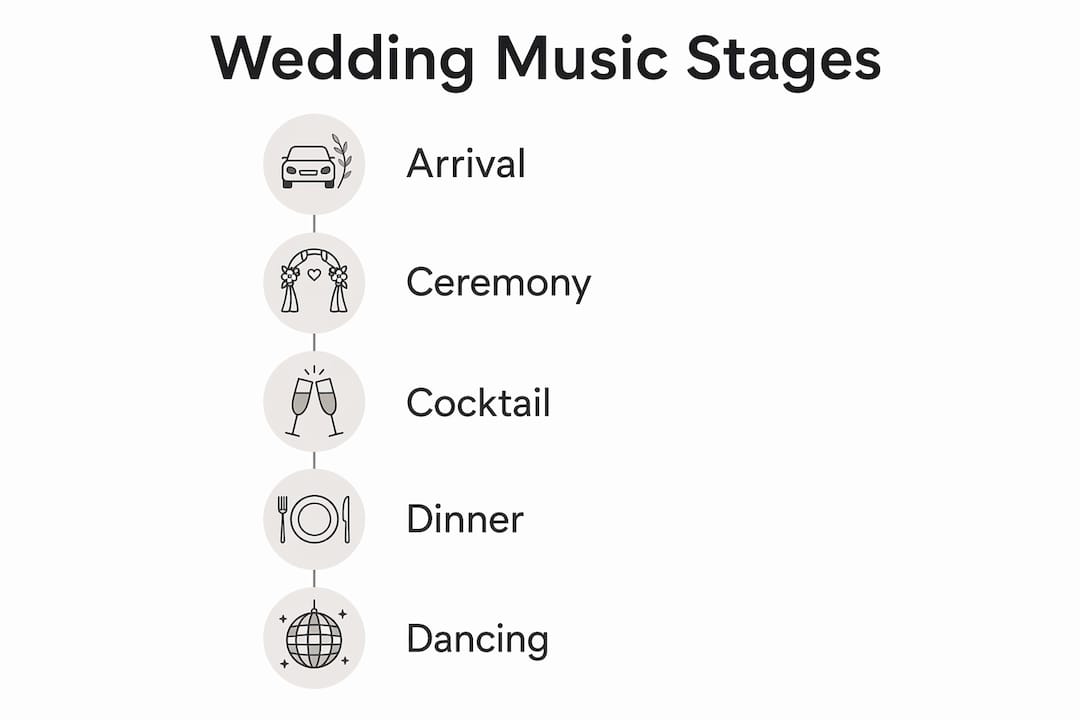
Here is how music works at each key moment:
Arrival and pre-ceremony. Soft, mid-tempo music as guests arrive sets a calm, welcoming tone. It reduces pre-ceremony nerves and signals that something meaningful is about to happen. The right choice here tells guests to relax and settle in.
Processional. This is the most emotionally loaded moment of the ceremony. The processional track signals significance and builds anticipation. Guests instinctively stand, turn, and focus. The music does that work, not an announcement.
Ceremony and vows. Gentle background music during readings or quiet interludes keeps the emotional temperature steady. It supports the spoken word rather than competing with it.
Recessional. An upbeat recessional releases the emotional tension built during the ceremony. Guests exhale, smile, and celebrate. The music gives them permission to shift from reverence to joy.
Cocktail hour. Relaxed, conversational music at this stage encourages mingling. Volume matters here. Music set just below guests’ speaking level promotes natural conversation without fatigue or shouting.
Reception and dancing. Energy builds progressively. Music signals the shift from dinner to dancing, from seated formality to open celebration.
Pro Tip: Match the energy of your music to the purpose of each moment. A slow processional builds reverence. A fast recessional releases joy. Think of each track as a stage direction for your guests.
What does the science say about music and emotion?
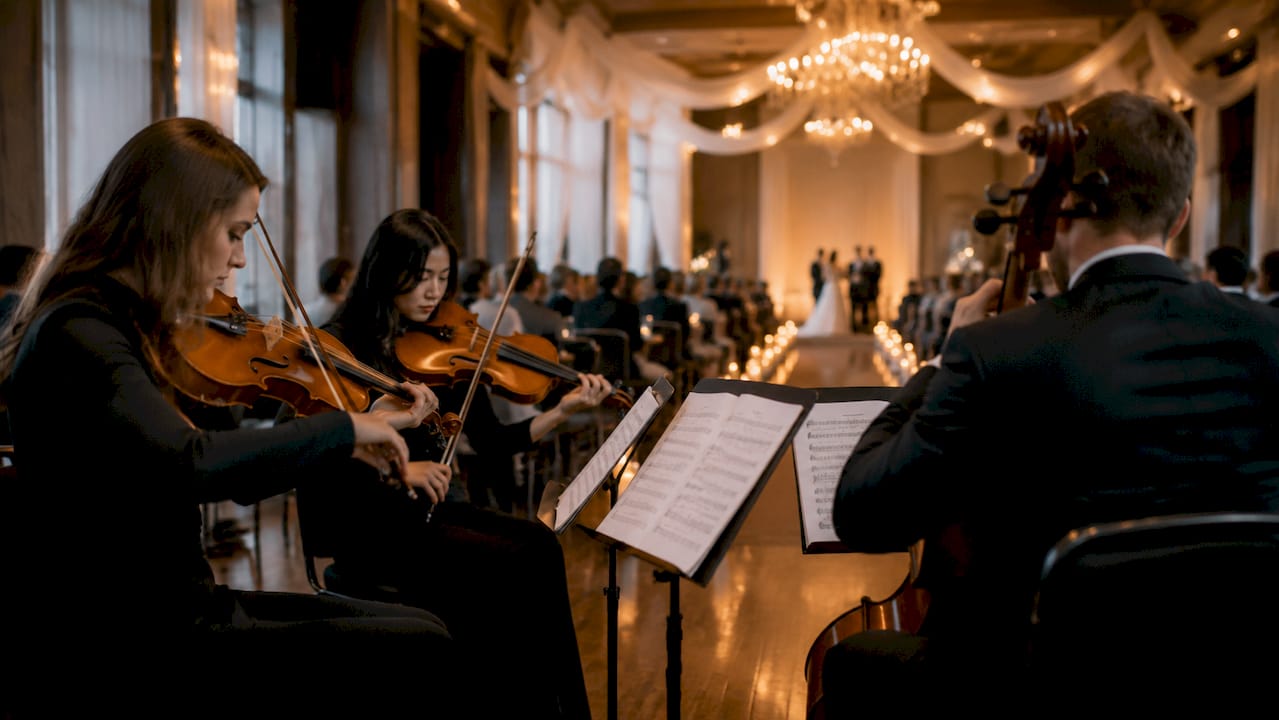
The neuroscience behind how wedding music affects emotions is well established. Music activates the brain’s reward system, releasing dopamine and creating emotional associations that guests carry with them long after the day ends. Ceremony music primes these neural pathways from the very start, before a single vow is spoken.
Tempo is the most direct lever couples have. Tempos of 60–80 BPM evoke reverence and calm, making them ideal for processionals and ceremony moments. Tracks above 120 BPM trigger celebration responses, which is why they work so well for recessionals and reception dancing. That is not a stylistic preference. It is a measurable physiological response.
“The best wedding music is often the music guests do not consciously notice, because it guides their behaviour naturally and effortlessly.” — JAM Duo
Music also connects with memory centres in the brain. A song heard at a wedding becomes permanently linked to that moment and those emotions. This is why couples often report that hearing their first dance song years later brings the day flooding back with full emotional force. The emotional thread music creates is not metaphorical. It is neurological.
Live music adds another layer. Live musicians adapt tempo and volume in real time to match the actual pace of the ceremony. A recorded track cannot pause for a delayed entrance or extend for a longer-than-expected reading. A live musician can. That flexibility protects the emotional flow of the day in ways a playlist simply cannot.
How do you choose music that actually sets the right mood?
Selecting music for a wedding involves more than picking songs you love. Several practical factors shape whether music enhances or disrupts the atmosphere you are trying to create.
Lyrics matter more than melody. Lyrical meaning carries more weight than melodic beauty. A song with a gorgeous arrangement but ambiguous or inappropriate lyrics can create confusion or even discomfort. Always read the lyrics of any track you are considering, not just the chorus.
Volume is a design decision. Too loud, and guests cannot converse. Too quiet, and the music disappears entirely. Volume just below conversational level is the target for cocktail hours and dinner. It acts as a social lubricant, keeping the atmosphere relaxed and connected.
Instrumentation signals formality. Strings communicate elegance and intimacy. Acoustic guitar creates warmth and informality. A full R&B or soul band brings energy and celebration. The instruments you choose tell guests what kind of event this is before the first note resolves.
Here is a quick comparison to help you decide between live music and a curated playlist:
| Factor | Live Music | Recorded Playlist |
|---|---|---|
| Adaptability | Adjusts in real time to ceremony pace | Fixed; cannot respond to delays |
| Emotional impact | Higher; human performance creates connection | Moderate; consistent but impersonal |
| Atmosphere | Active and immersive | Background and passive |
| Lyrical control | Full; musicians know the material | Requires careful pre-selection |
| Cost | Higher investment | Lower cost |
Common pitfalls to avoid:
- Choosing a processional that is too fast, which rushes the entrance and undercuts the moment
- Allowing awkward silences between ceremony segments because no music was planned for transitions
- Playing dinner music too loudly, forcing guests to shout across the table
- Ignoring the recessional entirely, which leaves guests unsure whether to applaud or stand
Pro Tip: When working with live musicians, share your ceremony timeline in advance. A good band or duo will map music choices to each segment, including transitions, so there are no gaps or missteps on the day.
For a deeper look at your options, the wedding ceremony music types guide from Brownsugarmusic covers the full range of formats and their emotional effects.
How does music connect your wedding into one unified experience?
A wedding is a series of distinct events: ceremony, cocktail hour, dinner, speeches, dancing. Without a connecting thread, these moments can feel disjointed. Music is what ties them together into a single, coherent experience.
Music provides the emotional thread that transforms separate events into a unified story. When the style and mood of music remain consistent across the day, guests feel a sense of continuity even as the setting and activity change. A shift from string quartet during the ceremony to a soul band at the reception works because both share warmth and emotional depth. A jarring genre switch, say from classical to heavy electronic, breaks that continuity and disorients guests.
Smooth musical transitions are also practical tools. When dinner music fades and the band begins a first dance introduction, guests understand instinctively that the programme is moving forward. No MC announcement is needed. The music handles the communication.
| Wedding Segment | Music Purpose | Mood Target |
|---|---|---|
| Guest arrival | Set tone, calm nerves | Relaxed, welcoming |
| Processional | Signal significance | Reverent, anticipatory |
| Ceremony interludes | Maintain emotional temperature | Tender, focused |
| Recessional | Release joy | Celebratory, uplifting |
| Cocktail hour | Encourage mingling | Warm, conversational |
| Dinner | Sustain atmosphere | Relaxed, sociable |
| First dance | Mark emotional peak | Intimate, memorable |
| Reception dancing | Build energy | Joyful, energetic |
The right music choices create lasting memories tied to specific songs and moments. Couples who plan their music as a continuous programme, rather than a collection of individual song choices, consistently report that their day felt more cohesive and emotionally satisfying. If you want ideas on what works across a full reception, the songs every wedding band plays list is a useful starting point.
Key takeaways
Music is the primary emotional framework of a wedding day, shaping guest behaviour, creating lasting memories, and connecting every segment into a unified experience.
| Point | Details |
|---|---|
| Music guides every stage | From arrival to final dance, music signals transitions and sets emotional tone without words. |
| Tempo is a direct lever | Use 60–80 BPM for reverence and 120+ BPM for celebration to match each moment’s purpose. |
| Lyrics carry more weight than melody | Always check lyrical meaning; inappropriate words disrupt mood regardless of how beautiful the tune is. |
| Volume shapes social behaviour | Music set just below conversational level promotes relaxed guest interaction and reduces fatigue. |
| Live music offers real-time flexibility | Live musicians adapt to ceremony pace, protecting emotional flow in ways a playlist cannot. |
What twenty years of weddings taught me about music
After performing at weddings across Sydney and around the world for over two decades, one thing stands out clearly. Couples who treat music as an afterthought almost always regret it. Not because the day falls apart, but because something feels missing. The moments that should land with weight feel flat. The transitions feel clunky. Guests are not sure when to sit, when to cheer, or when to cry.
The couples who get it right are the ones who think about music the way a film director thinks about a score. Every scene has a purpose. Every cue is deliberate. They are not just picking songs they like. They are designing an emotional experience for every person in the room.
The most common mistake I see is treating the reception as the only music moment that matters. Couples spend hours choosing a first dance song and then give almost no thought to arrival music, ceremony transitions, or cocktail hour atmosphere. Those quieter moments shape the emotional baseline for everything that follows. Get them wrong and the reception has to work twice as hard to recover the mood.
The second mistake is underestimating volume. A band or DJ playing too loud during dinner is not just annoying. It physically exhausts guests before the dancing even starts. The best live performances I have been part of are the ones where the music felt present without being intrusive, where guests were dancing and talking and laughing all at once because the energy was calibrated, not just cranked up.
Work closely with your musicians. Share your timeline, your priorities, and the moments that matter most to you. A good band will build the rest around that.
— Deni
How Brownsugarmusic helps you set the perfect wedding mood
Brownsugarmusic has been performing at Sydney weddings since 2003, with over two decades of experience reading rooms, adapting to ceremony timing, and delivering the kind of live R&B and soul music that turns a reception into a genuine celebration.

Every wedding is different. Brownsugarmusic works with couples to build a music programme that fits the emotional arc of their specific day, from ceremony atmosphere to late-night dancing. The band’s R&B soul wedding atmosphere guide is a free resource covering how genre, tempo, and song selection shape the mood at each stage. For couples ready to talk specifics, Brownsugarmusic offers personalised consultations to match the right music to your venue, timeline, and vision.
FAQ
Why does music set the wedding mood so effectively?
Music triggers dopamine release and activates emotional memory centres in the brain, creating immediate and lasting mood responses. It also functions as emotional etiquette, guiding guest behaviour subconsciously throughout the day.
What tempo is best for wedding ceremony music?
Tempos of 60–80 BPM create reverence and calm, making them ideal for processionals. Tracks above 120 BPM signal celebration and work best for recessionals and reception dancing.
Is live music better than a playlist for weddings?
Live music adapts in real time to ceremony pacing, fills awkward gaps, and creates a stronger emotional connection than recorded tracks. A playlist offers consistency at lower cost but cannot respond to the unexpected.
How does music volume affect wedding guests?
Music set just below guests’ conversational level promotes natural socialising and reduces fatigue. Volume that is too high forces guests to shout, which drains energy before the dancing begins.
How do i make sure music flows across the whole wedding day?
Plan music as a continuous programme rather than individual song choices. Keep style and mood consistent across segments, and brief your musicians on the full timeline so transitions between ceremony, cocktail hour, and reception feel natural.