

A live soul band is the single most effective way to create a wedding reception that guests talk about for years. These soul band wedding reception tips cover everything from band size and setlist structure to venue logistics and booking timelines, giving you a clear plan before you sign a contract. Soul and Motown music works at weddings because it is universally recognisable, crosses generations, and fills a dance floor without forcing it. Brownsugarmusic has performed at hundreds of weddings since 2003, and the difference between a good night and a great one almost always comes down to planning.
What are the best soul band wedding reception tips?
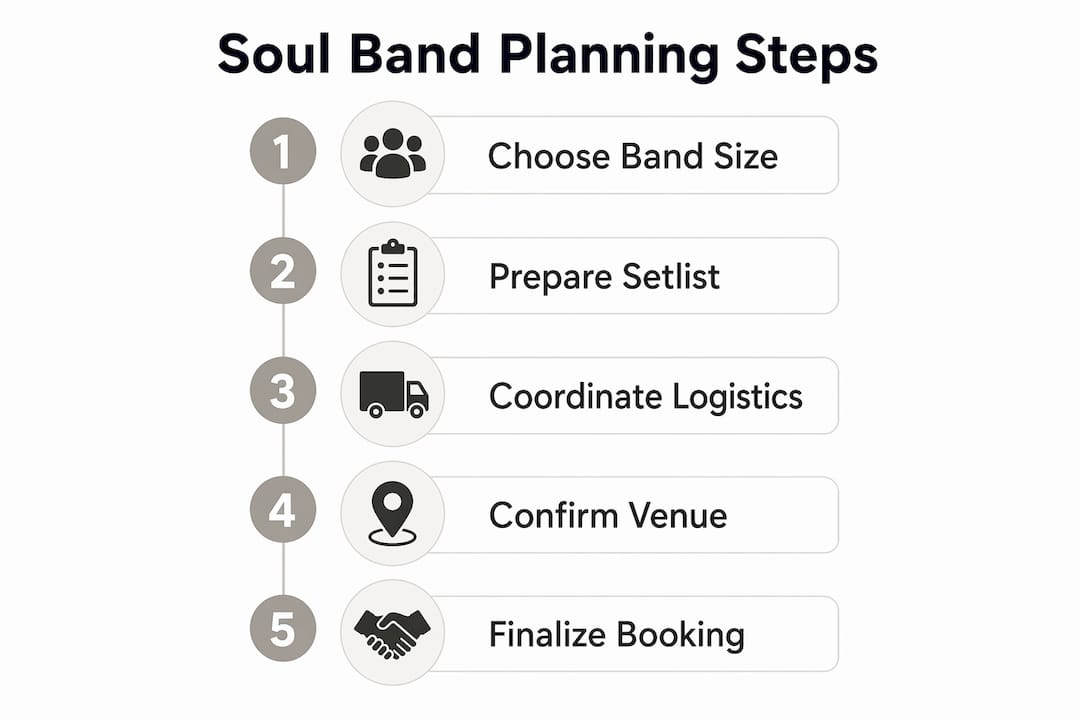
The most practical starting point is matching your band size to your guest count and venue. Band size scales directly with the number of guests: a 3-piece suits under 80 guests, a 5–7 piece works for 80–150 guests, and 8 or more musicians are needed for receptions above 150 guests. Larger bands fill bigger rooms with sound and presence, but they also cost more and need more stage space. Getting this match right from the start saves you from paying for musicians the room cannot hold, or booking a trio that disappears into a large venue.

Band size vs. guest count and venue type
| Band Size | Guest Count | Venue Type |
|---|---|---|
| 3-piece | Under 80 | Intimate restaurant, garden, or small hall |
| 5–7 piece | 80–150 | Mid-size function room or outdoor marquee |
| 8+ piece | 150+ | Large ballroom, warehouse, or estate |
Budget follows band size directly. Live wedding band pricing typically ranges from $2,500 to over $10,000 depending on the number of musicians and the specifics of your event. That range is wide, so set a realistic figure before you start approaching bands. A 5-piece soul band with a brass section and a strong vocalist sits comfortably in the middle of that range and suits most receptions.
Pro Tip: Ask venues for their stage dimensions and power supply details before you confirm a band size. A 7-piece band with a full backline needs significantly more floor space than a 4-piece.
How should you plan your soul band setlist and timing?
Setlist structure is where most couples make avoidable mistakes. The most effective approach is to open with soul and Motown classics in the first 45-minute set, then shift to modern high-energy tracks in the second set. This structure works because it brings every generation onto the floor early with familiar tracks, then builds momentum for the younger guests as the night progresses.
Here is a practical framework for structuring your evening:
- Dinner and arrival: Background soul and R&B at a lower volume. Think Stevie Wonder, Marvin Gaye, and Aretha Franklin. Conversation stays easy.
- First dance and opening set: The band opens with recognisable Motown and classic soul. Tracks like Ain’t No Mountain High Enough or Let’s Stay Together bring guests to their feet without pressure.
- Second set: Modern soul, funk, and R&B. Artists like Bruno Mars, Amy Winehouse, and Beyoncé keep the energy high for the later part of the night.
- Final push: The band reads the room and closes with crowd favourites. This is where flexibility matters most.
Limiting your must-play list to 10–15 songs gives the band room to respond to the crowd in real time. A rigid list of 40 songs locks the band into a programme that may not match the energy in the room at 10pm. Trust the musicians to read the floor. You can also check a complete wedding band song list to get a clearer picture of what most soul bands cover.
Pro Tip: Avoid scheduling speeches mid-set. A band that builds momentum and then stops for a 15-minute speech loses the crowd. Place speeches between sets or during dinner.
How do you coordinate venue logistics for a soul band?
Venue logistics are the most overlooked part of live music planning. Band placement near the bar and dance floor is the single most important layout decision you will make. When the band is positioned too far from the dance floor, guests split into clusters and the energy dissipates. Place the band so that the dance floor sits directly in front of them, with the bar close enough that guests moving for drinks stay within earshot.
Key logistics to confirm before your wedding day:
- Noise limiters: Many venues, particularly hotels and inner-city spaces, have electronic noise limiters that cut power if sound exceeds a set decibel level. Ask your venue directly whether a limiter is installed and what the threshold is.
- Load-in access: Confirm the band can access the venue at least two hours before guests arrive for setup and soundcheck.
- Power supply: A full soul band needs multiple power circuits. Confirm the venue’s electrical capacity with your band’s production manager.
- Ceiling height: Low ceilings affect sound quality and can make a large band feel overwhelming. Discuss this with the band before confirming the booking.
Pro Tip: Ask your venue coordinator to introduce themselves to the band’s sound engineer on the day. Direct communication between those two people prevents most technical problems before they start.
Clear communication with your entertainment agency or band manager about the space removes guesswork on the night. Share a floor plan of the venue with the band at least four weeks before the event. For Sydney couples, understanding why soul bands suit specific venues can help you match the right act to the right space.
How do you book a top soul band for your wedding?
Booking timeline is non-negotiable. Top-tier live wedding bands book out 6–12 months in advance, particularly during peak wedding seasons in spring and autumn. If you have a fixed date, start your search the moment the venue is confirmed. Waiting until three months out significantly narrows your options.
When researching bands, watch full, unedited live wedding videos rather than polished highlight reels. A two-minute promotional video tells you very little about how a band handles a quiet room, a difficult crowd, or a technical problem. A full-length set video shows you everything. Look for how the vocalist engages between songs, how the band transitions between tracks, and whether the crowd is actually dancing. You can read more about why live video matters before you commit.
“The best wedding bands are not just musicians. They are experienced entertainers who know how to read a room, pace a night, and keep guests engaged from the first song to the last.”
Questions to ask any band before booking:
- How many weddings have you performed at in the past 12 months?
- Can you provide references from recent wedding clients?
- Do you carry your own PA system and lighting rig?
- How do you handle song requests on the night?
- What is your policy if a band member is unavailable due to illness?
Using different acts for each phase of your wedding day, such as a solo acoustic guitarist for the ceremony and a full soul band for the reception, gives you better atmospheric control throughout the event. Many couples also use a DJ to fill the gaps between live sets, keeping the energy consistent. For guidance on different music formats across your wedding day, it is worth reading up before you finalise your entertainment plan.
Why does soul music work so well at wedding receptions?
Soul music creates a sophisticated yet inclusive atmosphere that prevents dead moments on the dance floor. Tracks by artists like Otis Redding, Sam Cooke, and Aretha Franklin are known by guests aged 25 to 75. That universal recognisability is rare in any other genre. Pop music dates quickly; soul music does not.
A 4–9 piece live soul band delivers warm vocals, tight grooves, and a polished performance that recorded music simply cannot replicate. The physical presence of live musicians changes the energy in a room. Guests respond differently to a real drummer and a live brass section than they do to a playlist. That response is what makes the dance floor fill naturally rather than by obligation. For a deeper look at why R&B and soul work so consistently at weddings, the reasons go well beyond nostalgia.
Soul music also supports smooth transitions between different parts of the wedding day. The same band that plays background music during dinner can shift gear entirely for the reception without the mood feeling disjointed. That flexibility is one of the strongest practical arguments for choosing soul over other genres.
Key takeaways
A live soul band delivers the most consistent and inclusive wedding reception atmosphere when band size, setlist structure, and venue logistics are planned together from the start.
| Point | Details |
|---|---|
| Match band size to guest count | Use a 3-piece for under 80 guests, 5–7 piece for 80–150, and 8+ for larger receptions. |
| Structure your setlist in two phases | Open with Motown classics, then shift to modern soul in the second set to build energy. |
| Limit must-play songs to 10–15 | Fewer fixed requests give the band room to read the crowd and maintain momentum. |
| Book 6–12 months in advance | Top soul bands fill their calendars early, especially during peak wedding seasons. |
| Place the band near the dance floor | Positioning near the bar and dance floor keeps guests engaged and prevents split crowds. |
What i have learned from watching soul bands work a wedding room
Most couples overthink the song list and underthink the logistics. I have seen beautifully curated setlists fall flat because the band was tucked into a corner behind a pillar, and I have seen a simple, flexible programme turn a quiet room into a full dance floor by 9pm. The band’s ability to read the room matters more than any individual song choice.
The most common mistake is handing the band a list of 35 must-play tracks. That removes the one thing a great soul band does better than any DJ: adapt in real time. When a band feels the crowd pulling toward a certain energy, they can lean into it. A rigid list prevents that entirely.
Combining a soul band with a DJ for the gaps between sets is a practical move that most couples do not consider until it is too late to arrange. It keeps the energy consistent and gives the band time to rest without the room going quiet. Plan it as part of the entertainment schedule from the start, not as an afterthought.
Early planning and clear communication are the two things that separate a smooth night from a stressful one. Share your venue layout, your timeline, and your preferences with the band well in advance. Then trust them to do what they do best.
— Deni
Brownsugarmusic: sydney’s soul band for wedding receptions
Brownsugarmusic has been performing at weddings, corporate events, and private functions across Sydney and beyond since 2003. As the resident band at Marble Bar in the Hilton Sydney for over 20 years, Brownsugarmusic brings a level of live performance experience that is hard to match. The band specialises in R&B and soul, with a repertoire that covers Motown classics through to contemporary hits.
For couples planning a reception that genuinely gets people dancing, Brownsugarmusic offers customised sets tailored to your guest profile, venue, and wedding style. Read the full guide on soul music wedding atmosphere to understand what a live soul band can do for your event, or visit the events and booking page to check availability and get in touch.
FAQ
How far in advance should you book a soul band for a wedding?
Book 6–12 months ahead to secure your preferred band, particularly during peak wedding seasons in spring and autumn. Popular soul bands fill their calendars quickly.
How many songs should be on a wedding band must-play list?
Limit your must-play list to 10–15 songs. This gives the band enough flexibility to read the room and adjust their performance to maintain energy throughout the night.
What is the best soul band size for a wedding reception?
A 5–7 piece band suits most receptions with 80–150 guests. Smaller gatherings work well with a 3-piece, while large ballroom events benefit from 8 or more musicians.
Should you use a DJ alongside a live soul band at a wedding?
Using a DJ to fill the gaps between live sets keeps the energy consistent and gives the band time to rest. Plan this as part of your entertainment schedule from the start.
What makes soul music a good choice for a wedding reception?
Soul and Motown tracks are universally recognisable across age groups, which means guests of all generations get on the dance floor without prompting. That inclusivity is what prevents dead moments during the reception.