

Soul music is the genre brides choose most often when they want their wedding to feel genuinely emotional, inclusive, and alive. It combines expressive vocals, rich instrumentation, and a rhythmic groove that works across every phase of a wedding day, from the quiet processional to the packed dance floor. Unlike many other genres, soul adapts without losing its identity. That versatility is precisely why brides choose soul music over formats that serve only one moment well.
What musical elements make soul music ideal for weddings?
Soul music’s pocket rhythm is its most practical asset at a wedding. It sits in a mid-tempo groove that feels warm and present without demanding attention. Guests can hold a conversation during dinner without raising their voices, yet the music never fades into wallpaper.
The instrumentation does specific work at each stage of the day:
- Soft acoustic soul during the ceremony and cocktail hour creates an intimate, sophisticated atmosphere that acoustic arrangements deliver far more effectively than generic classical background music.
- A full live band with keys, bass, drums, and guitar builds energy naturally as the evening progresses.
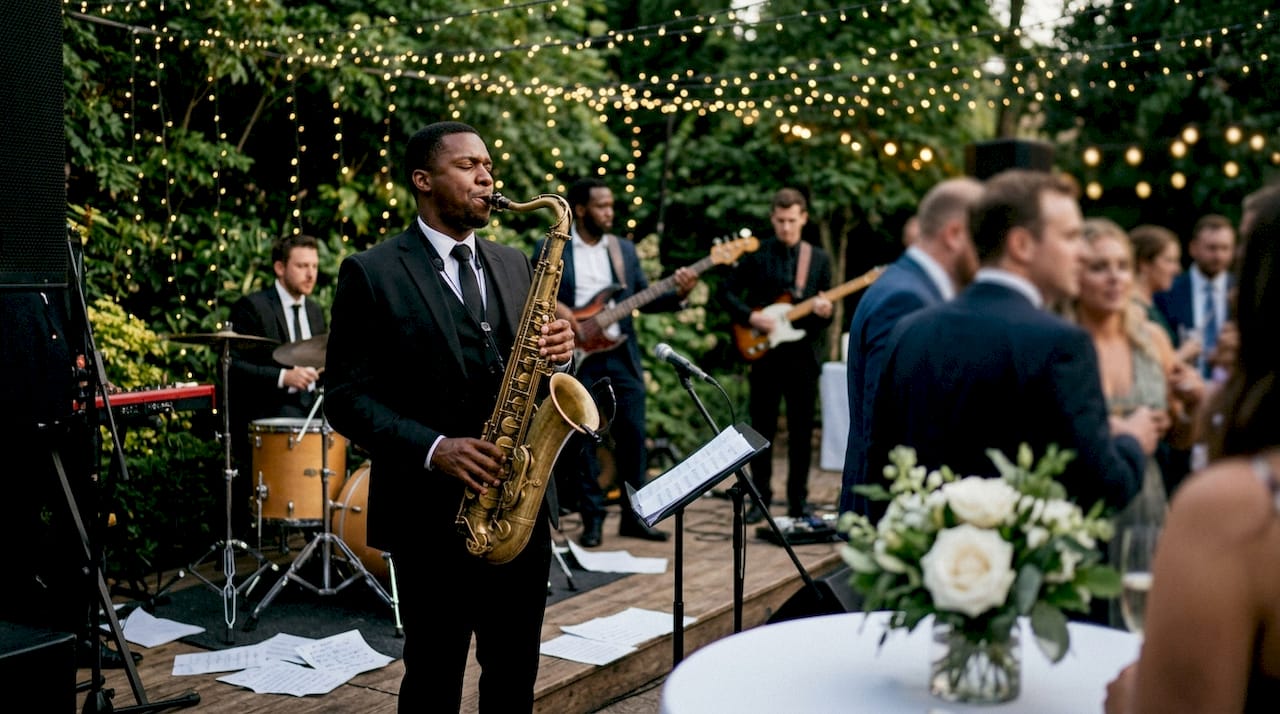
- A horn section is the defining feature of authentic Motown and soul sound. Horn sections provide dynamic power that smaller groups simply cannot replicate. That punch is what fills a room and gets people out of their seats.
Bands typically scale from 4 to 9 pieces depending on the venue size and the mood transitions required. A four-piece works well for an intimate garden ceremony. A nine-piece with horns transforms a ballroom reception into something guests remember for years.
Pro Tip: Ask your band to keep the groove soft and conversational during the entrée course, then let the horns open up after the speeches. The contrast makes the dance floor moment feel earned.
How does soul music deepen emotional connection at weddings?
Soul music’s expressive vocals convey love, joy, and intimacy in a way that few other genres match. The genre was built on emotional honesty. Singers in the soul tradition do not hold back, and that directness lands with wedding guests in a physical way.
Selecting 3–6 soul or gospel tracks for the ceremony personalises each significant moment with real emotional weight. A gospel-influenced processional carries a different charge to a string quartet arrangement of the same melody. The human voice, amplified by soul phrasing, connects the moment to something larger.
Live soul performances also work across generations. Blending classic 1970s soul with modern neo-soul artists such as SZA and Daniel Caesar creates a soundscape that feels both nostalgic and current. Grandparents recognise the groove. Younger guests feel seen. That shared recognition is rare in wedding music and it is one of the clearest reasons brides love soul.
Music shapes wedding memories more durably than almost any other element of the day. Guests may forget the centrepieces. They will not forget the moment a live vocalist held a note during the first dance.
Pro Tip: Choose one soul track that tells your personal story as a couple, whether it is a song from your first date or a track that captures how you feel about each other. Brief that moment to your band so they treat it with the weight it deserves.
What are the practical benefits of soul music over other genres?
Soul and Motown music function as a social lubricant at wedding receptions. The genre balances background pleasantness with celebratory energy. It avoids the aggressive bass drops and sharp volume shifts that interrupt conversation and make older guests uncomfortable.
The practical advantages are clear:
- Guest inclusivity. Soul’s wide appeal means guests aged 20 to 80 share the same dance floor without anyone feeling excluded. Balanced playlists that blend classics with modern hits keep energy dynamic and age-inclusive throughout the event.
- Energy management. The groove maintains warmth during dinner and builds naturally toward a high-energy reception without jarring transitions. There is no need to switch genres mid-event.
- Conversational volume. Soul music sits at a register that allows guests to speak at a normal level during seated courses. This is a practical detail that brides often overlook until they attend a wedding where the music makes dinner feel like a nightclub.
- Flexible band formats. Band sizes from 4 to 9 pieces adapt to venue constraints and budget without sacrificing the genre’s core identity. A smaller ensemble still delivers the soul feel; it simply does so with less volume and fewer moving parts.
- Timeless song catalogue. Soul and Motown classics provide feel-good music that works from ceremony to reception without feeling dated or niche.
Pro Tip: Mix eras deliberately. Open the reception with recognisable Motown classics to warm the room, then shift to neo-soul and contemporary R&B as the night builds. The progression feels natural and keeps the energy fresh.
How can brides personalise their wedding with soul music?
Personalisation is where soul music genuinely excels. The genre has enough breadth to reflect almost any couple’s story, from a stripped-back acoustic duet during the signing to a full live band closing the night with an Aretha Franklin anthem.
For the ceremony, selecting 3–6 gospel or soul tracks gives each key moment its own musical identity. The processional, the signing, and the recessional each carry a different emotional weight. Choosing tracks that reflect those differences makes the ceremony feel considered rather than generic.
- Cocktail hour: Acoustic soul or a small jazz-influenced soul trio creates a sophisticated, relaxed atmosphere. Acoustic soul arrangements suit this phase better than a full live band, which can feel overwhelming before guests have settled.
- Dinner: A four or five-piece band playing mid-tempo soul keeps the room warm without competing with conversation.
- Reception and dancing: This is where a full band with a horn section earns its place. The horn section’s dynamic power transforms the room and signals clearly that the celebration has shifted into a higher gear.
- Song selection across eras: Mixing 1970s Motown with contemporary neo-soul artists gives the playlist generational range. Guests who grew up with Stevie Wonder and guests who stream SZA both find their moment.
For guidance on wedding ceremony music types, it helps to map each phase of the day before approaching a band or music director. Knowing which moments need emotional weight and which need background warmth makes the curation process far more focused.
Pro Tip: Work closely with your band to identify two or three peak moments in the evening where the music should carry maximum emotional impact. Brief those moments specifically rather than leaving the set list entirely to the band’s discretion.
Key takeaways
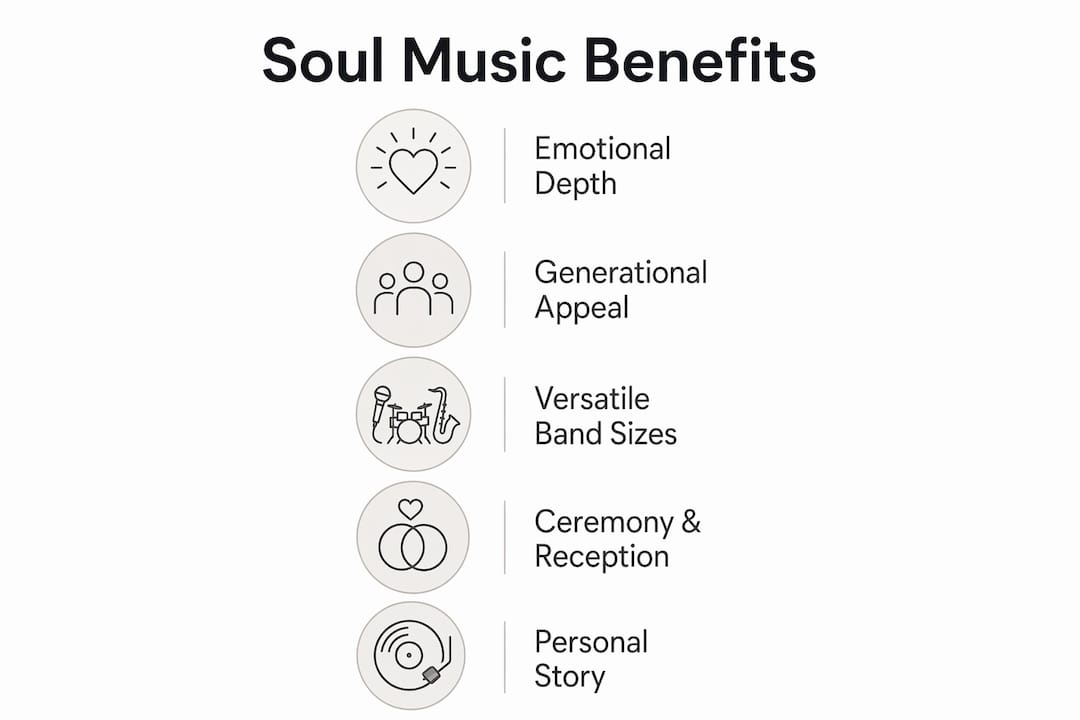
Soul music is the most versatile and emotionally effective genre for weddings because it adapts across every phase of the day while maintaining a consistent warmth that connects guests of all ages.
| Point | Details |
|---|---|
| Pocket rhythm serves every phase | Soul’s mid-tempo groove works as background music during dining and builds naturally to a dance floor. |
| Horn sections define live authenticity | A full horn section delivers dynamic power that smaller or recorded formats cannot replicate. |
| Generational appeal is built in | Blending 1970s Motown with neo-soul artists ensures guests of all ages feel included. |
| Social function is practical | Soul avoids harsh volume shifts, letting guests converse comfortably throughout the reception. |
| Personalisation is straightforward | Selecting 3–6 meaningful tracks for ceremony phases makes the day feel specific to the couple. |
Soul music at weddings: what 20 years of live performance taught me
I have played hundreds of weddings with Brownsugarmusic since 2003, and the pattern is consistent. Brides who choose soul music are not simply picking a genre they like. They are choosing a feeling they want their guests to carry home.
The moment that stays with me most is not the big dance floor set. It is the quieter one. A bride walking down the aisle to a live vocal arrangement of a soul track she and her partner had played on their first date. The room changed. You could feel it. That is what soul music does that a DJ playlist rarely achieves. The live voice in the room makes the emotion real and immediate.
What I tell brides who are undecided is this: think about what you want guests to say the next morning. If the answer involves the word “felt”, soul music is your answer. It is not background. It is not wallpaper. It is the emotional architecture of the day.
The one practical note I always add is about volume. Soul music played too loud during dinner loses its social function entirely. The groove should be present but not dominant until the dancing begins. Get that balance right and the whole evening flows without effort.
— Deni
Brownsugarmusic and soulful wedding entertainment
Brownsugarmusic has been Sydney’s resident R&B and soul band since 2003, with over two decades of live performance at weddings, corporate events, and venues including the Marble Bar at the Hilton Sydney.

For brides planning their wedding soundtrack, the soul music wedding atmosphere guide covers everything from band setup to song selection across every phase of the day. Brownsugarmusic offers flexible band configurations from intimate four-piece sets to full nine-piece live performances with a horn section. Browse soul band reception tips for practical advice on set structure, energy management, and working with a live band to create the moments that matter most.
FAQ
Why do brides choose soul music over other genres?
Soul music adapts across every wedding phase, from quiet ceremonies to high-energy receptions, while maintaining emotional warmth that connects guests of all ages. Its expressive vocals and groove-based rhythm create an atmosphere that few other genres can match across an entire day.
What is the ideal band size for a soul wedding reception?
Bands typically range from 4 to 9 pieces depending on venue size and budget. A horn section is recommended for larger reception spaces where dynamic energy and authentic Motown sound are priorities.
How many soul tracks should a bride choose for the ceremony?
Selecting 3–6 soul or gospel tracks for the ceremony gives each key moment, including the processional, signing, and recessional, its own distinct emotional character without overloading the programme.
Does soul music work for wedding guests of different ages?
Soul music’s generational range is one of its strongest practical advantages. Blending classic 1970s Motown with contemporary neo-soul artists ensures guests from their twenties to their eighties share the same experience on the dance floor.
What is the difference between acoustic soul and a full live soul band at a wedding?
Acoustic soul suits cocktail hours and ceremonies where intimacy and conversation matter. A full live band with horns suits the reception and dancing, where energy and volume need to fill a larger space and signal that the celebration has begun.