

A live band transforms a wedding night by creating an immersive, dynamic atmosphere that no recording can replicate. The difference is not simply about sound quality. It is about human energy, real-time response, and the psychological shift that happens when guests watch skilled musicians perform in the same room. Live music triggers 21% higher wellbeing feelings compared to recorded music. That figure alone explains why couples who invest in live entertainment consistently report it as the single best decision of their wedding planning. Brownsugarmusic, Sydney’s resident R&B and soul band since 2003, has witnessed this effect at hundreds of weddings across Australia and beyond.
Why does a live band transform the wedding night atmosphere?
A live band creates what industry professionals call the “Live Band Effect.” This is a psychological shift that signals the party has started, moving guests from passive observers to active participants. The moment musicians take the stage, the energy in the room changes. Guests stand taller, conversations get louder, and the dance floor fills faster.
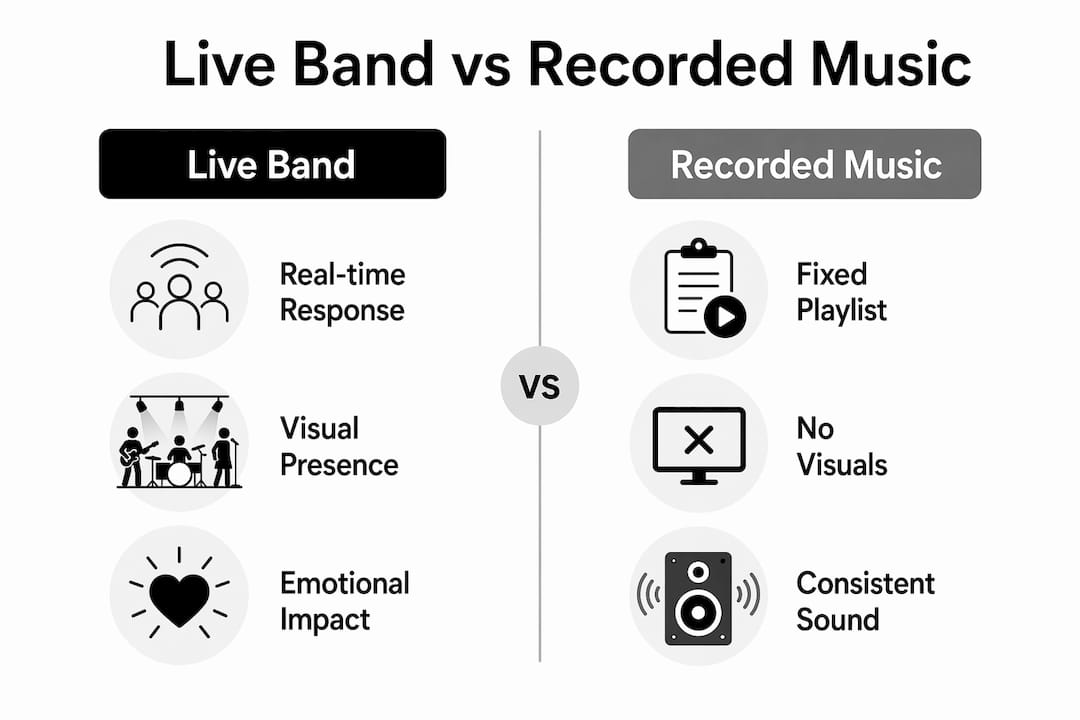
Pre-recorded music plays a fixed programme. A live band reads the room and responds to it. That distinction defines the entire evening. A band notices when energy dips after a slow ballad and lifts the tempo before guests drift to the bar. A playlist cannot do that.
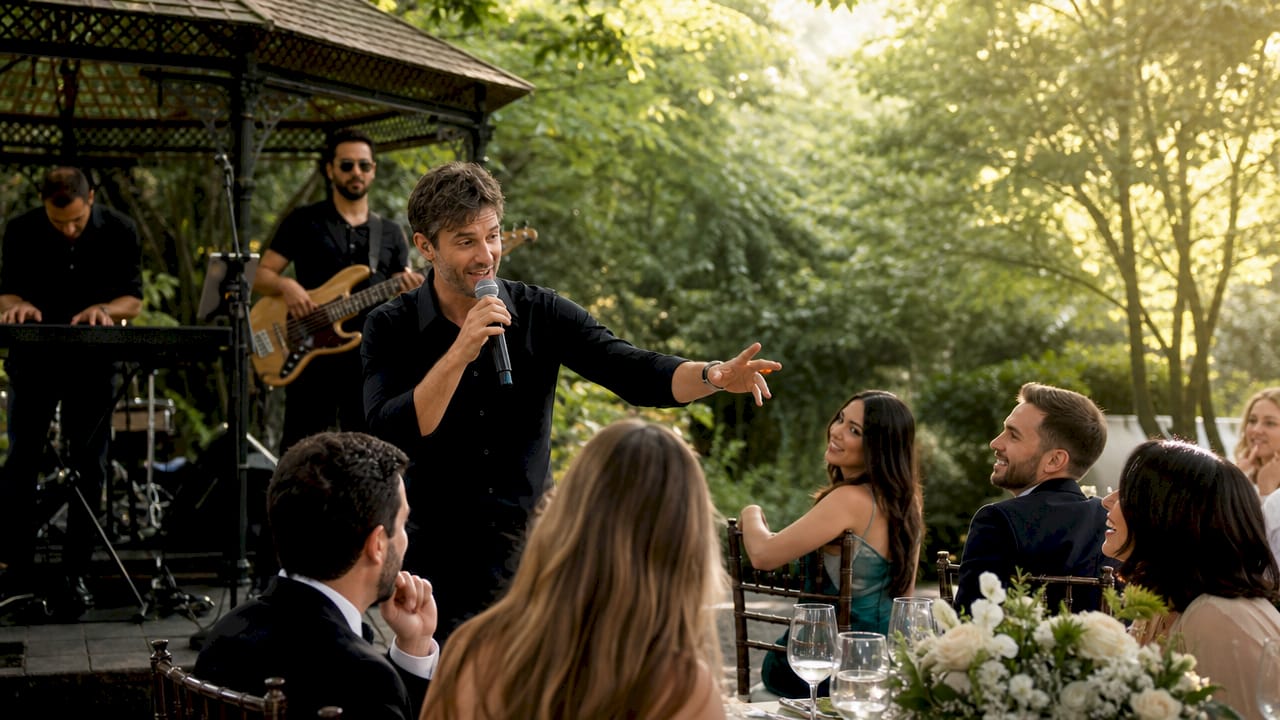
The visual element compounds the effect. Watching a frontman work the crowd, a guitarist lean into a solo, or a drummer drive the rhythm creates a focal point that recorded music simply cannot provide. Live bands combine sound and stage presence to become the emotional and visual centrepiece of the night.
How does a live band read and respond to the crowd?
The feedback loop between musicians and guests is the core mechanism behind every great wedding performance. A skilled band watches the dance floor constantly. They track which songs fill it, which songs thin it, and how quickly guests respond to tempo changes.
Here is what that looks like in practice:
- Tempo adjustment: A band senses the crowd cooling and shifts from a mid-tempo groove to an uptempo anthem without breaking the flow.
- Song selection in real time: If a particular artist gets a strong reaction, the band can pivot to more songs from that catalogue.
- Crowd interaction: A frontman calls guests by name, invites the couple to the stage, or leads a singalong to deepen engagement.
- Energy management: Bands coordinate from first dance to final song, building emotional arcs that keep guests invested for hours.
Band repertoires typically include 40–60 pre-rehearsed songs. That range gives musicians enough material to respond to almost any crowd mood without repeating themselves.
Pro Tip: Trust an experienced band’s instincts on the night. Couples who hand over creative control after the key moments, such as the first dance and entrance, consistently report better dance floors than those who micromanage the set list.
What emotional benefits does live music bring to a wedding?
Live music does more than entertain. It provides emotional permission by signalling to guests that it is time to celebrate, dance, and let go. This is a subtle but powerful function. Guests take their cues from the environment. When a live band launches into an upbeat number, the social signal is clear: the party is on.
The emotional benefits show up across several key moments:
- The entrance: A live band can build anticipation with a slow intro and then explode into the full arrangement as the couple walks in.
- The first dance: Live musicians respond to the couple’s pace and emotion in a way a recording never can.
- The final song: A well-chosen closer played live creates a collective memory that guests carry home.
“Live music transforms passive listening into active celebration. The difference between hearing a song and experiencing it performed live is the difference between watching a film and being in it.”
The multisensory experience matters too. Guests see the musicians, feel the bass through the floor, and watch the frontman connect with the room. That combination of visual, auditory, and physical sensation is what makes live music matter for wedding memories in a way that photographs and videos capture but never fully convey.
What practical considerations should couples know about hiring a live band?
Budget is the first practical reality. Investing in live music commands 5–8% of a wedding budget. Typical UK band costs run from £1,500 to £3,500 and above, reflecting rehearsal time and the number of musicians involved. That is a meaningful investment, and it requires planning.
Here are the key logistical points to address before booking:
- Repertoire and custom requests: New songs require weeks of preparation and approximately £150 per song in additional fees. Discuss your must-play list early and be realistic about what is achievable.
- Stage space: A four-piece band needs 18–20 m² of stage space. Larger bands require up to 30 m². Confirm your venue dimensions before signing any contract.
- Performance sets and breaks: A live band performs 90–120 minutes in sets. Breaks are standard. Plan for a DJ set or curated playlist to fill those gaps and maintain energy.
- Power and technical requirements: Confirm the venue’s power supply, PA system availability, and load-in access well in advance.
| Consideration | Detail |
|---|---|
| Budget allocation | 5–8% of total wedding budget |
| Typical band cost (UK) | £1,500–£3,500+ |
| Stage space (4-piece band) | 18–20 m² |
| Performance set length | 90–120 minutes per set |
| Custom song fee | Approx. £150 per song |
Pro Tip: Contact your venue and band at least six months before the wedding. Early communication prevents the most common logistical problems, from insufficient stage space to power supply conflicts.
For a full breakdown of space and technical needs, the wedding band stage requirements guide covers every detail couples need to check before booking.
How does a live band compare to other music options for a wedding night?
The core difference between a live band and recorded music formats is interactivity. A live band responds to the room. Recorded music does not. That single distinction shapes the entire guest experience.
Pre-recorded playlists offer consistency and cost efficiency. They play exactly what is programmed, at the volume set, without variation. That predictability is useful for background music during a dinner service. It is far less effective at driving a dance floor for four hours.
A DJ occupies a middle ground. A skilled DJ reads the crowd and adjusts selections in real time, which is a genuine advantage. The difference is that a DJ works with recordings, while a live band creates the music in the room. The physical act of performance, the energy of musicians playing together, produces a sound and atmosphere that engages guests more fully than any playback system.
| Feature | Live band | Recorded music formats |
|---|---|---|
| Real-time crowd response | Yes, continuous | Limited or none |
| Visual performance element | Yes, full stage presence | Minimal |
| Repertoire flexibility | 40–60 songs, planned in advance | Virtually unlimited |
| Emotional arc management | Active, musician-led | Passive, pre-set |
| Cost | Higher investment | Lower investment |
Quality of performance matters more than format. A mediocre live band delivers less than an excellent DJ. The goal is to find musicians who combine technical skill with genuine crowd awareness. For couples weighing the options, the live band vs DJ guide offers a detailed breakdown of both approaches.
How can couples maximise the impact of their live band?
Getting the most from a live band requires preparation before the wedding night, not just on the day. The couples who see the best results treat the band as a creative partner rather than a hired service.
- Define your must-play and must-not-play lists. Give the band clear boundaries and then trust them within those boundaries.
- Plan the key moments precisely. Agree on the entrance song, first dance arrangement, and final song well in advance.
- Encourage the frontman to interact. A good frontman can call guests to the floor, lead a group singalong, or acknowledge the couple’s story. Brief the band on names and any personal details that add warmth.
- Use the complete wedding band song list as a starting point. It shows which songs consistently work on wedding dance floors and why.
- Coordinate timing with your MC or event coordinator. The band needs to know when speeches end, when dinner is cleared, and when the venue requires music to stop.
Pro Tip: Watch performance videos from any band you are considering before booking. Live footage reveals crowd response, stage energy, and frontman confidence in a way that a demo recording never does. Brownsugarmusic publishes performance videos worth reviewing before you make any decision.
Live bands at weddings: what I have seen after 20 years on stage
After more than two decades performing at weddings, I have watched the same thing happen hundreds of times. The couple is nervous before the reception. The guests are polite but reserved. Then the band starts, and within three songs, the room is unrecognisable. That shift is not magic. It is the result of skilled musicians reading the room and responding to it with intention.
The couples who get the most from their live band are the ones who communicate clearly beforehand and then let go on the night. They trust the musicians to manage the energy. That trust is almost always rewarded. The couples who try to control every song choice from the dance floor often end up with a more fragmented experience.
One thing I would tell every couple: do not treat the band as a background feature. Position them where guests can see them. Brief your photographer to capture the performance. The band is not just providing music. They are creating the atmosphere that defines how your guests remember the night.
Prioritise the live experience over cost alone. The investment in a quality band is one of the few wedding decisions that guests notice, comment on, and remember years later.
— Deni
Brownsugarmusic and the live wedding band experience
Brownsugarmusic has been performing at Sydney weddings since 2003, with a residency at the Marble Bar in the Hilton Sydney that has run for over 20 years. That level of experience translates directly to wedding performances: the band knows how to read a room, manage energy across a full evening, and deliver the kind of R&B and soul performance that keeps guests on the floor.
For couples planning their wedding night entertainment, the R&B soul wedding atmosphere guide is the best starting point. It covers how soul and R&B music shapes the emotional tone of a reception, with practical advice on song selection and timing. Couples looking for reception-specific planning can also find detailed guidance in the soul band reception tips resource. Both pages are built around real wedding experience, not theory.
Key takeaways
A live band transforms a wedding night by combining real-time crowd response, visual stage presence, and emotional arc management in ways that recorded music formats cannot replicate.
| Point | Details |
|---|---|
| Emotional impact | Live music triggers 21% higher wellbeing feelings than recorded music. |
| Real-time adaptability | Bands read the crowd and adjust tempo and song selection throughout the night. |
| Practical planning | Budget 5–8% of total wedding spend and confirm stage space requirements early. |
| Performance structure | Live bands play 90–120 minute sets; plan a playlist or DJ for breaks. |
| Maximising results | Brief the band on key moments and trust their expertise on the dance floor. |
FAQ
How much does a live wedding band cost in the UK?
A live wedding band typically costs between £1,500 and £3,500 or more, depending on band size and experience. This represents approximately 5–8% of a typical wedding budget.
How many songs does a wedding band know?
Most wedding bands carry a repertoire of 40–60 songs. Custom song requests outside that list usually require several weeks of preparation and an additional fee of around £150 per song.
How long does a live band play at a wedding?
A live band performs in sets of 90–120 minutes. Breaks are standard practice, and couples should plan for a DJ set or curated playlist to maintain the atmosphere during those intervals.
What stage space does a wedding band need?
A four-piece band requires 18–20 m² of stage space. Larger ensembles need up to 30 m². Confirming venue dimensions before booking prevents last-minute logistical problems.
Is a live band better than a DJ for a wedding?
A live band delivers a visual performance, real-time crowd response, and emotional arc management that recorded formats cannot match. The best choice depends on budget, venue size, and the atmosphere the couple wants to create. Quality of performance matters more than format alone.