

A wedding song shortlist is a curated selection of 60–80 songs chosen to cover the key emotional moments and overall musical atmosphere of your wedding day. In the industry, professionals also call this a “music brief” or “song curation document.” It is not the same as a full wedding playlist, which spans 150–200 songs across every segment of the day. The shortlist is your focused input. It tells your band or DJ what matters most, which moments need specific songs, and what vibe to maintain everywhere else. Getting this right is the single most effective thing you can do to shape how your wedding feels from start to finish.
What is a wedding song shortlist and what moments does it cover?
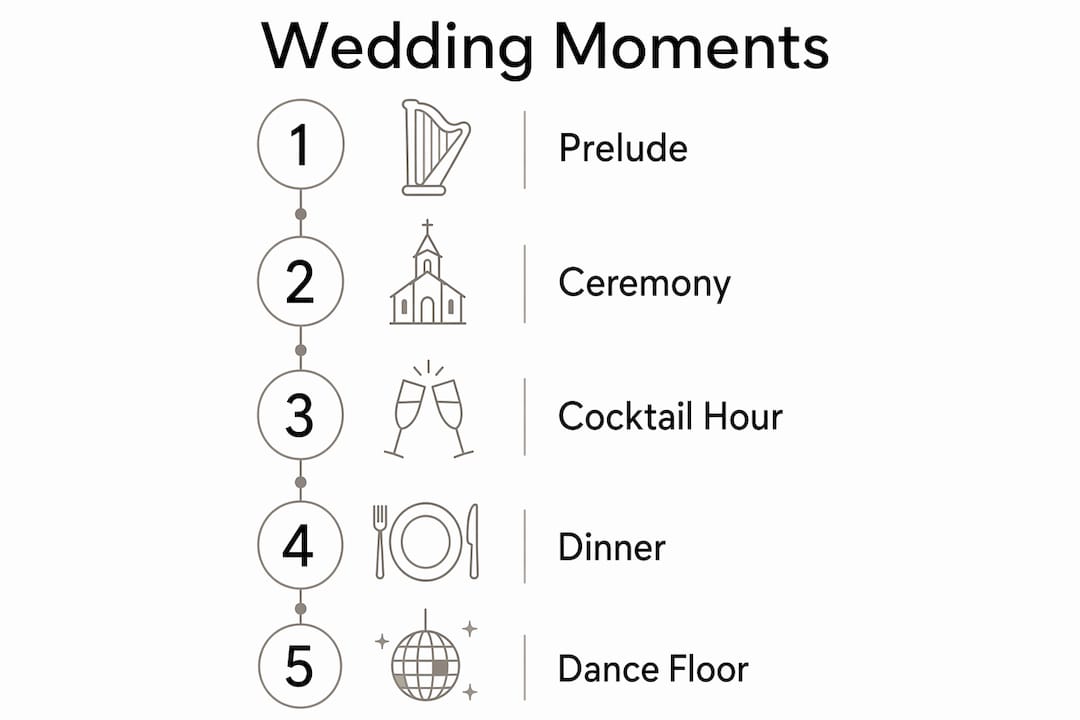
A wedding song shortlist covers 6–8 emotionally significant moments that require a specific, named song. These are the moments guests remember. They are also the moments where the wrong song causes a problem that cannot be undone.
The core moments to pin down with exact song choices are:
- Bridal entrance (processional): The song playing as you walk down the aisle. This sets the emotional tone for the entire ceremony.
- Signing of the register: A quieter, reflective piece played during the signing. One or two songs work well here.
- Recessional: The song you walk out to as a married couple. Upbeat and celebratory is the standard choice.
- First dance: The most personal song of the day. Guests will watch in silence, so every word matters.
- Parent dances: Father-daughter and mother-son dances, if included. These carry strong emotional weight for families.
- Last dance: The final song of the night. It closes the event and stays in guests’ memories.
Beyond these fixed moments, your shortlist also provides vibe directions for the cocktail hour, dinner, and the dance floor. You do not need to name every song in these segments. You need to define the mood. A full wedding typically requires 10–15 songs for the prelude, 20–30 for cocktail hour, 25–35 for dinner, and 40–60 for reception dancing. Your shortlist guides those choices without micromanaging them.
| Moment | Typical song count | Mood |
|---|---|---|
| Prelude | 10–15 | Warm, welcoming |
| Ceremony (processional, signing, recessional) | 3–5 | Emotional, celebratory |
| Cocktail hour | 20–30 | Relaxed, conversational |
| Dinner | 25–35 | Sophisticated, background |
| Reception dancing | 40–60 | Energetic, crowd-driven |
How to curate your wedding song shortlist effectively
Start by mapping your wedding day moments before you choose a single song. Couples who begin with a song list and work backwards often end up with gaps or duplicates. Moment-first planning gives every song a purpose.
Once your moments are mapped, follow these steps:
- Anchor your fixed moments first. Choose your processional, first dance, and recessional before anything else. These are non-negotiable and take the most thought.
- Define the vibe for each segment. Write one sentence describing the feeling you want during cocktail hour, dinner, and dancing. “Warm and jazzy” or “upbeat R&B” is enough. Your musicians will work from this.
- Mix timeless classics with personal choices. Effective shortlists blend familiar tracks that guests recognise with songs that reflect your story as a couple. Neither alone is enough.
- Read every lyric aloud before you finalise. Melody is not enough. Lyrics reviewed carefully before the day prevent last-minute changes and awkward moments during the ceremony.
- Separate must-play songs from vibe guidance. Your must-play list should contain 10–20 songs maximum. Everything else is direction, not instruction.
- Consider overlooked moments. A private last dance or an anniversary dance for your parents adds a personal touch that generic playlists miss entirely.
Pro Tip: Build a wedding music vision board before your first meeting with a band or DJ. Collect songs, artists, and moods in one place. It makes the briefing conversation far more productive.
Prioritising emotional relevance over trends produces the best musical experience. A song that means something to you will always land better than a chart hit chosen because it is popular this year.
How to communicate your wedding song shortlist to musicians or DJs
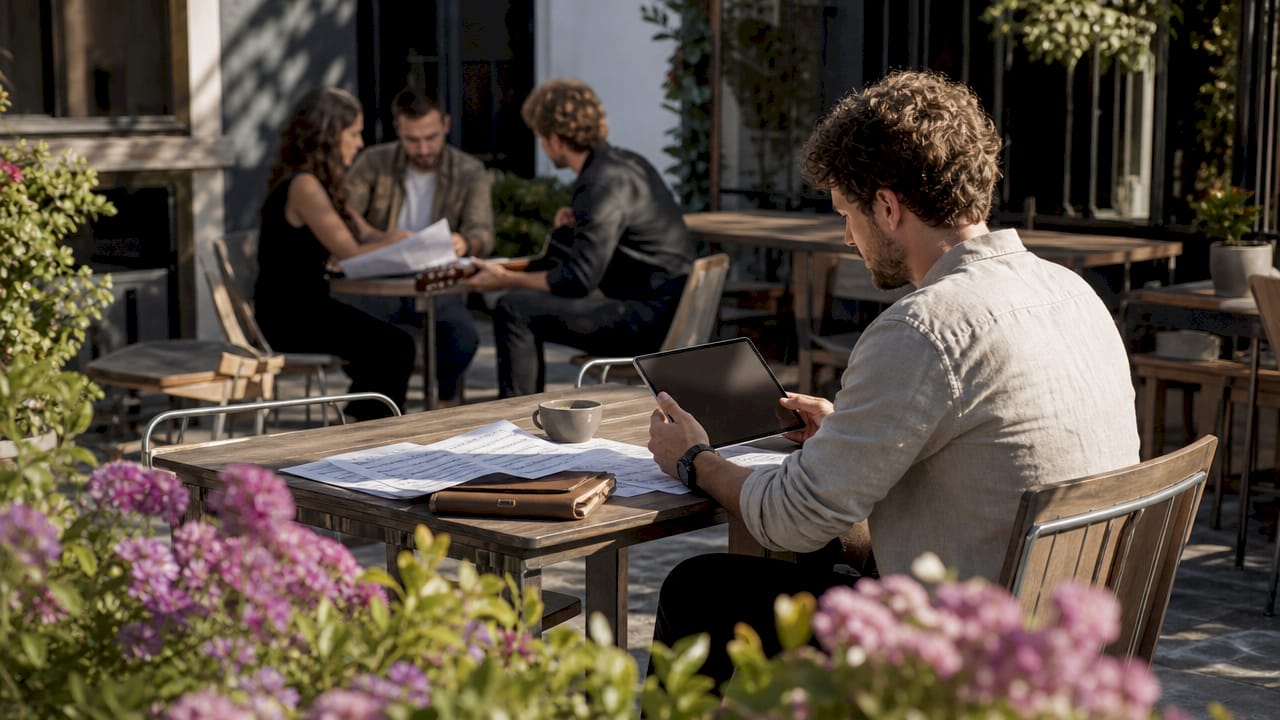
A shortlist only works if your performers understand it. Handing over a raw list of song titles is not enough. Professionals need context to deliver the experience you want.
A clear briefing includes:
- Your must-play list: 10–20 songs with the exact moment each one belongs to. Specify “first dance” or “recessional” next to each title.
- Your do-not-play list: Without a do-not-play list, default choices may include songs tied to negative memories or that simply clash with your tone. This list protects the atmosphere.
- Vibe descriptions per segment: One or two sentences per segment. “Cocktail hour: relaxed soul and jazz, nothing too loud” is more useful than a list of 30 songs.
- A crowd description: Note the age range, energy level, and any cultural considerations. A band reading the room needs this context.
- A timeline: Include ceremony start time, first dance timing, and when you want the dance floor to peak.
Pro Tip: When working with a live band, ask about their song request process early. Some bands need six to eight weeks to arrange a song they have not performed before.
The most important principle here is flexibility. A must-play list is not a setlist. Rigid playlists limit what a live band can do. Giving performers room to read the room and respond to guest energy is what separates a good wedding from a great one. A skilled band, like Brownsugarmusic, uses your shortlist as a foundation and builds from there in real time.
For a full breakdown of wedding ceremony music roles, including how DJs and live bands divide responsibilities across the day, an industry guide from DJ Phoenix covers the structure clearly.
Common pitfalls when creating a wedding song shortlist
Most couples make the same mistakes. Knowing them in advance saves significant stress.
Treating the shortlist as a rigid setlist. Couples often mistake the shortlist for a minute-by-minute programme. Overloading it with exact songs for every moment removes the performer’s ability to adapt. The result is a mechanical experience rather than a living one.
Choosing only popular songs. A shortlist built entirely from chart hits has no personal identity. A personalised soundtrack that reflects your story creates more lasting memories than a generic popular songs list. Include at least a few songs that mean something specific to you as a couple.
Leaving it too late. Finalising your shortlist 6–9 months before the wedding is the professional standard. Live musicians need time to arrange tracks, especially bespoke or unusual choices. Leaving it to the final weeks causes rushed decisions and limits your options.
Skipping the do-not-play list. This is the most overlooked element. Without it, a DJ filling a quiet moment may choose a song that means something painful to a family member or simply kills the mood.
Ignoring venue atmosphere and guest demographics. Matching song energy to your venue matters. An elegant ballroom calls for a different energy to a relaxed outdoor garden setting. Consider your guests’ age range and musical background when setting vibe directions.
Pro Tip: Ask your partner to build their own shortlist independently, then compare. The overlap becomes your must-play list. The differences start a useful conversation about priorities.
Key takeaways
A wedding song shortlist of 60–80 songs, anchored by 10–20 must-play choices and supported by clear vibe directions, gives professional musicians and DJs everything they need to deliver a memorable wedding.
| Point | Details |
|---|---|
| Define your shortlist early | Finalise your must-play songs 6–9 months before the wedding to allow musicians preparation time. |
| Anchor fixed moments first | Choose processional, first dance, and recessional before selecting any other songs. |
| Separate must-play from vibe guidance | Limit your must-play list to 10–20 songs; use mood descriptions for cocktail hour and dinner. |
| Always include a do-not-play list | Name songs to avoid to protect the atmosphere and prevent awkward moments. |
| Give performers flexibility | A shortlist is a foundation, not a script. Skilled bands read the room and adapt in real time. |
What I have learnt from watching couples get this right and wrong
After years of performing at weddings across Sydney and around the world, the pattern is clear. Couples who arrive with a thoughtful shortlist and a relaxed attitude get the best results. Couples who arrive with a 200-song spreadsheet and a minute-by-minute schedule often end the night frustrated, even when everything technically went to plan.
The biggest shift I have seen is when couples stop thinking about songs and start thinking about feelings. What do you want guests to feel when you walk in? What do you want the room to feel like at 10PM? Those questions produce better music choices than any popular wedding songs list.
The do-not-play list is the most underrated tool in wedding music planning. I have seen a single wrong song derail the energy of an entire room. It takes five minutes to write and it prevents a problem that cannot be fixed once it happens.
Trust your musicians. A live band with 20 years of experience has read thousands of rooms. Give them your shortlist, your vibe, and your must-plays. Then let them work. The moments that guests talk about for years are almost always the ones that happened organically, not the ones that were scripted.
— Deni
Brownsugarmusic and your wedding music shortlist
Brownsugarmusic has performed at weddings across Sydney and internationally since 2003. The band brings over two decades of live experience to every event, including a long-running residency at the Marble Bar in the Hilton Sydney.
For couples building their wedding music shortlist, Brownsugarmusic works directly with you to shape the right R&B and soul atmosphere for every moment of your day. From the processional to the last dance, the band uses your shortlist as a starting point and adapts live to keep the energy exactly where it needs to be. The R&B soul wedding atmosphere guide on the Brownsugarmusic website covers how this genre works across ceremony, cocktail hour, and reception. For couples considering a live band at their reception, the difference a professional band makes to the energy of the room is significant.
FAQ
What is a wedding song shortlist?
A wedding song shortlist is a curated selection of 60–80 songs covering the key emotional moments and vibe directions for a wedding day. It includes must-play choices for fixed moments and mood guidance for segments like cocktail hour and dancing.
How many songs should be on a wedding must-play list?
A must-play list should contain 10–20 songs. These are the specific tracks required for named moments such as the processional, first dance, and recessional.
When should couples finalise their wedding song shortlist?
Couples should finalise their shortlist 6–9 months before the wedding. Live musicians need this lead time to arrange tracks, particularly for bespoke or unusual song choices.
What is a do-not-play list and why does it matter?
A do-not-play list names songs you want excluded from the day. Without one, a DJ or band may default to tracks that clash with your tone or carry negative associations for guests.
How do you communicate a wedding song shortlist to a band?
Provide a must-play list with moment labels, a do-not-play list, vibe descriptions per segment, a crowd description, and a timeline. This gives performers the context they need to deliver the right experience.