

A wedding band rehearsal is a dedicated practice session where the band, wedding party, and officiant synchronise music timing and ceremony flow before the wedding day. Understanding what does wedding band rehearsal involve helps couples avoid timing errors, reduce nerves, and ensure every musical moment lands exactly as planned. A well-run rehearsal typically lasts 30–60 minutes and covers the processional, recessional, and all key transitions in between. Brownsugarmusic, Sydney’s resident R&B and soul band since 2003, coordinates these sessions as a standard part of their wedding service.
What does wedding band rehearsal involve at the ceremony?
A wedding band rehearsal covers every musical cue tied to the ceremony’s structure. The band practises the processional, the recessional, and all transitions between ceremony moments such as readings, vows, and the ring exchange. The goal is to align music tempo with the actual walking pace of the wedding party, which is often slower than expected. That slower pace changes everything about how a song is timed and when it needs to start.
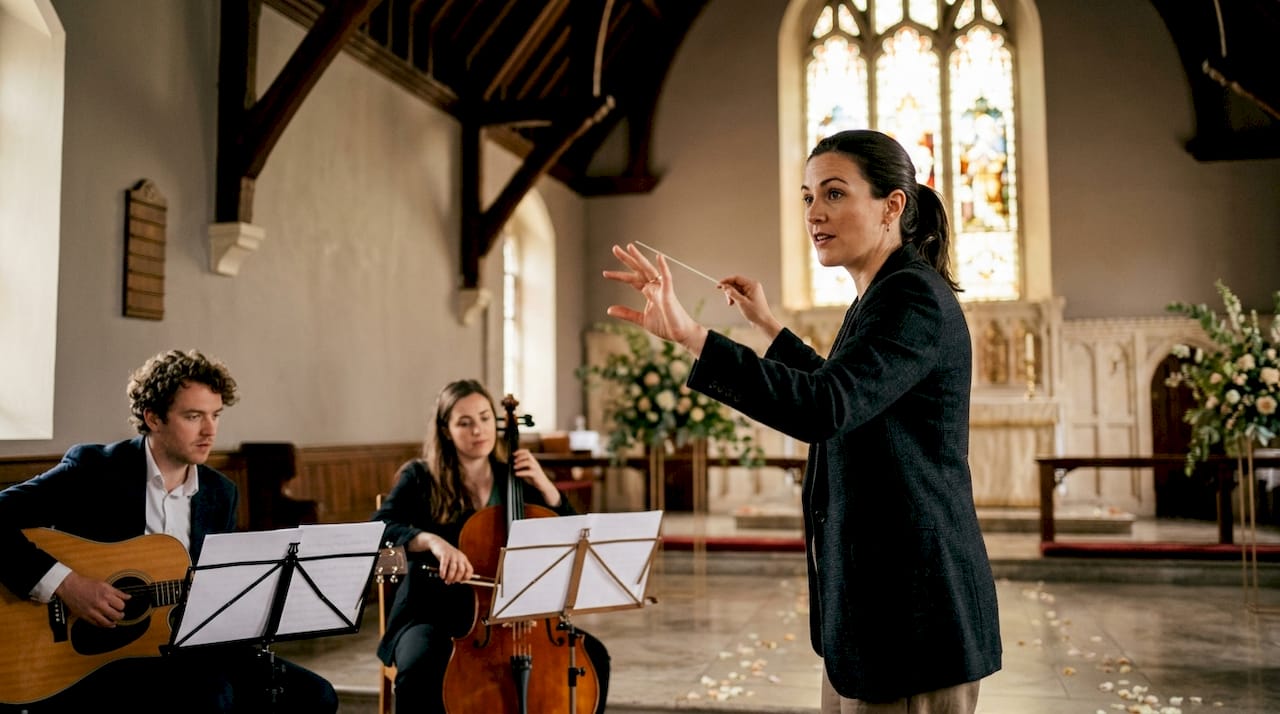
The rehearsal also tests the sound setup. Microphones, instrument levels, and monitor positions all get checked in the actual venue space. Practising at the venue gives the band a chance to adjust for acoustics, outdoor wind noise, or any layout that affects sound projection. These are details no amount of studio practice can replicate.
The specific elements rehearsed typically include:
- Processional timing: The band starts the music at a set cue, usually when the first member of the wedding party begins walking. The tempo must match the pace of each person entering, not a generic beat.
- Recessional pacing: The exit music needs to build energy at the right moment. The band rehearses when to begin and how quickly to lift the tempo.
- Transition cues: Music between readings, during the signing of the register, or beneath a unity ceremony all require precise start and stop points.
- Pauses and holds: Some moments, such as the couple’s first look at the altar, call for the music to hold or fade. The band rehearses these holds so they feel natural, not abrupt.
- Sound check integration: Levels for vocalists and instruments are set during the rehearsal, not on the wedding day itself.
Pro Tip: Ask your bandleader to walk the processional route themselves during rehearsal. Feeling the pace firsthand is more reliable than counting beats from the stage.
Who should attend a wedding band rehearsal?
The right people in the room make a rehearsal productive. The wrong mix wastes time and leaves gaps that show up on the wedding day.
The core attendees are:
- The couple: You need to hear the music in context and confirm every cue feels right.
- The bandleader: The bandleader manages all musical decisions and communicates directly with the officiant and coordinator.
- All performing musicians: Every band member should be present. Absent members create gaps in the rehearsal that cannot be fully resolved later.
- The officiant: The officiant controls the ceremony pace. Without them, the band cannot accurately time cues to spoken moments.
- The wedding coordinator: If you have one, their presence is non-negotiable. They manage the overall flow and relay cues between the band and the wedding party.
- Key members of the wedding party: Anyone walking in the processional should attend so the band can match music to their actual pace.
Attendance of the bandleader and the person controlling music cues is strongly recommended because musical cues run slower than most couples anticipate. Photographers and videographers benefit from attending too, as they can plan their positions around music transitions. Guests, extended family, and anyone not directly involved in the ceremony can skip the rehearsal entirely. Keeping the group focused prevents the session from running long.
How to prepare for a wedding band rehearsal
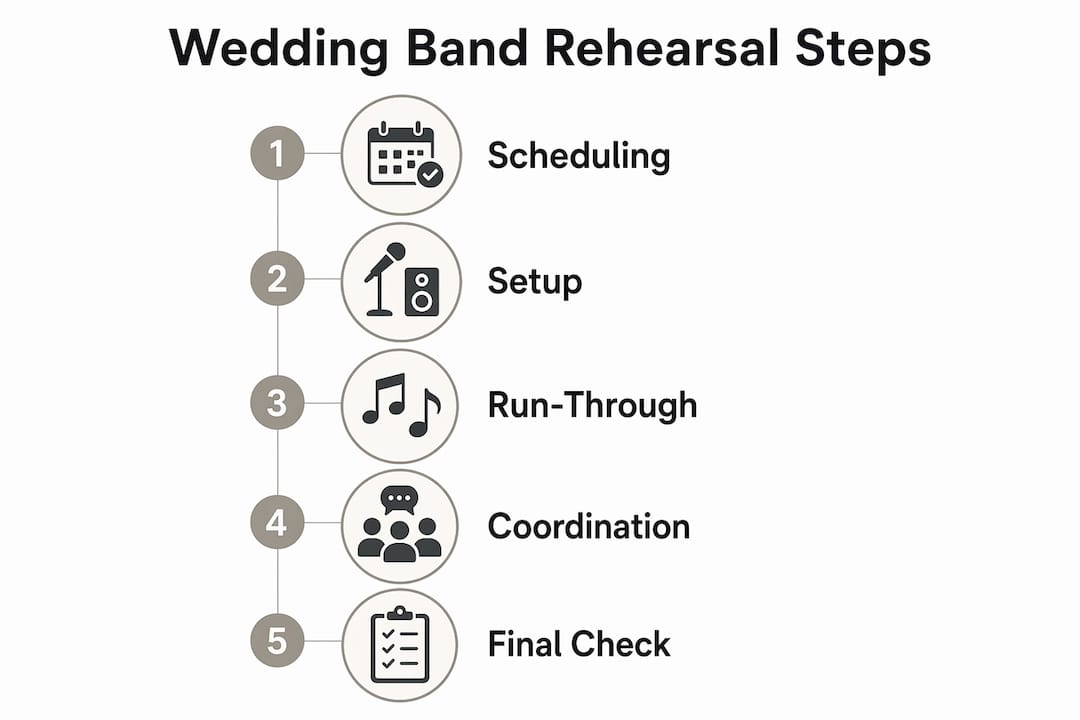
Preparation before the rehearsal determines how smoothly it runs. A disorganised rehearsal wastes the band’s time and leaves couples more anxious, not less. Pre-rehearsal organisation is the single biggest factor in a productive session.
Follow these steps to prepare:
- Confirm the ceremony order in writing. Send the band a written running order at least one week before the rehearsal. Include every moment where music plays, pauses, or stops.
- Agree the setlist and cues in advance. Every song choice, including the processional, signing music, and recessional, should be confirmed before the rehearsal begins. Use a song request guide to structure your choices clearly.
- Ask band members to practise individually beforehand. A structured band rehearsal includes individual preparation before the group session. Members who know their parts arrive ready to focus on timing and coordination, not notes.
- Book venue access in advance. Confirm with the venue that the band can access the space, set up equipment, and run a sound check before the rehearsal begins. Check stage requirements with the band early.
- Prepare a written rehearsal schedule. Allocate time blocks: roughly 15–20 minutes for the processional, 10–15 minutes for positioning, and 5–10 minutes for the recessional. Share this schedule with everyone attending.
- Brief the band on any special moments. If there is a unity candle ceremony, a surprise song, or a cultural tradition, the band needs to know before they arrive.
Common challenges during wedding band rehearsals
Rehearsals surface problems that would otherwise appear on the wedding day. That is their purpose. The best rehearsals involve constant questions and clarifications rather than silent, perfect run-throughs.
Common challenges and how to handle them:
- Nervousness about timing: Couples often feel unsure about when to start walking. The solution is simple: the bandleader gives a clear visual or verbal cue, and you practise responding to it until it feels natural.
- Absent band members: If a musician cannot attend, the bandleader should brief them separately and run a partial rehearsal with the remaining members. The absent member must review the written cue sheet before the wedding day.
- Venue constraints: Outdoor venues, heritage buildings, and unusual layouts all create sound challenges. Rehearsing in the actual space identifies these early. A band sound check during the rehearsal resolves most acoustic issues before they become problems.
- Unclear cues for special moments: Unity ceremonies, readings, and cultural rituals all need specific music cues. Write these down and hand a copy to both the bandleader and the officiant.
- Rehearsal running long: Rehearsals longer than 60 minutes cause fatigue and reduce focus. If the session runs over, prioritise the processional and recessional. Everything else can be confirmed verbally.
Pro Tip: Treat every question during rehearsal as a success. A question asked now is a mistake prevented on the day. Encourage your wedding party to speak up rather than guess.
Clarifying roles during rehearsal also covers non-musical logistics, such as who holds the rings, where the bouquet goes during the ring exchange, and where the best man stands for the register signing. These details connect directly to music cues and affect the band’s timing.
How does the band rehearsal fit with the full wedding rehearsal?
The band rehearsal works best when it is integrated into the full ceremony rehearsal rather than treated as a separate event. Most rehearsals take place the day before the wedding at the ceremony venue, which gives the band the chance to practise in the actual space alongside the wedding party.
A well-run rehearsal is led by the officiant or a professional wedding coordinator. The band follows their lead on pacing and timing. This structure prevents the session from becoming disorganised and keeps every participant focused on their role.
The table below shows how the band rehearsal slots into the broader ceremony walkthrough:
| Rehearsal stage | Band’s role |
|---|---|
| Processional walk-through | Play processional music at actual tempo; adjust to walking pace |
| Ceremony positioning | Hold or fade music on cue from officiant |
| Vows and ring exchange | Remain silent or play softly beneath the moment as agreed |
| Signing of the register | Play agreed signing music for the correct duration |
| Recessional exit | Begin recessional on cue; build energy as couple exits |
Coordinating with wedding entertainment professionals, including those who specialise in wedding show planning, reinforces how much smoother ceremonies run when musicians are part of the full rehearsal process. The band is not a background detail. They are a core part of the ceremony’s structure, and rehearsing together reflects that.
Key takeaways
A wedding band rehearsal is the single most effective way to prevent music timing errors and reduce ceremony day stress for everyone involved.
| Point | Details |
|---|---|
| Rehearsal timing | A ceremony rehearsal runs 30–60 minutes; allocate time blocks for processional, positioning, and recessional. |
| Essential attendees | The couple, bandleader, all musicians, officiant, and coordinator must all be present for the rehearsal to work. |
| Music cue preparation | Confirm every song and cue in writing at least one week before the rehearsal to avoid confusion on the day. |
| Venue practice matters | Rehearsing in the actual ceremony space resolves acoustic and layout issues that studio practice cannot replicate. |
| Questions are productive | A rehearsal that surfaces questions and clarifications is more valuable than a silent, perfect run-through. |
What I’ve learned from weddings with and without a band rehearsal
The difference between a wedding with a proper band rehearsal and one without is audible within the first 30 seconds of the processional. Without rehearsal, the music starts a beat too early or a bar too late. The wedding party hesitates. The couple feels it, even if the guests do not.
Surveyed couples who rehearsed said it was essential, while a significant proportion of those who skipped it wished they had not. Those numbers reflect something real. The rehearsal is not about perfection. It is about removing uncertainty so that the day itself can be fully felt rather than managed.
The couples who get the most from a rehearsal are the ones who treat it as a conversation, not a performance. They ask questions. They walk the processional twice. They tell the bandleader exactly what they want the recessional to feel like. That openness produces music that genuinely fits the moment.
Brownsugarmusic has played at weddings across Sydney and beyond for over two decades. The ceremonies that stand out are always the ones where the band was part of the planning from the start, not an afterthought added in the final week.
— Deni
Brownsugarmusic and your wedding band rehearsal
Brownsugarmusic brings over 20 years of live wedding experience to every rehearsal and ceremony. The band works directly with couples and coordinators to map out every music cue, from the processional to the final recessional note.

Every Brownsugarmusic wedding booking includes rehearsal coordination as part of the process. The band’s approach to live band wedding reception planning covers ceremony music, timing, and sound setup in full. Couples can also explore wedding ceremony music types to build a setlist that suits their style before the rehearsal begins. Contact Brownsugarmusic to discuss your ceremony music and rehearsal requirements directly.
FAQ
How long does a wedding band rehearsal take?
A wedding band rehearsal typically runs within the broader ceremony rehearsal of 30–60 minutes. Longer sessions risk fatigue and reduced focus, so keeping to this window is advisable.
What does the band practise during the rehearsal?
The band practises processional and recessional timing, music transitions between ceremony moments, sound levels, and any special cues for moments such as the ring exchange or unity ceremony.
Does the whole band need to attend the rehearsal?
All performing musicians should attend. Absent members create gaps in timing coordination that cannot be fully resolved through briefing notes alone.
When should the wedding band rehearsal happen?
Most rehearsals take place the day before the wedding at the ceremony venue. Practising in the actual space allows the band to adjust for acoustics, layout, and any venue-specific constraints.
What should couples bring to the band rehearsal?
Couples should bring a written ceremony running order, the confirmed music setlist with cue points, and any special instructions for cultural traditions or surprise moments. Sharing this with the bandleader at least one week in advance produces the best results.