

A wedding entertainment timeline is a chronological plan that sequences music, activities, and transitions across your reception to keep guests engaged and the day running on time. Without one, even the best band in the room cannot save a reception that stalls between speeches or loses energy before the dance floor opens. The industry term for this document is a reception run sheet, and every professional coordinator uses one. Wedding entertainment timeline planning is the process of building that run sheet around your entertainment choices, your budget, and your guests’ experience. Get it right, and the evening flows naturally from one moment to the next.
What are the main elements of a wedding entertainment timeline?
A typical reception timeline covers three core phases: cocktail hour, dinner with speeches, and open dancing, allocated roughly one hour, one and a half to two hours, and two to three hours respectively. That structure is a starting point, not a rule. Your venue, guest count, and cultural traditions will all shape the final version.
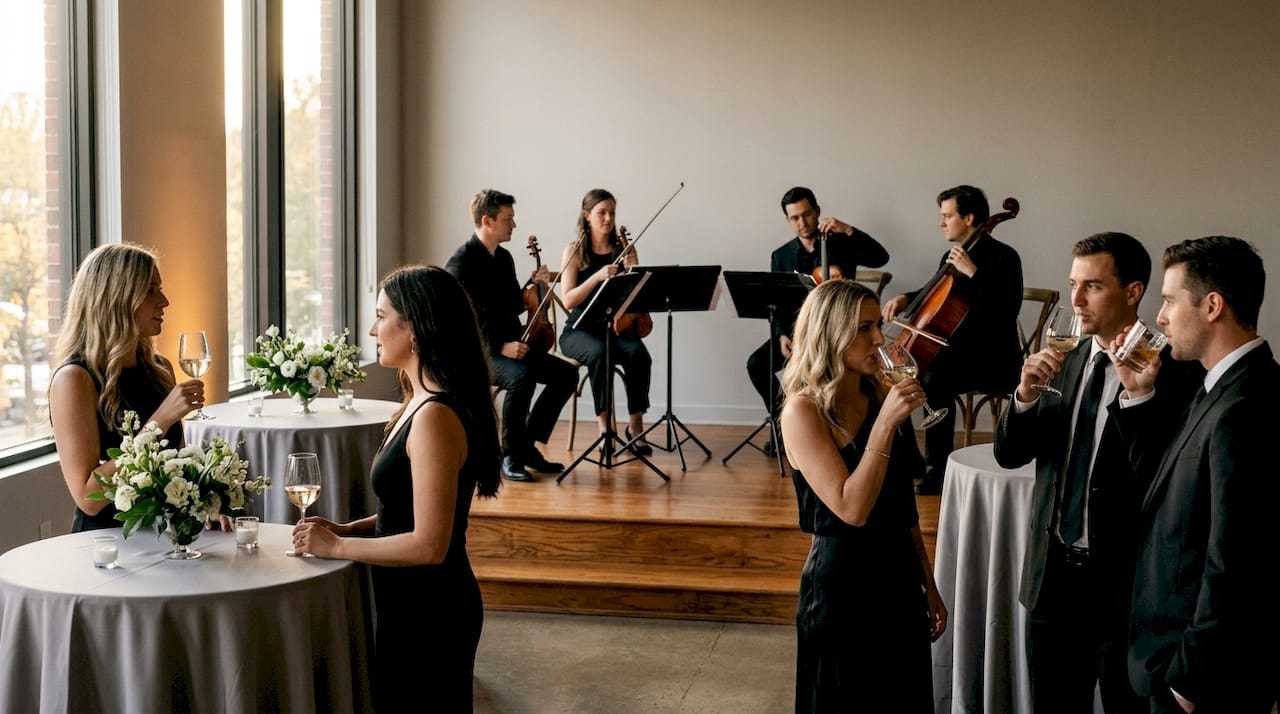
The cocktail hour sets the tone. Guests arrive, drinks flow, and background music fills the room. This is the right time for acoustic sets or a jazz trio if you want elegance, or upbeat R&B if you want energy from the first moment. Keep the music at a volume that allows conversation.
Dinner and speeches require careful scheduling. Allocate time for each speech individually rather than treating them as one block. A four-speech programme with no time limits routinely runs forty minutes over. Build that buffer in before it happens.
Special moments need their own slots in the run sheet:
- First dance — schedule immediately after the couple’s introduction, before dinner or at the transition into dancing.
- Parent dances — place these directly after the first dance to maintain emotional momentum.
- Cake cutting — works well as a visual signal that open dancing is about to begin.
- Bouquet toss or other traditions — schedule mid-dancing to re-energise the floor, not at the end when energy is already fading.
- Band breaks — plan for two fifteen-minute breaks across a four-hour set, and fill them with a curated playlist so the room never goes silent.
Pro Tip: Build ten-minute buffers between each major phase. Meals run late, speeches run long, and guests take time to move between areas. Those buffers are what keep your timeline intact by midnight.
Cultural or unique entertainment needs belong in the run sheet too. A Greek circle dance, a Nigerian money spray, or a surprise performance all require coordination with the band and the venue. Flag these at least six weeks out so the entertainment team can prepare.
How to set your wedding entertainment budget within the timeline
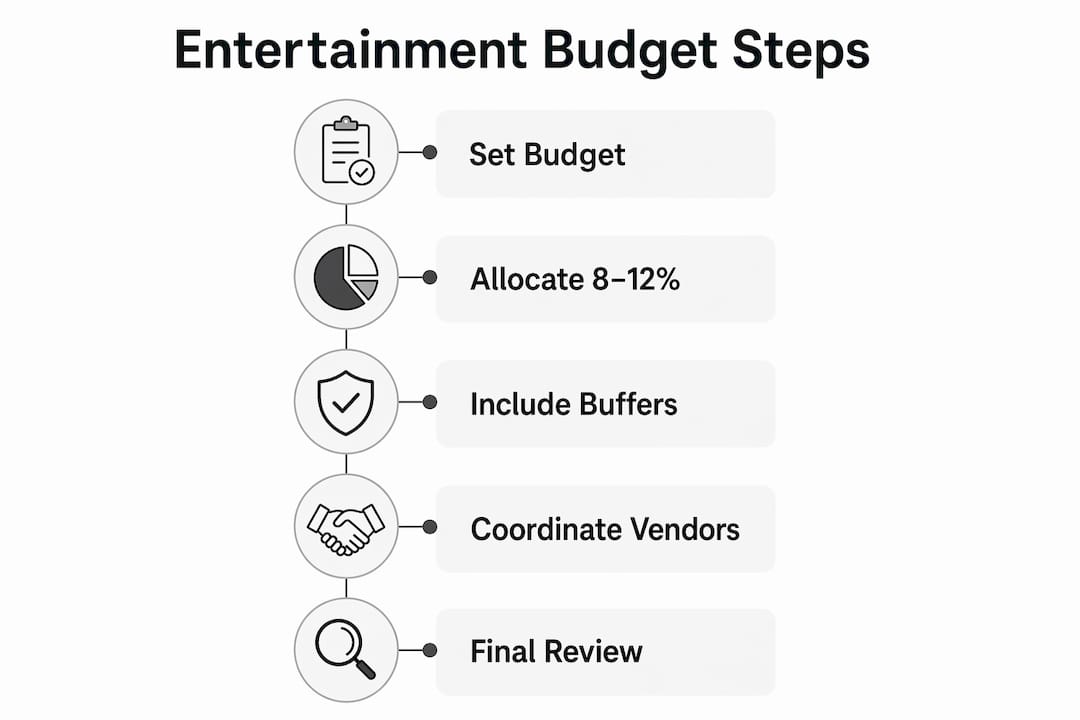
Experts recommend allocating 8–12% of the total wedding budget to entertainment. Couples who prioritise the dance floor often push that figure to 15–20%. That range reflects a real difference in what you get: a four-piece live band with a professional sound rig versus a solo performer with a backing track.
The most practical way to frame entertainment spend is per guest. A live band that costs £4,000 for 100 guests works out to £40 per person. Compare that to the per-head cost of food and drink, and the return on investment becomes clear. Entertainment is the one element guests remember and talk about the following week.
Key cost factors to account for when setting your budget:
- Band size — a six-piece soul band costs more than a three-piece, but fills a larger room without a sound system upgrade.
- Equipment quality — poor sound gear can undermine even a talented band. Always confirm what the quote includes.
- MC duties — some bands include an MC in the fee; others charge separately. Clarify this upfront.
- Overtime fees — band overtime typically runs between $500 and $1,500 per hour. Budget for at least one hour of potential overtime rather than discovering the cost at 11:30 PM.
- Travel and accommodation — relevant for destination weddings or venues outside the band’s home city.
Booking a unified entertainment provider for the full day, covering both ceremony and reception, can save 15–20% compared to hiring separate vendors for each phase. It also removes the risk of technical friction when two different sound systems need to coexist in the same venue.
Pro Tip: Ask every vendor for an itemised quote. A single line that reads “entertainment package” tells you nothing. Line-by-line pricing lets you compare vendors fairly and spot what is and is not included.
| Budget priority | Recommended allocation | What it covers |
|---|---|---|
| Standard reception | 8–12% of total budget | Live band or DJ, basic sound rig, MC |
| Dance-focused reception | 15–20% of total budget | Premium band, full sound and lighting, MC |
| Unified day package | Saves 15–20% overall | Ceremony and reception with one provider |
| Overtime contingency | One additional hour | Avoids surprise charges at end of night |
How to coordinate your timeline with your entertainment team
Music lists should be finalised four to six weeks before the wedding. A final briefing call one to two weeks out confirms that nothing has changed and that the band has everything they need. Leaving this until the week of the wedding creates unnecessary pressure on both sides.
The single most effective coordination tool is a dedicated timeline owner. This is the person, typically the MC or wedding coordinator, who signals key moments to the band throughout the evening. Without this role, the couple ends up managing cues themselves, which is the last thing you want to be doing on your wedding day.
Your pre-event briefing with the entertainment team should cover:
- Transition cues — who signals the band to start the first dance, and how?
- Speech timing — does the band play under the final speech or wait for a clear signal?
- Meal pacing — when does the band shift from background to performance volume?
- Break management — what playlist runs during band breaks, and who controls it?
- Emergency contacts — who does the band call if there is a venue access issue or a technical problem on the day?
For a detailed walkthrough of what to cover in that pre-event call, the guide on briefing a wedding band covers every question worth asking. Confirming stage dimensions, power access, and load-in times in writing removes the most common sources of day-of friction.
Pro Tip: Send the entertainment team a one-page timeline document, not a long email chain. A single page with times, cues, and contact names is what a band actually uses on the night.
For couples working with a DJ rather than a live band, the wedding DJ timeline best practices guide covers the same coordination principles from a DJ-specific perspective.
What common challenges arise in wedding entertainment timeline planning?
The most frequent problem is underestimated speech duration. Couples plan for three speeches at five minutes each and end up with six speeches averaging twelve minutes. That single miscalculation pushes dinner back, compresses dancing, and forces the band into overtime. The fix is to set a firm speech limit in writing and communicate it to speakers in advance.
Meal delays cause a similar knock-on effect. A kitchen running twenty minutes behind schedule does not just affect dinner. It shifts every subsequent timeline block, including the first dance, the cake cutting, and the opening of the dance floor. Build a fifteen-minute meal buffer into the run sheet as standard.
A timeline that builds, peaks, and rests mimics an emotional arc that keeps guests engaged and the day flowing naturally. The mistake most couples make is treating the evening as a flat sequence of events rather than a story with a beginning, a middle, and a climax.
Other common challenges include:
- Energy gaps — a long gap between dinner and dancing kills momentum. The cake cutting or a short performance set bridges that gap effectively.
- Multiple vendor friction — two separate sound systems from two different providers regularly cause technical conflicts. A unified entertainment team avoids this entirely.
- Last-minute song requests — guests who approach the band mid-set with requests that were not on the approved list can disrupt the planned flow. Brief the band in advance on how to handle these.
- Dance floor pacing — interactive song request tools can increase dance floor participation significantly compared to a standard set. Consider whether your entertainment provider offers this option.
For a broader look at how a wedding reception timeline fits together across the full evening, the structural principles apply regardless of whether you choose a live band or a DJ.
Key takeaways
A well-built wedding entertainment timeline, anchored by clear budget allocation, a dedicated timeline owner, and finalised music lists at least four weeks out, is the single most reliable way to keep your reception on track.
| Point | Details |
|---|---|
| Standard budget allocation | Allocate 8–12% of your total budget to entertainment, or 15–20% if dancing is the priority. |
| Core timeline structure | Plan one hour for cocktails, one and a half to two hours for dinner, and two to three hours for dancing. |
| Finalise music lists early | Lock in must-play and do-not-play lists four to six weeks before the wedding. |
| Assign a timeline owner | Delegate cue management to an MC or coordinator so the couple can enjoy the evening. |
| Budget for overtime | Set aside funds for at least one hour of overtime to avoid unexpected charges at the end of the night. |
What I have learned from twenty years of wedding receptions
The couples who have the best receptions are rarely the ones with the biggest budgets. They are the ones who planned the emotional arc of the evening before they planned the playlist. They thought about when guests would feel moved, when they would want to dance, and when they would need a moment to breathe. That thinking shapes a timeline far more than any checklist.
The biggest mistake I see is treating entertainment as a vendor to book rather than a partner to brief. A band that knows your story, your must-play list, and your timeline can read the room and adjust in real time. A band that received a one-line email two days before the wedding cannot do that.
Flexibility matters more than perfection. Every reception I have played has run slightly differently from the plan. The couples who briefed us thoroughly were the ones who never noticed. The timeline gave us enough structure to adapt without losing the thread of the evening.
One practical observation: the first dance sets the emotional register for everything that follows. Choose a song that means something to you, not one that sounds impressive on paper. Guests feel the difference immediately, and the band plays it better when the couple is genuinely moved by it.
— Deni
Brownsugarmusic and your wedding entertainment
Brownsugarmusic has performed at weddings across Sydney and beyond since 2003. The band brings over two decades of live reception experience to every booking, including full timeline coordination, MC support, and playlist curation tailored to your run sheet.
Whether you are building your timeline from scratch or refining an existing plan, the soul band reception guide on the Brownsugarmusic website covers the practical steps in detail. For couples who want to understand how live music shapes the atmosphere of the whole evening, the R&B soul wedding guide is the right starting point. Book early. Sydney dates fill quickly, particularly for spring and summer weekends.
FAQ
What does a wedding entertainment timeline include?
A wedding entertainment timeline covers every music cue, activity, and transition across the reception, from the cocktail hour through to the final song. It includes timing allocations for dinner, speeches, special dances, and open dancing.
How much should couples budget for wedding entertainment?
The standard recommendation is 8–12% of the total wedding budget, rising to 15–20% for couples who prioritise dancing. Overtime fees for live bands typically add a further $500–$1,500 per additional hour.
When should music lists be finalised with the band?
Must-play and do-not-play lists should be finalised four to six weeks before the wedding, with a final briefing call one to two weeks out to confirm all details.
What is a timeline owner and why does a wedding need one?
A timeline owner is the MC or coordinator responsible for signalling key moments to the band throughout the evening. This role keeps the couple free to enjoy the reception while the entertainment team stays on cue.
How do couples avoid overtime charges at their wedding?
Build at least one hour of overtime into the budget from the start, and negotiate the overtime rate before signing the contract. Confirm the agreed end time in writing with the entertainment provider.