

Music is the single most powerful tool for shaping how guests feel at a wedding. Guest experience wedding music best practices are the deliberate planning and curation methods that transform wedding music from background noise into an emotionally resonant celebration that engages every person in the room. A full wedding plan requires 150–200 songs to cover all segments effectively. That figure alone shows how much intentional work sits behind a great wedding soundtrack. Brownsugarmusic, Sydney’s resident R&B and soul band at the Hilton’s Marble Bar since 2003, has shaped the music at countless weddings and knows exactly what moves a crowd.
1. What are the essential segments and their music needs?
Every wedding moves through distinct phases, and each one demands a different musical approach. Getting the segment structure right is the foundation of the whole experience.
Prelude (10–15 songs). Guests arrive over 20–30 minutes before the ceremony begins. Soft, mid-tempo tracks set a warm, welcoming tone without demanding attention. Think acoustic arrangements or gentle instrumental versions of songs the couple loves.
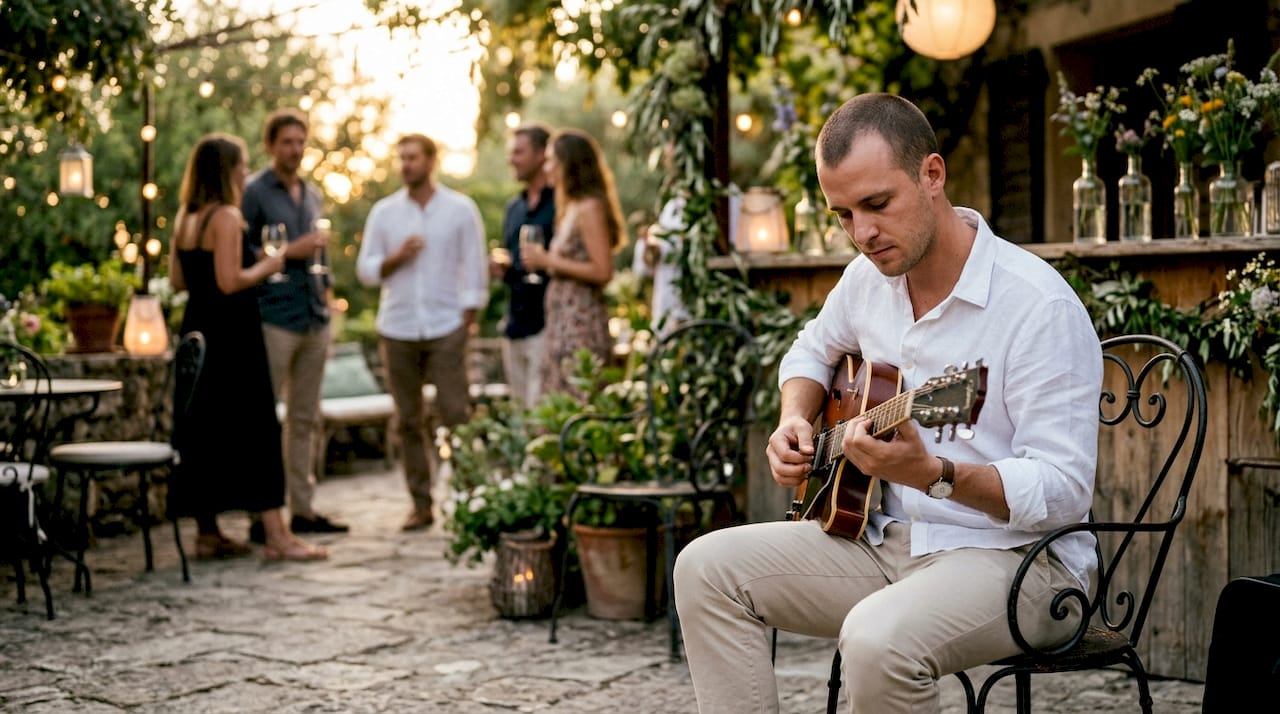
Processional (1–3 songs). This is the most emotionally charged moment of the ceremony. About 70% of modern couples now choose contemporary songs over classical standards for the processional. That shift reflects a broader move towards personal expression over tradition.
Cocktail hour (20–30 songs). This phase is a social bridge. Cocktail music works best when roughly 90% of tracks are familiar. Familiar songs create warmth and keep conversation flowing without forcing guests to raise their voices.
Dinner (25–35 songs). Volume drops and tempo slows. The goal is pleasant background music that supports conversation, not competes with it. Jazz, soul, and light R&B work particularly well here.
Dancing (40–60 songs). This is where energy peaks. Dance floor programming mixes familiar hits with well-chosen new tracks to sustain energy across a diverse crowd. The balance between recognition and novelty keeps guests on their feet.
| Segment | Song count | Key musical goal |
|---|---|---|
| Prelude | 10–15 | Warm welcome, low energy |
| Processional | 1–3 | Emotional peak, high focus |
| Cocktail hour | 20–30 | Social warmth, familiar tracks |
| Dinner | 25–35 | Conversational backdrop |
| Dancing | 40–60 | Energy, variety, crowd engagement |
2. How to build a moment map before choosing songs
Most couples make the same mistake: they start picking songs before they understand the shape of their day. Effective planning builds a moment map first, identifying the emotional purpose of each phase before a single track is chosen. That approach ensures music supports social interaction rather than just personal taste.
A moment map is a simple timeline. Write down each segment, its duration, and the feeling you want guests to have. Then choose music to serve that feeling. A song you love may not serve the moment. A song your guests love almost certainly will.
Once the map is in place, build two lists alongside your playlist:
- Must-play list. The 10–20 tracks that are non-negotiable. These are songs tied to specific moments, such as the first dance, the father-daughter dance, or a track that defines your relationship.
- Do-not-play list. Songs that would genuinely upset you or your guests. Share this clearly with your band or DJ. Clear communication of both lists prevents last-minute mishaps and keeps the event aligned with your vision.
Pro Tip: Keep your must-play list to 20 songs maximum. A longer list removes the flexibility your performers need to read the room and respond to what guests actually want in the moment.
3. How to curate a playlist that balances personal taste and guest enjoyment
Personal taste and guest enjoyment are not opposites. They become opposites only when couples treat the playlist as a personal concert rather than a shared experience. The fix is sequencing.
Music sequencing means ordering tracks so the energy builds, dips, and rises again in a way that feels natural. Professional music programmers manage tempo, volume, and song order to create intentional emotional arcs. The result is a playlist guests feel but rarely notice consciously. That invisibility is the goal.
For couples who want to include niche or personal tracks, the dinner segment is the right place. Guests are seated, relaxed, and receptive. A song that means everything to you but nothing to your guests lands far better over dinner than on the dance floor. Save the universally loved tracks for dancing.
Involving your performers in the curation process pays off. A live band or experienced DJ brings knowledge of what actually works in a room. Share your moment map, your must-play list, and your do-not-play list. Then trust their professional judgement on sequencing and transitions.
4. What role do live music and DJs play in enhancing guest experience?
Live music and DJs serve different functions, and the best weddings often use both. A live band creates energy that a recording cannot replicate. The physical presence of musicians, the visual spectacle, and the spontaneous interaction with the crowd all contribute to a heightened atmosphere. Brownsugarmusic’s two decades of live performance experience show exactly how a band reads a room and adjusts in real time.
A DJ offers breadth. No live band can cover every genre or decade with equal authority. A DJ can pivot instantly from Motown to current pop to 90s R&B without a break in momentum. Smooth transitions without awkward silence are critical for maintaining guest comfort and energy, particularly during meals and speeches.
The most effective wedding music setups treat live bands and DJs as partners, not alternatives. When coordinated properly, a band handles the high-energy performance moments while a DJ covers transitions, background sets, and genre shifts. Pre-production planning ensures smooth handoffs and consistent energy throughout the reception.
Coordination is the key word. Live bands and DJs complement each other when the handoffs are planned in advance. Discuss the exact moments when each takes over. Agree on volume levels for each segment. Brief both parties on the moment map and the must-play list. That preparation removes the risk of dead air or jarring tonal shifts.
For couples considering a combined setup, a practical structure is: live band for cocktail hour and the first hour of dancing, DJ for dinner background and the later dance floor sets. This gives guests the spectacle of live performance at the moments they are most attentive, and the flexibility of a DJ when the crowd needs variety.
5. Advanced tips for personalising the wedding music experience
Once the fundamentals are in place, several approaches can deepen guest engagement further.
- Crowd-sourced song requests. Allow guests to submit requests in advance through your wedding website or RSVP card. Curate the responses and pass a shortlist to your performers. This gives guests a sense of ownership without handing over full control. A guide to handling guest music requests can help you set clear boundaries with your band.
- Demographic weighting. Map your guest list by age group. If 40% of guests are over 55, the dance floor set needs a stronger proportion of tracks from the 1970s and 1980s. If the crowd skews younger, current R&B and pop should dominate. Adjust the ratio, not the overall structure.
- Bridging generation gaps. Choose songs that cross generational lines. Tracks by artists like Stevie Wonder, Aretha Franklin, and Michael Jackson work across age groups because they are culturally embedded. Indian classical music offers another example of ceremony music that carries deep cultural resonance and suits a formal, reverent atmosphere for multicultural weddings.
- Live performance highlights. Plan two or three specific moments where the live band delivers something unexpected. A stripped-back acoustic version of a pop song, a guest invited to sing, or a surprise cover of a track the couple loves. These moments become the stories guests tell afterwards.
- Song voting apps. Several event planning platforms allow guests to vote on songs in real time during the reception. Use this selectively. Give guests a curated shortlist to vote from, not an open field. This keeps the energy focused while making guests feel involved.
Pro Tip: Brief your band or DJ on the three or four guests who are most likely to get the dance floor moving. Experienced performers watch for those people and time their energy peaks to match.
6. How wedding photo booths and music work together
Guest engagement does not live in music alone. Photo booths, for example, create a physical activity that draws guests together during quieter music moments, such as dinner or the early cocktail hour. When the booth is positioned near the dance floor, it also acts as a social magnet that pulls guests back into the energy zone as dancing begins. Pairing a well-timed music shift with the opening of a photo booth is a simple coordination trick that experienced event producers use to sustain momentum through the middle section of a reception.
Key takeaways
Deliberate music planning, built around a moment map and clear communication with performers, is the most reliable method for maximising guest engagement and emotional impact at a wedding.
| Point | Details |
|---|---|
| Build a moment map first | Plan the emotional purpose of each segment before choosing any songs. |
| Use a must-play and do-not-play list | Limit must-plays to 20 tracks to preserve performer flexibility and responsiveness. |
| Match music to segment function | Cocktail hour needs familiar tracks; dance floor needs a balance of hits and novelty. |
| Coordinate live bands and DJs | Plan handoffs in advance to avoid dead air and maintain consistent energy. |
| Weight the playlist by guest demographics | Adjust genre and era ratios to reflect the actual age spread of your guest list. |
What I have learned from years of wedding music
A perspective from Deni
Most couples spend more time choosing table centrepieces than they do planning the music sequence. That is the wrong priority. Centrepieces are noticed for about 30 seconds. Music is felt for the entire day.
The weddings that stay with me are the ones where the music was treated as a living, responsive thing rather than a fixed programme. The couple had done the work: a clear moment map, a tight must-play list, and a genuine conversation with the performers about the crowd. Then they let the band do its job.
What I have seen go wrong, repeatedly, is couples who hand over a 60-song setlist and expect it to be played in order. That approach removes the one thing that makes live music worth having: the ability to read the room and respond. A great band or DJ is not a jukebox. They are reading body language, watching the dance floor, and making decisions in real time. Your job is to give them the right information and then trust them.
The emotional payoff, when it works, is unmistakable. Guests who felt connected to the music talk about the wedding for years. They do not remember the flowers. They remember the song that came on just as the dance floor filled up, and the feeling in the room at that exact moment. That is what you are planning for.
— Deni
Brownsugarmusic: live music for your wedding day
Brownsugarmusic has been performing at Sydney weddings since 2003, bringing R&B and soul to receptions across Australia and internationally. The band’s residency at the Hilton Sydney’s Marble Bar for over 20 years reflects a level of consistency and crowd-reading ability that translates directly to wedding performance.
Couples who book Brownsugarmusic receive a consultation process that covers moment mapping, must-play and do-not-play lists, and segment-specific music planning. The band’s R&B soul wedding atmosphere guide is a practical starting point for couples thinking about how soul and R&B can shape the energy of their reception. Bookings fill quickly, particularly for summer dates. Reaching out early gives you the best chance of securing a personalised planning process before your date is gone.
FAQ
How many songs does a wedding playlist need?
A complete wedding music plan requires 150–200 songs across all segments, from the prelude through to the final dance set.
What music works best for the cocktail hour?
Cocktail hour music should be roughly 90% familiar tracks. Familiar songs create warmth and keep conversation flowing without forcing guests to raise their voices.
Should I give my band or DJ a full setlist?
No. A must-play list of 10–20 songs gives performers the flexibility to read the room while guaranteeing your most important tracks are played.
How do live bands and DJs work together at a wedding?
Live bands and DJs complement each other when handoffs are planned in advance. A common structure is live band for cocktail hour and peak dancing, with a DJ covering dinner and later sets.
What is a moment map and why does it matter?
A moment map is a timeline that assigns an emotional purpose to each wedding segment before any songs are chosen. Building a moment map first ensures music supports social flow rather than just personal preference.