

A wedding band dress code guide is the planning tool that aligns your live band’s appearance with your wedding’s formality, venue, and overall atmosphere. Most couples spend months choosing flowers, menus, and table settings, yet overlook the visual impact of the performers on stage. A band in mismatched outfits breaks the spell of an otherwise polished event. Sharp, coordinated attire raises the energy of the entire room and encourages guests onto the dance floor. Brownsugarmusic, Sydney’s resident R&B and soul band at the Hilton’s Marble Bar since 2003, confirms that dress code coordination is one of the most overlooked details in wedding planning.
What does a wedding band dress code guide cover?
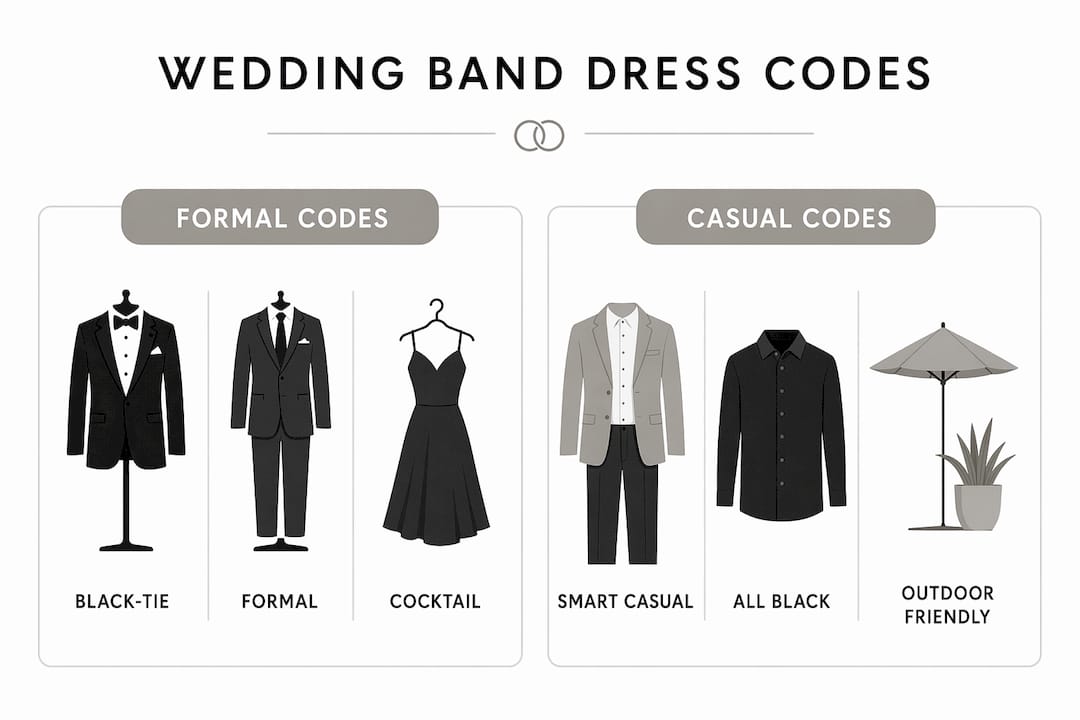
A wedding band dress code defines the expected attire standard for every performer, matched to the formality level of the ceremony and reception. The four standard categories used across the live music industry are black-tie, formal, cocktail, and smart casual. Each carries distinct expectations for suits, accessories, and fabrics. Getting this right before the wedding day prevents awkward last-minute negotiations with your band leader.
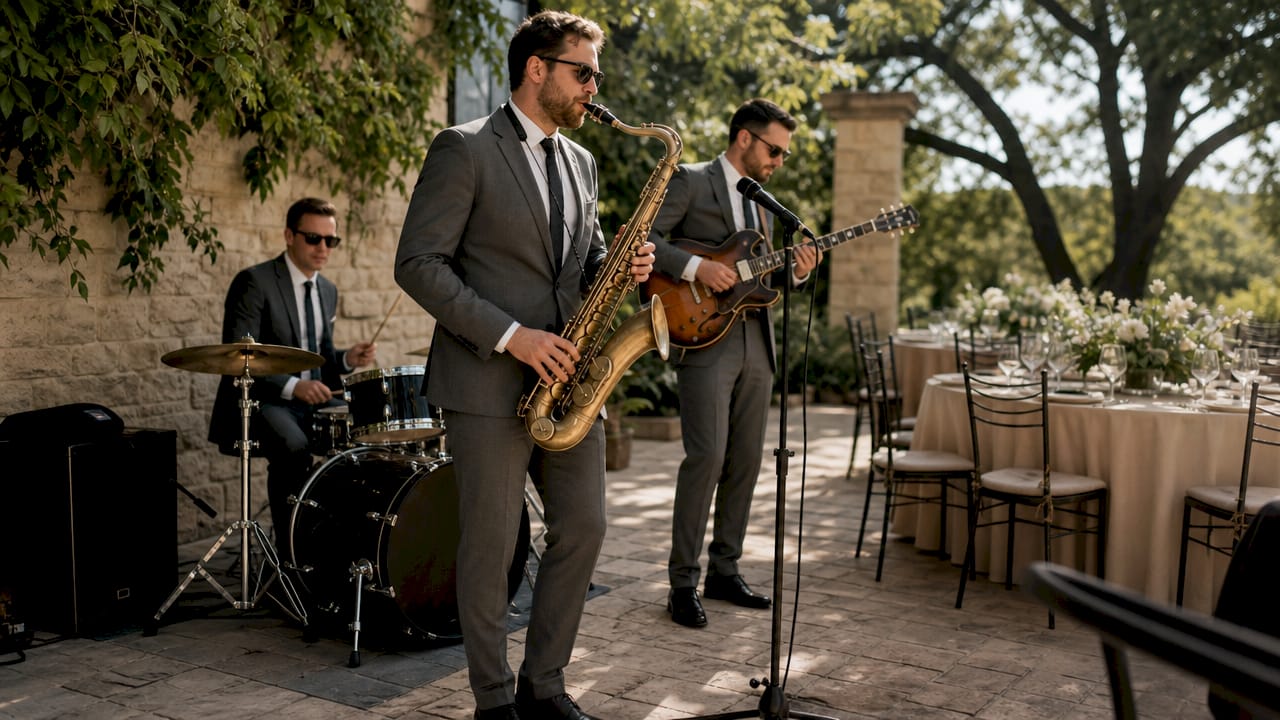
Black-tie
Black-tie requires tuxedos or white-tie formal wear. This is the correct standard for evening weddings held in grand ballrooms, heritage hotels, or luxury venues. Bow ties, cummerbunds, and polished dress shoes are expected. No exceptions for individual band members.
Formal
Formal weddings call for dark suits in black, navy, or charcoal. Ties are required. This category suits afternoon or early evening receptions at upscale restaurants, wineries, or boutique venues. It is the most common dress code request Brownsugarmusic receives for Sydney weddings.
Cocktail
Cocktail attire permits lighter suits, blazers with tailored trousers, or elegant ensembles for female performers. Ties are optional. This works well for garden parties, rooftop receptions, and relaxed yet stylish celebrations. The key is that every performer looks intentional and coordinated, not casual.
Smart casual
Smart casual allows chinos, button-down shirts without ties, and clean leather shoes. This is appropriate for daytime beach weddings, relaxed outdoor ceremonies, or informal celebrations. The standard still requires a polished, put-together look. Jeans, trainers, and untucked shirts fall outside any professional band dress code.
| Dress code | Typical attire | Best suited for |
|---|---|---|
| Black-tie | Tuxedos, bow ties, dress shoes | Grand ballrooms, luxury evening events |
| Formal | Dark suits, ties, dress shoes | Upscale restaurants, winery receptions |
| Cocktail | Lighter suits, optional ties | Garden parties, rooftop venues |
| Smart casual | Chinos, button-down shirts | Beach weddings, daytime ceremonies |
Pro Tip: Send your band a photo of your venue and your own wedding attire. Seeing the setting and the couple’s style gives performers a clear visual reference that words alone cannot provide.
How to communicate dress codes with your wedding band
Clear communication prevents the most common dress code failures at weddings. A final coordination meeting scheduled 1–2 weeks before the event is the standard practice among professional wedding bands. This meeting confirms attire, stage setup, and any last-minute changes to the programme. Skipping it is the single biggest cause of avoidable surprises on the day.
Follow these steps to get the conversation right:
Confirm the formality level in writing. State the dress code category clearly in your booking contract. Verbal agreements are forgotten. A written record protects both parties.
Share visual references. Send colour palettes, mood boards, or photos of your venue. A band leader who can see the aesthetic will make better choices about suit colours, accessories, and overall presentation.
Discuss accessories and grooming. Specify whether ties, pocket squares, or matching colours are required. Grooming standards, such as neat hair and clean shoes, are worth mentioning explicitly for large ensembles.
Address adaptive and religious attire needs. A professional band dress code policy includes provisions for religious head coverings, modest dress requirements, and other personal needs. Raise these early so no performer feels excluded or uncomfortable.
Confirm equipment appearance. Polished, modern gear is part of the overall visual impression. Ask whether the band uses cable management, branded equipment covers, or lighting rigs that complement the venue’s aesthetic.
Schedule the final walk-through. Use the 1–2 week meeting to confirm every detail. This is also the time to raise any changes to the venue layout, lighting conditions, or guest expectations that might affect what the band wears.
Pro Tip: Ask your band leader to send a photo of the planned outfits before the wedding day. A quick image confirmation takes two minutes and eliminates all guesswork.
Brownsugarmusic builds this coordination meeting into every wedding booking. It is not optional. That discipline is one reason the band has maintained its residency at the Hilton Sydney for over two decades.
How does venue and ceremony style affect band attire?
Venue conditions directly shape what a band can and should wear. An outdoor summer wedding in Sydney is a very different environment from a candlelit ballroom in winter. Ignoring these conditions leads to uncomfortable performers and a visible drop in energy during the reception.
For outdoor venues, breathable, performance-oriented fabrics are the practical choice. Lightweight wool, linen blends, and moisture-wicking dress shirts keep performers sharp without overheating. Heavy traditional suits are being replaced across the live music industry by fabrics that maintain a polished look while allowing free movement. This matters especially for high-energy R&B and soul performances where musicians move constantly.
Religious and cultural ceremonies require additional thought. Some venues prohibit bare arms or require head coverings. A professional band accommodates these requirements without compromising the overall uniform standard. Raise any such requirements during the initial booking conversation, not the week before the wedding.
Venue lighting also influences colour choices. Dark navy suits read as near-black under warm amber lighting, which can flatten the visual contrast between performers. Lighter suits in grey or beige stand out more clearly under the same conditions. If your venue uses dramatic uplighting or coloured wash lighting, discuss this with your band leader so attire choices work with the light rather than against it.
- Indoor ballrooms: Dark suits or tuxedos work well. Lighting is controlled and predictable.
- Outdoor gardens: Breathable fabrics and lighter colours suit warm conditions. Avoid heavy wool.
- Beach or coastal venues: Smart casual is appropriate. Linen suits and loafers are a practical standard.
- Religious venues: Confirm modesty requirements in advance. Long sleeves and covered shoulders may be required.
- Rooftop venues: Wind and temperature changes are unpredictable. Layering options help performers stay comfortable and polished.
Pro Tip: For outdoor summer weddings, ask your band whether they have a lightweight suit option. A band that plans for the climate will perform better and look sharper throughout the night.
Thinking about how wedding band stage requirements interact with venue conditions is equally useful. Stage placement, power access, and surface type all influence what performers can comfortably wear and how they move.
What are the most common band dress code challenges at weddings?
Even well-planned dress codes encounter problems. The most frequent issue is a band member arriving in attire that does not match the agreed standard. This is not always intentional. Miscommunication, last-minute wardrobe failures, and differing interpretations of “formal” all contribute.
Clear, inclusive dress code policies reduce the risk significantly. Policies that specify exact garments, colours, and accessories leave no room for interpretation. Vague instructions like “dress smartly” produce inconsistent results across a six-piece ensemble.
| Challenge | Solution |
|---|---|
| Band member arrives out of dress code | Request a backup outfit or agree on a compromise that maintains visual unity |
| Individual comfort conflicts with uniform standard | Adopt an all-black dress code for flexibility without sacrificing cohesion |
| Last-minute wardrobe failure | Ask the band to confirm outfits via photo 48 hours before the event |
| Misunderstanding of formality level | Specify exact garments in the contract, not just the category name |
| Equipment appearance clashes with venue | Discuss gear presentation during the coordination meeting |
The all-black dress code deserves special mention. An all-black uniform outperforms traditional gendered or white-tie dress codes for live bands because it delivers visual unity across diverse body types and movement styles. It is inclusive, practical, and consistently professional. Many of Sydney’s most experienced wedding bands default to all-black precisely because it solves most dress code conflicts before they arise.
Pro Tip: Include a dress code clause in your band contract that specifies the exact category, any required colours, and a photo confirmation deadline. This single step prevents the majority of day-of dress code issues.
Key takeaways
A wedding band’s attire is a direct extension of your wedding’s formality, and confirming dress codes 1–2 weeks before the event is the most effective way to prevent day-of surprises.
| Point | Details |
|---|---|
| Match attire to formality level | Choose from black-tie, formal, cocktail, or smart casual based on your venue and ceremony style. |
| Confirm in writing | State the exact dress code category and garment expectations in your booking contract. |
| Schedule a coordination meeting | Book a final walk-through 1–2 weeks before the wedding to confirm all attire and stage details. |
| Consider venue conditions | Outdoor and warm-weather venues require breathable fabrics; indoor venues suit darker, heavier suits. |
| Use all-black as a fallback | An all-black dress code provides unity, comfort, and professionalism across any ensemble size. |
What I have learnt after 20 years of wedding performances
After performing at weddings across Sydney and internationally for over two decades, I have one clear observation: couples who brief their band on attire get a better show. Not because musicians cannot dress themselves, but because context changes everything. A band that knows it is playing a black-tie ballroom reception at the Hilton prepares differently from one heading to a garden party in the Blue Mountains.
The detail most couples miss is equipment presentation. Band gear appearance is part of the visual dress code. A beautifully dressed six-piece band standing behind tangled cables and mismatched speaker stands undermines the entire aesthetic. At Brownsugarmusic, we treat our stage setup as part of our uniform. Clean lines, matched equipment, and tidy cable runs are non-negotiable.
The shift toward breathable fabrics has also changed what is possible on stage. Performance-friendly materials mean a band can play a three-hour R&B set in a formal suit without wilting by the second set. That matters for your guests. A comfortable band plays better, moves more freely, and brings more energy to the room.
My honest advice: do not treat the dress code conversation as an afterthought. Raise it at booking, confirm it in writing, and verify it with a photo before the day. The couples who do this never have problems. The ones who assume the band will “figure it out” occasionally get a surprise they cannot fix.
— Deni
Brownsugarmusic: professional attire and live wedding performance
Brownsugarmusic has performed at weddings across Sydney and around the world since 2003. Every booking includes a dedicated coordination meeting to confirm dress code, stage setup, and performance details before the wedding day.

The band’s standard is formal attire matched to your event’s requirements, with full flexibility across black-tie, formal, cocktail, and smart casual categories. Equipment presentation is treated as part of the dress code. For couples planning a polished wedding atmosphere with live R&B and soul music, Brownsugarmusic offers a complete performance package that covers music, attire, and stage presentation. Use the wedding band performance checklist to prepare your brief before getting in touch.
FAQ
What is the standard dress code for a wedding band?
The most common standard is a formal dark suit with a tie, matched to the wedding’s formality level. Black-tie events require tuxedos; smart casual events permit chinos and button-down shirts.
When should I discuss dress code with my wedding band?
Raise the dress code at the time of booking and confirm it during a final coordination meeting scheduled 1–2 weeks before the wedding day.
What is an all-black dress code for a band?
An all-black dress code requires every performer to wear black from head to toe, in any combination of suits, shirts, and trousers. It delivers visual unity across diverse body types and is widely used by professional wedding bands.
How do I handle a band member who arrives out of dress code?
Request a backup outfit or negotiate a compromise that maintains visual consistency across the ensemble. Including a dress code clause with a photo confirmation deadline in your contract prevents this situation in most cases.
Does band equipment appearance matter at a wedding?
Band gear is part of the overall visual impression. Clean, modern sound and lighting equipment with tidy cable management complements the band’s attire and the venue’s aesthetic. Discuss equipment presentation during your coordination meeting alongside attire expectations. Couples planning elegant wedding entertainment should treat stage presentation as part of the dress code brief.