

Wedding bands learn custom songs through a structured process of advance arrangement, rehearsal, and close collaboration with the couple. This is not a casual task. Live bands must arrange music for every instrument in the group, then rehearse together until the performance feels natural and confident. Understanding this process helps you plan your wedding music realistically and get the best possible result from your band.
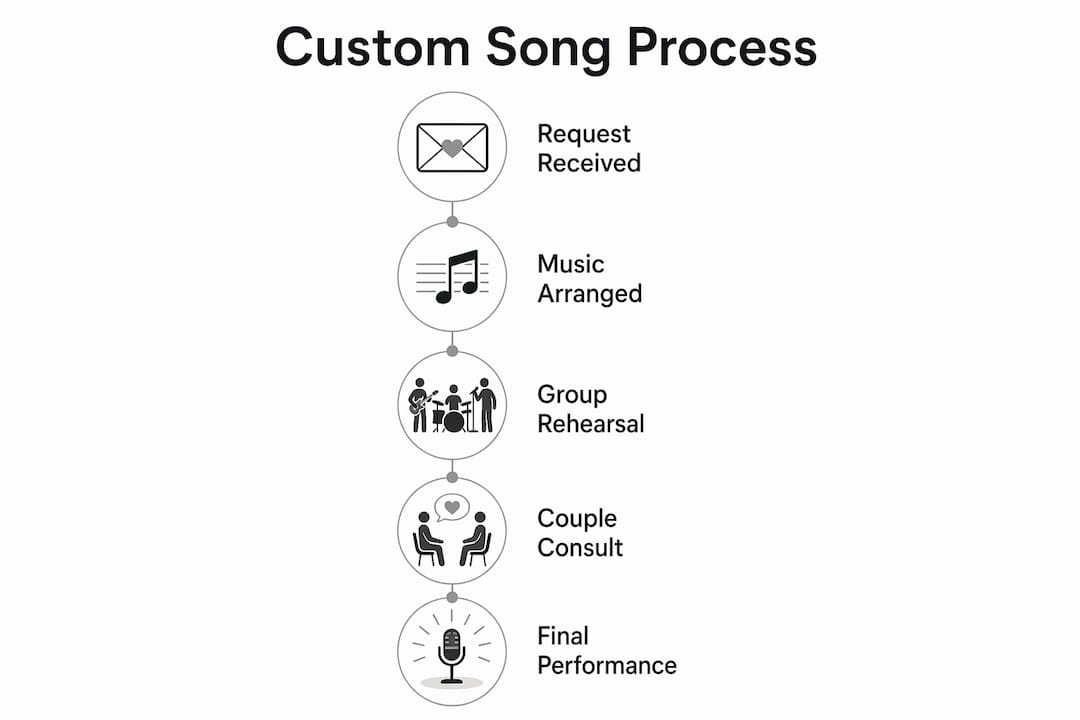
How wedding bands learn custom songs: the step-by-step process
The process of learning a custom song starts the moment a couple submits their request. Bands do not simply press play on a track. Every part, from bass to vocals, must be written out, learnt, and rehearsed as a group.
Step 1: Receiving the request with enough notice
Timing is the single most important factor in this process. Most bands advise giving at least 3 months’ notice for special song requests. That window allows the band to source or write an arrangement, distribute parts to each musician, and schedule dedicated rehearsal time before the wedding date.
Submitting a request too late puts the band under pressure. A pressured performance rarely sounds as polished as one that has been properly prepared. If your wedding is less than 8 weeks away and you have not yet confirmed your custom song, contact your band immediately.
Step 2: Arranging the music for all instruments
Arrangement is where the real work begins. A professional arranger, or a musically experienced band member, transcribes the song into individual parts for guitar, bass, keyboards, drums, and vocals. This is not a quick task. A single arrangement can take several hours depending on the complexity of the original recording.
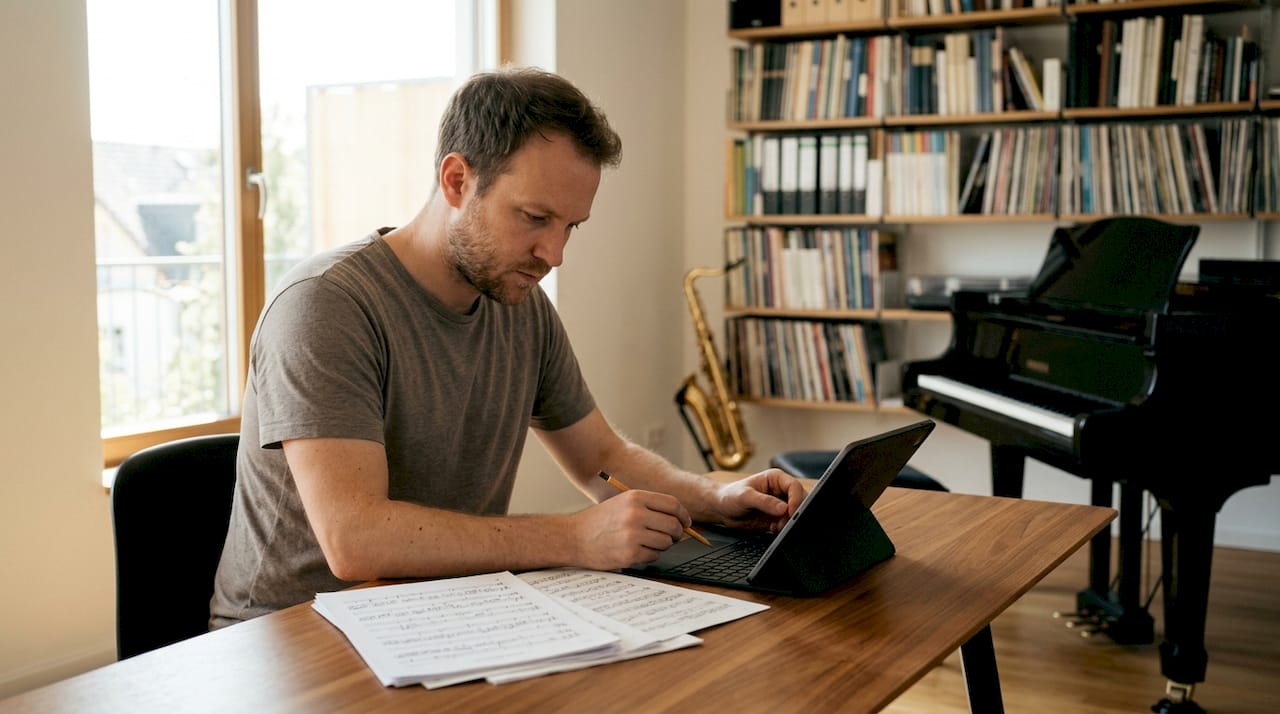
The arrangement also involves creative decisions. The band may adjust the key to suit the vocalist, alter the tempo slightly for a live feel, or simplify a studio production that relies heavily on electronic elements. These choices shape how the song sounds on the night.
Pro Tip: Share a recording of your chosen song with the band as early as possible. If you have sheet music or chord charts, include those too. The more reference material the band has, the closer the live version will match your expectations.
Step 3: Rehearsing as a group
Individual practice comes first, then the band rehearses together. Group rehearsal is where the arrangement becomes a performance. Musicians listen to each other, adjust dynamics, and work out transitions. This stage takes time and cannot be rushed.
Arrangement and rehearsal is time-consuming and requires coordination across the whole band. That coordination is what separates a live band from a DJ. It is also why custom song learning carries a cost and a timeline.
Step 4: Communicating with the couple
Good bands check in with couples before finalising the arrangement. They confirm the preferred key, the mood, whether the song should be instrumental or include full vocals, and any specific moments in the song that matter most. This dialogue prevents surprises on the wedding day.
You can read more about how to structure this conversation in Brownsugarmusic’s guide on briefing your wedding band effectively.
What does it cost to add extra custom songs?
Most couples are surprised to learn that custom song learning is not unlimited. Most wedding bands include 1 to 2 custom song requests for free, usually covering the first dance. Additional songs cost approximately £50 to £100 each.
That cost reflects real labour. Each extra song requires a new arrangement and additional rehearsal time. The price also varies based on band size. A six-piece band with a horn section requires more arrangement work than a four-piece group. Complexity of the original track matters too. A stripped-back acoustic ballad is far simpler to arrange than a layered Motown production.
Key points to keep in mind when budgeting for custom songs:
- Standard inclusion: Most packages cover 1 to 2 songs, typically the first dance and sometimes the last dance.
- Extra song cost: Budget approximately £50 to £100 per additional song, though this varies by band.
- Band size: Larger bands with more instruments cost more to arrange for.
- Arrangement complexity: Songs with intricate harmonies or unusual structures take longer to prepare.
- Timing: Requests submitted late may incur a rush fee or may not be possible at all.
Discuss your full list of custom songs with the band at the time of booking. Leaving this conversation until a month before the wedding limits your options and may increase costs.
For a broader view of how custom song requests work across different wedding music formats, the planning considerations are largely consistent regardless of the instrument or ensemble.
How do bands balance guest requests with your custom songs?
Guest song requests are a normal part of any wedding reception. Managing them well requires a clear structure agreed between the couple and the band before the event.
Bands recommend that couples provide must-play and do-not-play lists to help curate a cohesive setlist and maintain the desired atmosphere. These lists give the band a clear framework. They know which songs are non-negotiable and which genres or tracks to avoid entirely.
Pro Tip: Set up a digital request system before the wedding. Guest requests collected in advance via QR codes or pre-show forms allow the band to filter requests before the event, reducing on-the-spot confusion and keeping the set flowing.
A typical two-hour wedding band set contains 30 to 40 songs drawn from various decades. That breadth means bands can often accommodate guest requests from their existing repertoire without learning anything new on the night. The challenge is sequencing those requests so the energy stays consistent.
Here is how experienced bands manage the balance:
- Couples submit must-play and do-not-play lists at least four weeks before the wedding.
- Guests submit requests in advance through a digital form or QR code at the venue.
- The band filters guest requests against the couple’s preferences and their own repertoire.
- On the night, the band reads the room and adjusts the set order to maintain energy.
- Custom songs for the couple take priority over guest requests at key moments.
Experienced bands advise managing guest requests carefully to avoid disrupting the event’s atmosphere. The couple’s vision leads. Guest requests fill the gaps. For a full breakdown of how this works in practice, Brownsugarmusic has a detailed guide on managing guest music requests at weddings.
What practical steps help your custom song sound its best?
Getting a custom song right is a shared responsibility. The band brings the musical skill. You bring the clarity and the advance notice.
- Give at least 3 months’ notice. This is the single most effective thing you can do. It gives the band time to arrange, rehearse, and refine the performance without pressure.
- Share a reference recording. Send the original track along with your request. Note any specific version you prefer, such as a live recording or an acoustic cover, if that is closer to the feel you want.
- Discuss the arrangement style. Tell the band whether you want the song to feel intimate and stripped back, or full and energetic. These decisions affect how the arrangement is written.
- Clarify vocals versus instrumental. Some couples want a full vocal performance. Others prefer the song played instrumentally during a key moment. Both are valid. The band needs to know which you want.
- Trust the band’s expertise. Bands recommend trusting their expertise in arranging and sequencing songs to ensure smooth transitions and a sustained atmosphere. A live performance will never be identical to a studio recording. That is not a flaw. It is what makes it memorable.
- Confirm details in writing. After your conversation, send a brief summary email confirming the song title, the arrangement style, and any specific preferences. This protects both parties.
Close collaboration between couples and bands produces the most personalised and memorable performances. The more clearly you communicate your vision, the more precisely the band can deliver it. You can also explore Brownsugarmusic’s guide on requesting songs for your band for further practical advice.
Key takeaways
Wedding bands learn custom songs through a structured process of arrangement, rehearsal, and communication. The earlier you engage with your band, the better the result.
| Point | Details |
|---|---|
| Give advance notice | Submit custom song requests at least 3 months before the wedding. |
| Understand what is included | Most packages cover 1 to 2 custom songs; additional songs cost approximately £50 to £100 each. |
| Provide clear references | Share recordings, chord charts, and arrangement preferences to guide the band. |
| Use must-play and do-not-play lists | These lists help the band balance your priorities with guest requests. |
| Trust the band’s judgement | Giving musicians some flexibility results in better flow and a more enjoyable event. |
What I have learnt from years of custom song requests
After more than two decades performing at weddings, I have seen every version of this conversation. Couples who communicate early and clearly always get the best result. Couples who leave it to the last minute, or assume the band already knows their favourite song, often end up disappointed.
The most common misconception I encounter is that learning a custom song is simply a matter of listening to the track a few times. It is not. Arranging a song for a full live band takes real skill and real time. When couples understand that, they approach the process as a collaboration rather than a transaction. That shift in mindset changes everything.
The other thing I would say is this: trust the musicians. A professional band has performed hundreds of weddings. They know how a song needs to feel in a room full of people, and that is different from how it sounds through headphones. The live version may not be note-for-note identical to the original. It will, however, be alive in a way that a recording never can be.
— Deni
Brownsugarmusic and your custom wedding songs
Brownsugarmusic has been performing at Sydney weddings since 2003, with a residency at the Marble Bar in the Hilton Sydney that spans over 20 years. Custom song learning is a standard part of how the band prepares for every wedding.
Standard packages include 1 to 2 custom songs, typically the first dance. The band works directly with couples to arrange each song for a full R&B and soul ensemble, covering everything from key and tempo to vocal style. Couples who want to explore the full range of elegant wedding entertainment options can find more on the Brownsugarmusic website. For couples drawn to a specific sound, the guide to R&B soul wedding atmosphere explains how the genre translates to a live reception setting.
FAQ
How far in advance should I request a custom song?
Most bands advise giving at least 3 months’ notice for custom song requests. This allows time for arrangement, group rehearsal, and any adjustments before the wedding date.
How many custom songs does a wedding band typically include?
Most wedding bands include 1 to 2 custom songs in their standard package, usually the first dance. Additional songs cost approximately £50 to £100 each depending on the band’s size and the complexity of the arrangement.
Can a band learn any song I request?
Most professional bands can learn a wide range of songs, but some tracks are more difficult to arrange for a live ensemble than others. Discuss your request early so the band can confirm whether it is achievable within your timeline.
How do I make sure the live version sounds close to the original?
Share the original recording with the band and discuss the arrangement style, key, tempo, and vocal approach. The closer your brief, the closer the result. Trusting the band’s expertise on live adaptation also helps.
What is a must-play and do-not-play list?
A must-play list tells the band which songs are non-negotiable for your wedding. A do-not-play list tells them which tracks or genres to avoid. Both lists help the band build a setlist that reflects your preferences while managing guest requests.