

Wedding music curation is the intentional process of selecting, sequencing, and timing music to create a cohesive emotional soundtrack across every phase of a wedding day. It goes well beyond assembling a playlist. Effective curation considers the couple’s personal taste, the guest demographic, the event timeline, and the emotional arc of each moment, from the ceremony processional to the final dance. Couples and event planners who understand what is wedding music curation gain a clear advantage: they produce weddings where the music feels purposeful, not accidental. Brownsugarmusic, Sydney’s resident R&B and soul band since 2003, has shaped that experience at countless weddings across Australia and beyond.
What is wedding music curation and how does it differ from a playlist?
Wedding music curation is the structured design of a musical experience, not simply a list of favourite songs. The industry term for this practice is “music programming,” and it treats each segment of the day as a distinct emotional chapter requiring its own sound.
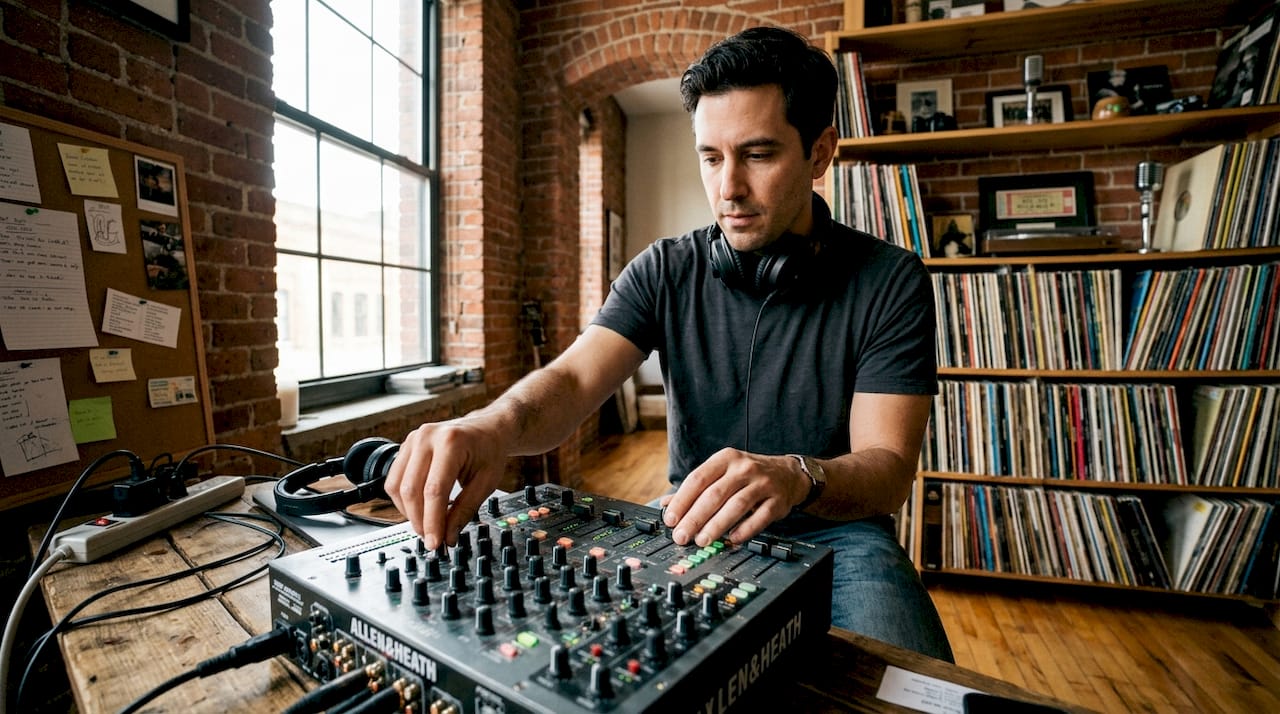
A casual playlist is a collection. Curated wedding music is a sequence with intention behind every transition. Music curation creates an emotional arc that guests sense without noticing, through changes in pacing, volume, and energy. That invisibility is the point. When it works, guests feel the mood shift naturally.
The practical differences are significant:
- Emotional pacing. Curated music rises and falls with the event. Dinner music sits at lower volume to allow conversation. Dance floor tracks build in energy as the night progresses.
- Must-play and do-not-play lists. Professional frameworks include ranked song priorities and firm exclusions, not just a shuffle queue.
- Timing alignment. Each song is matched to a specific moment: prelude, processional, first dance, cake cutting, last song.
- Real-time adaptability. A live performer or skilled DJ reads the room and adjusts. A static playlist cannot.
- Guest demographic awareness. Curated selections account for age ranges, cultural backgrounds, and shared musical references across the guest list.
Pro Tip: Build your must-play list first, then fill the gaps. Starting with your non-negotiables gives the entire programme a clear emotional spine.
The most common misconception is that personal taste alone should drive every choice. High-performing playlists are built for the room, not only for the couple’s personal style. That distinction separates a memorable wedding from one where the dance floor empties by 9pm.
How to plan and organise wedding music curation effectively
Effective planning starts with numbers. A standard 4–5 hour reception requires around 75–100 songs, plus a 20% surplus to cover extended moments or repeated requests. That surplus matters because live events rarely run to the minute.
Break the day into segments and assign song counts to each:
- Ceremony prelude. Aim for 5–8 songs playing as guests are seated, typically 20–30 minutes of music.
- Processional and recessional. Choose 1–2 songs each. These are the most emotionally charged selections of the day.
- Cocktail hour. Plan for 20–25 songs per hour. Upbeat but not loud. Background jazz, soul, or acoustic pop works well here.
- Dinner. Another 20–25 songs per hour, at lower volume to support conversation.
- Reception and dancing. Build energy progressively. Start with mid-tempo crowd pleasers, then move to high-energy tracks as the floor fills.
Once song quantities are clear, build your lists in this order:
| List type | Purpose | Recommended size |
|---|---|---|
| Must-play list | Non-negotiable songs for key moments | 10–15 songs |
| Priority ranked list | Preferred songs for DJ or band to draw from | 40–50 songs |
| Do-not-play list | Songs to exclude entirely | As many as needed |
| Filler pool | Background and ambient options | 30–40 songs |
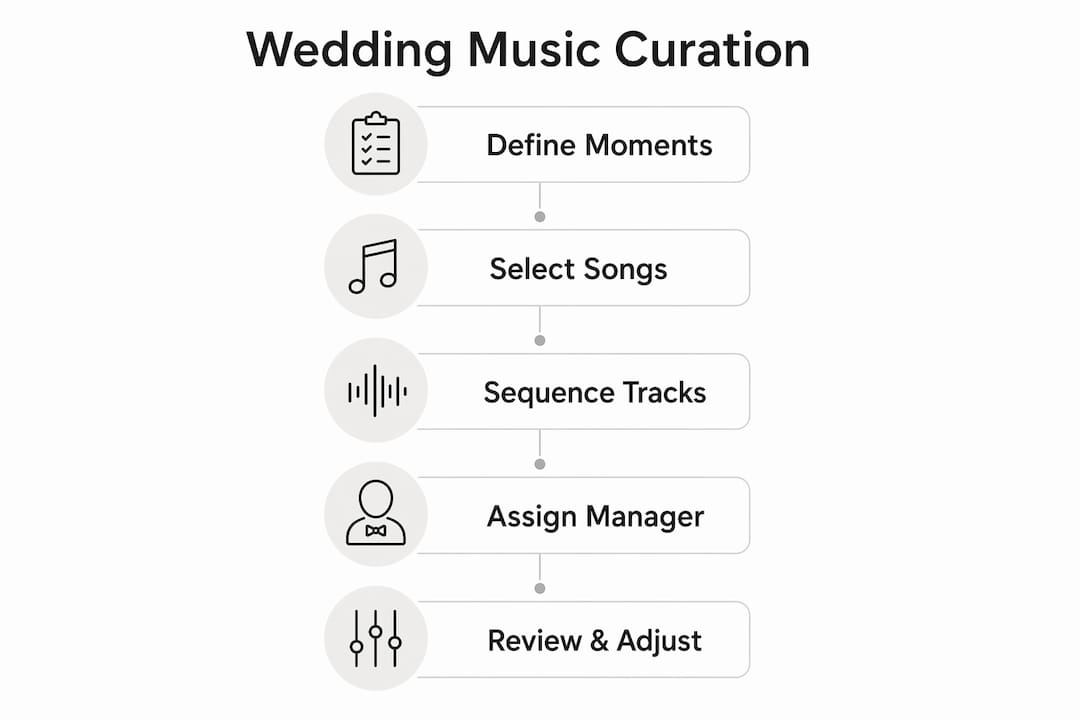
Professional DJs prefer 40–50 ranked must-play songs and a clear do-not-play list over a rigid chronological set list. That structure gives them room to read the room while still honouring your priorities.
For couples managing their own playlist, DIY planning requires 20–25% more music than the expected event duration. Set crossfade to 3–6 seconds to prevent awkward silences between tracks. Download everything for offline playback. Venue Wi-Fi is unreliable.
Pro Tip: Assign a dedicated playlist manager on the day. This person monitors the queue, handles timing adjustments, and steps in if something goes wrong. Do not leave it to chance.
A useful starting point for song ideas is this guide to songs every wedding band plays, which covers the tracks that consistently work across different guest groups.
How do you balance personal taste with guest preferences?
Personal songs carry meaning. They also carry risk. A track that defines a couple’s relationship may mean nothing to the 70-year-old guests at table three or the teenagers at table twelve. Effective curation holds both realities at once.
Successful wedding playlists balance personal taste with broad generational appeal to engage all guests. The practical approach is to anchor key moments with personal songs and fill the surrounding time with crowd-tested tracks. Use your first dance, the processional, and the last song for deeply personal choices. Use the cocktail hour and mid-reception period to serve the wider room.
Genre mixing is a proven technique for maintaining energy across age groups. A set that moves from Motown to 90s R&B to current pop hits covers three generations without feeling disjointed. Brownsugarmusic’s live sets at the Hilton Sydney’s Marble Bar demonstrate this weekly: the room stays full because the music speaks to everyone present, not just one demographic.
Collaboration with your entertainer also matters. Micromanaging playlists limits a DJ’s ability to read the room. Better results come from providing ranked must-play lists and trusting the professional to fill the gaps. That trust is not passive. It is an informed decision based on clear communication before the event. Brownsugarmusic recommends couples use a song request guide to structure that conversation clearly.
A few principles that hold across every wedding:
- Avoid niche tracks during peak dancing time. Save them for dinner or cocktails.
- Include at least two or three songs that every generation in the room will recognise.
- Ask your entertainer which songs consistently clear the dance floor. They know.
- Do not programme more than three slow songs in a row during the reception.
Live musicians and DJs versus pre-recorded playlists
The choice between live music, a DJ, and a self-managed playlist is not purely financial. Each option has a distinct functional profile that affects how well your curation plan actually works on the day.
Live musicians have a psychological advantage because they adjust tempo and timing in real time. If a bride pauses at the top of the aisle, a live musician holds the note. A recorded track moves on regardless. That adaptability makes live music the preferred choice for ceremonies, where timing is unpredictable and emotion runs high. For a deeper look at ceremony music types, the options range from string quartets to acoustic soloists to full bands.
Cocktail hour and dinner suit curated playlists well, but DJ or live band mixing is preferred for high-energy dance segments. A static playlist lacks real-time mixing. That gap shows when a song ends awkwardly or the energy drops at the wrong moment.
Pro Tip: Use a self-managed playlist for cocktail hour and dinner. Hire a professional for the dance floor. That split gives you control where it matters less and expertise where it matters most.
The benefits of a live band at your reception extend beyond sound quality. A live act creates visual energy, responds to crowd feedback, and builds moments that a playlist simply cannot manufacture. For couples weighing the decision, the wedding reception entertainment timeline is worth reviewing to understand how each format fits different parts of the day.
Key takeaways
Effective wedding music curation requires a structured plan, professional frameworks, and a clear balance between personal meaning and guest engagement.
| Point | Details |
|---|---|
| Curation is not a playlist | Music programming designs an emotional arc across every wedding segment, not just a song collection. |
| Plan song quantities by segment | A 4–5 hour reception needs 75–100 songs plus a 20% surplus across ceremony, cocktail, dinner, and dancing. |
| Use ranked lists, not rigid setlists | Provide 40–50 priority songs and a do-not-play list so professionals can read the room effectively. |
| Balance personal and crowd appeal | Anchor key moments with personal songs; fill surrounding time with generationally broad tracks. |
| Match the format to the moment | Live musicians suit ceremonies and dance floors; self-managed playlists work well for cocktail hour and dinner. |
Why curation is the detail most couples underestimate
I have watched weddings where the food was exceptional, the venue was stunning, and the music was an afterthought. Those are the weddings people struggle to describe the next day. They say it was “nice.” They cannot tell you why it felt flat.
Curated music is the difference between a wedding that guests remember and one they politely enjoyed. The emotional arc that good music programming creates is not something guests consciously notice. They just feel more connected, more willing to dance, more moved at the right moments. That is not an accident. It is the result of deliberate sequencing.
The couples who get this right are not necessarily the ones with the biggest budgets. They are the ones who treat music as a structural element of the day, not a decoration. They brief their entertainer properly. They build their lists with the guest list in mind, not just their own Spotify history. They trust the professional to fill the gaps.
The couples who struggle are the ones who hand over a 200-song playlist and assume the job is done. Curated wedding music shapes memories subtly rather than playing isolated favourites. That subtlety requires expertise, not just enthusiasm.
My honest advice: spend as much time on your music brief as you do on your menu. The food is forgotten by Tuesday. The music stays with people for years.
— Deni
Brownsugarmusic: live wedding music that works
Brownsugarmusic has performed at weddings across Sydney and around the world since 2003. The band brings over two decades of live experience to every event, reading the room in real time and adapting the set to keep guests engaged from the first song to the last.
Every wedding booking includes a consultation to build a personalised song list, covering must-play priorities, do-not-play exclusions, and segment-by-segment timing. Brownsugarmusic’s R&B and soul catalogue covers multiple decades and genres, giving couples the breadth to serve every guest at the table. For couples who want to understand how live soul music shapes a wedding atmosphere, the R&B soul wedding atmosphere guide is a practical starting point. To discuss your wedding date and music brief, contact Brownsugarmusic directly through the website.
FAQ
What is wedding music curation?
Wedding music curation is the structured process of selecting, sequencing, and timing music across every phase of a wedding day to create a cohesive emotional experience. It uses professional frameworks such as must-play lists, do-not-play lists, and segment-by-segment planning rather than a simple shuffle playlist.
How many songs do you need for a wedding?
A 4–5 hour reception requires 75–100 songs plus a 20% surplus, with an additional 3–5 songs specifically for ceremony moments such as the prelude, processional, and recessional.
When should I meet with my DJ or band to discuss music?
DJs and bands should ideally meet couples 4–6 weeks before the wedding to review must-play lists, do-not-play lists, and segment timing. Earlier conversations are better for complex or large weddings.
Is a live band better than a playlist for a wedding?
Live musicians adjust tempo and timing in real time, making them the stronger choice for ceremonies and dance floors. Self-managed playlists work well for cocktail hour and dinner where ambient background music is the goal.
How do you build a wedding song list?
Start with a ranked must-play list of 10–15 non-negotiable songs, then add 40–50 priority tracks and a clear do-not-play list. Assign songs to specific segments rather than treating the list as one continuous queue.