

Communicating vision to a wedding band means clearly conveying your music preferences, desired atmosphere, and emotional tone so the band can deliver a performance that feels personal to you. Done well, this process transforms a standard reception into something guests remember for years. Done poorly, it leaves your band guessing and your dance floor half empty. The good news is that clear, documented communication is a skill any couple can learn. This guide covers the preparation, the language, the step-by-step process, and the mistakes to avoid.
What does communicating vision to a wedding band actually involve?
Sharing your music vision is the industry term for the full briefing process between a couple and their live entertainment. It goes well beyond handing over a song list. The goal is to give your band enough context, both creative and logistical, to make real-time decisions that suit your day. Brownsugarmusic, which has performed at weddings across Sydney and around the world since 2003, describes this as the difference between a band that plays songs and a band that reads the room. The brief is what makes the latter possible.
What you need before briefing your wedding band
Preparation is the foundation of effective band communication. Without it, even the most talented musicians cannot deliver what you want.
Start early and centralise everything
Industry best practice recommends beginning consultations at least two months before your wedding date. That window gives both parties time to refine ideas, test alternatives, and confirm logistics without pressure. Starting late compresses every decision and removes the chance to course-correct.
All communication should go through a single channel. Documented conversations via email reduce the risk of missed details and give both sides a clear record to refer back to. Verbal agreements made over the phone or in person are easy to misremember.
Assign one point of contact
Designating one person from the couple as the sole contact prevents contradictory instructions reaching the band. When two people send separate messages with different preferences, the band has no way to know which to follow. Pick one person and keep all outgoing communication in their name.
Gather your materials before the first meeting
Before your first consultation, pull together the following:
- Venue details: name, address, room layout, and any acoustic restrictions
- Timeline: ceremony time, reception start, first dance, dinner, and finish time
- Budget notes: any agreed limits on set length or overtime charges
- Inspiration material: playlists, mood boards, or reference tracks that capture the feeling you want
- A “do not play” list: songs or genres you actively dislike
Pro Tip: Build a wedding music vision board before your first band meeting. Organising photos, playlist links, and reference tracks into one document gives your band a concrete starting point rather than a blank brief.
| Preparation item | Why it matters |
|---|---|
| Venue and room details | Allows the band to plan stage setup and acoustics |
| Full event timeline | Helps the band schedule sets, breaks, and transitions |
| Inspiration playlist | Gives the band a tonal reference beyond genre labels |
| Do not play list | Prevents unwanted songs without awkward on-the-night requests |
| Single point of contact | Removes conflicting instructions from the planning process |
How do you express your wedding day music vision clearly?
The most common mistake couples make is describing their preferences in genre labels alone. Telling a band you want “R&B and soul” is a starting point, not a brief. The band still needs to know whether you want the warm, late-night feel of classic Motown or the high-energy drive of contemporary neo-soul. Those are very different performances.
Lead with feeling, not just song titles
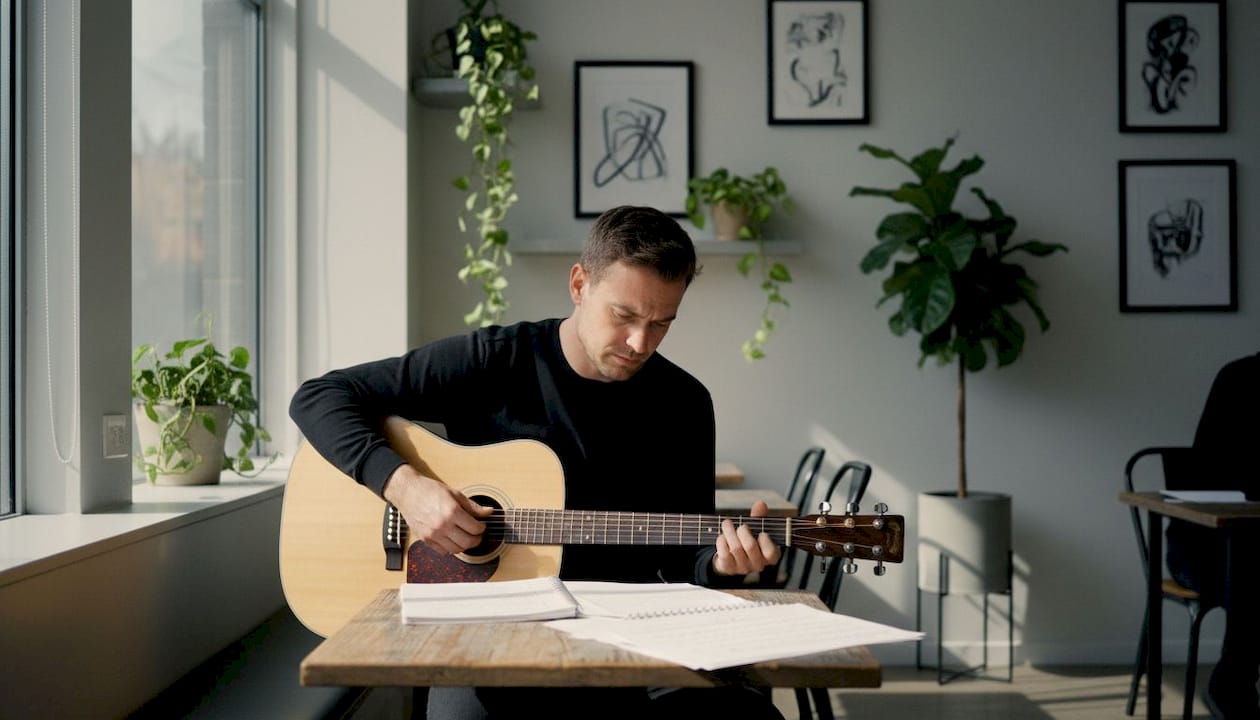
Wedding industry experts advise expressing your music vision in descriptive emotional terms such as “timeless,” “intimate,” or “celebratory.” This approach gives the band a filter for every decision they make, from tempo to song selection to how much they engage the crowd. A feeling is more useful than a list because it guides the moments between the songs too.
Think about why music sets your wedding mood and work backwards from the atmosphere you want guests to feel at each stage of the evening.
Use specific examples alongside descriptive language
Reference tracks are powerful. Share three to five songs that capture the energy you want, and explain what you like about each one. Is it the tempo, the vocal style, the instrumentation, or the overall mood? The more specific you are, the easier it is for the band to replicate that quality across their full set.
Include the following in your creative brief:
- Two or three songs that represent your ideal energy level
- One or two songs that represent the wrong direction entirely
- A description of how you want guests to feel at the end of the night
- Any specific moments requiring a particular song (first dance, father-daughter dance, last song of the night)
Tell the band what to avoid
Sharing what you dislike is often more instructive than sharing what you love. If you hate a particular era, tempo, or vocal style, say so directly. This prevents the band from defaulting to crowd-pleasing choices that do not suit your taste. A clear “do not play” list is one of the most practical tools in any wedding entertainment brief.
Pro Tip: When reviewing unique entertainment ideas for inspiration, note what you actively dislike as well as what appeals to you. Both lists are equally useful to your band.
How to brief your wedding band: a step-by-step process
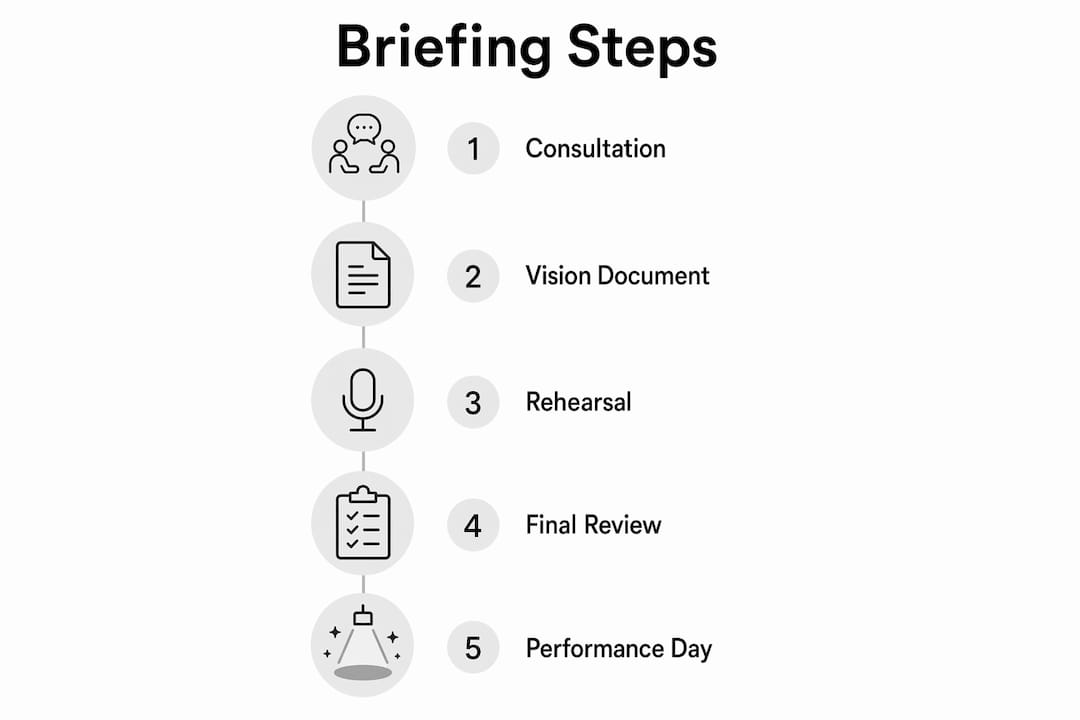
A structured briefing process removes ambiguity and gives both parties a shared reference point.
- Schedule a consultation call or meeting at least eight weeks before the wedding. Use this session to introduce yourselves, share your vision document, and ask the band about their experience with similar events.
- Discuss set structure and timing. Confirm the number of sets, the length of each, and when breaks will fall. Providing your full timeline allows the band to plan transitions and avoid clashing with speeches or dinner service.
- Confirm performance style expectations. Discuss how much crowd engagement you want, whether the band will take requests on the night, and how they handle the energy shift between dinner and dancing.
- Ask the logistical questions. Clarify overtime charges, load-in times, stage dimensions required, and whether the band provides their own PA system. Asking specific logistical questions early prevents stress on the day itself.
- Document every agreement in writing. Send a follow-up email after each meeting summarising what was discussed and agreed. Confirmed details in writing remove the risk of last-minute surprises.
- Schedule a final check-in two weeks before the wedding. Use this to confirm the timeline has not changed, review the song list one last time, and address any outstanding questions.
| Briefing stage | Key outcome |
|---|---|
| Initial consultation | Vision document shared, band’s experience confirmed |
| Timeline discussion | Sets, breaks, and transitions locked in |
| Style and engagement talk | Crowd interaction expectations agreed |
| Logistics confirmed | Overtime, setup, and equipment questions answered |
| Written follow-up | All agreements documented and accessible |
| Final check-in | Last-minute changes captured before the event |
What are the most common mistakes when briefing a wedding band?
Most communication breakdowns follow a predictable pattern. Recognising them in advance is the fastest way to avoid them.
- Using vague language without examples. Saying “we want it to feel fun” gives the band nothing concrete to work with. Pair every descriptive word with a reference track or a specific moment you have in mind.
- Having multiple contacts. When both partners send separate messages, the band receives conflicting instructions. One contact, one channel.
- Starting the conversation too late. Leaving the brief until four weeks before the wedding removes the time needed to refine preferences and confirm logistics. The two-month minimum exists for good reason.
- Skipping the “do not play” list. Bands default to proven crowd-pleasers when they lack specific guidance. Without a clear list of what to avoid, you may hear exactly what you were hoping to escape.
- Not confirming details in writing. A verbal agreement is only as reliable as both parties’ memories. Every decision should be followed by a written summary.
Pro Tip: Review the wedding band performance checklist before your final meeting to confirm you have covered every logistical and creative detail.
Key takeaways
Clear, documented, and emotionally descriptive communication is the most reliable way to ensure your wedding band delivers a performance that matches your vision.
| Point | Details |
|---|---|
| Start at least two months ahead | Early consultation gives time to refine preferences and confirm logistics without pressure. |
| Use one contact and one channel | A single point of contact via email prevents contradictory instructions reaching the band. |
| Lead with feeling, not just song titles | Descriptive emotional terms give the band a filter for every decision they make on the night. |
| Share what you dislike | A clear “do not play” list is as useful as your favourite song list. |
| Confirm everything in writing | Written follow-ups after each meeting remove the risk of last-minute surprises. |
What I have learned from watching couples brief their bands
After years of watching this process play out at weddings across Sydney and beyond, one pattern stands out. The couples who get the best results are not necessarily the ones with the longest song lists. They are the ones who can describe how they want the room to feel at 10PM on a Saturday night.
Emotional clarity is the real currency of a good brief. A band can learn any song, but they cannot guess your emotional intention. When you tell them “we want guests to feel like they are at the best dinner party they have ever been to,” that single sentence shapes every choice the band makes, from tempo to volume to how much they talk between songs.
Visual references matter more than most couples expect. I have seen mood boards completely change a band’s interpretation of a brief. A collection of five images and a ten-song playlist communicates more than a two-page written description. Use both.
The single contact rule is the one most couples resist and the one they most regret ignoring. Two people sending separate messages, even with the best intentions, creates noise. The band ends up managing a conflict rather than preparing a performance.
Ask questions early and ask them directly. What happens if the reception runs over? Who do we call on the day if something changes? What does the band need from the venue in terms of power and space? These are not awkward questions. They are the questions that prevent a problem becoming a crisis at 7PM on your wedding day.
— Deni
How Brownsugarmusic works with your wedding music vision
Brownsugarmusic has been performing at Sydney weddings since 2003, with a residency at the Marble Bar in the Hilton Sydney that spans over two decades. The band brings that same depth of experience to every wedding consultation.
Couples who book Brownsugarmusic receive a structured briefing process that covers creative vision, logistical detail, and performance style from the first conversation. The band specialises in R&B and soul, and their R&B soul wedding atmosphere guide is a practical starting point for couples who want to understand how that sound translates to a live reception setting. Every performance is shaped by the brief the couple provides, not a standard set list.
FAQ
When should we start briefing our wedding band?
Industry best practice recommends starting at least two months before the wedding date. This gives both parties time to refine the brief and confirm all logistical details.
What should a wedding music brief include?
A complete brief covers your preferred feeling or mood, reference tracks, a “do not play” list, the full event timeline, and venue logistics. Documented agreements should follow every meeting.
How do we communicate guest song requests to the band?
Discuss the request policy during your initial consultation and confirm whether the band will accept requests on the night. A clear guide to requesting songs helps set expectations for both the couple and their guests.
Why is a mood board useful for briefing a wedding band?
Mood boards and visual aids translate abstract preferences into concrete performance cues. A collection of images and reference tracks communicates tone and energy more efficiently than written descriptions alone.
What logistical details does the band need from us?
The band needs your venue name and layout, the full event timeline, stage dimensions, power requirements, and clarity on overtime charges. Providing these details early allows the band to plan every transition and avoid day-of surprises.