

Wedding ceremony music types are distinct musical segments that correspond to specific moments of the ceremony, each shaping the emotional tone for guests and the couple alike. A standard ceremony includes five key musical segments: prelude, seating, processional, ceremony interludes, and recessional. Getting each segment right is not a minor detail. The music you choose determines whether guests feel moved, joyful, or simply present. This guide covers every ceremony music type, the genres that suit each moment, and practical steps for making it all work on the day.
1. Wedding ceremony music types explained: the five core segments
Every wedding ceremony follows a musical structure, whether couples plan it deliberately or not. Understanding each segment gives you the framework to make deliberate, meaningful choices rather than last-minute ones.
Prelude. This is the music playing as guests arrive and take their seats, typically 20 to 30 minutes before the ceremony begins. Soft instrumentals, acoustic guitar covers, or gentle piano pieces work well here. The prelude sets a welcoming, calm mood and signals that something significant is about to happen.
Processional. The processional covers the entrance of the bridal party and, most memorably, the bride or couple walking down the aisle. This is the most emotionally charged musical moment of the ceremony. Song choice here carries enormous weight. Pachelbel’s Canon in D remains one of the most recognised processional pieces globally, though contemporary couples increasingly opt for orchestral arrangements of modern songs.
Ceremony interludes. These are brief musical passages during rituals such as the ring exchange, the signing of the register, or a unity candle ceremony. Instrumental music is preferred during these moments because lyrics can distract guests from spoken vows or the officiant’s words.
Recessional. This is the music played as the newly married couple walks back up the aisle together. It signals joy, celebration, and the official end of the ceremony. Upbeat, high-energy choices work best here.
Pro Tip: Brief the musician or DJ on the exact order of events and estimated timings for each segment at least two weeks before the wedding.
2. Classical music: the timeless foundation
Classical music remains the most widely used genre across all ceremony segments. Traditional classics like Canon in D and Bach’s Jesu, Joy of Man’s Desiring stay popular because of their timelessness and neutrality. They suit almost any venue, from a grand cathedral to a garden setting, and they carry no lyrical associations that might feel out of place.
String quartets are particularly effective for classical repertoire. A string quartet’s real-time tempo adjustments mean the music synchronises perfectly with the bridal party’s pace, something a fixed recording simply cannot do. This adaptability is the single strongest argument for live classical musicians at a formal ceremony.
Other reliable classical choices include Handel’s Water Music, Vivaldi’s Four Seasons, and Schubert’s Ave Maria for more spiritual ceremonies. Each carries a distinct emotional register, from stately and formal to tender and devotional.
3. Cinematic and acoustic pop covers: the modern standard
Three out of four contemporary weddings now favour cinematic instrumental pop covers over strictly classical pieces. This reflects a broader shift toward personalisation. Couples want music that feels meaningful to them, not just traditionally appropriate.
Cinematic covers transform familiar songs into orchestral or acoustic arrangements that retain emotional resonance without the distraction of lyrics. A string arrangement of a favourite Coldplay or Adele song, for example, carries personal significance while still feeling ceremonially appropriate. This is why the genre has become the dominant choice for processionals in particular.
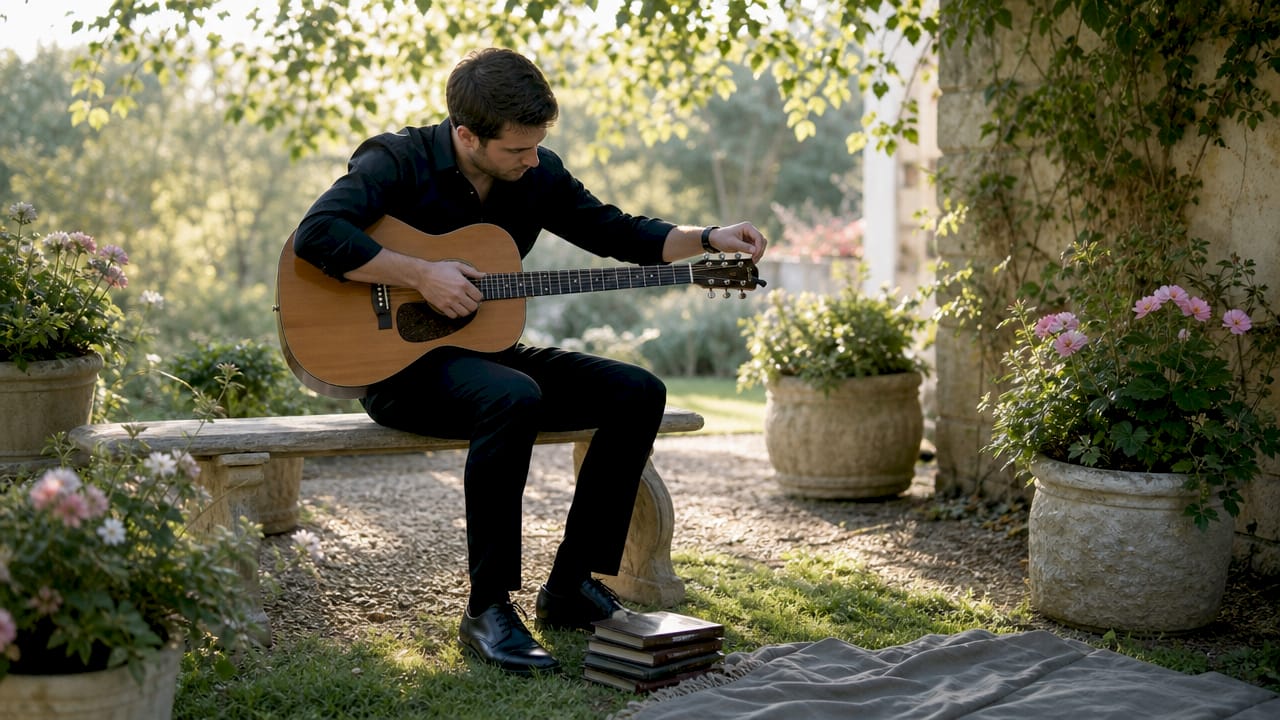
Acoustic guitar covers occupy a similar space. They are warm, intimate, and suit outdoor or garden ceremonies especially well. Artists like Ed Sheeran and John Legend have provided source material for countless acoustic ceremony arrangements in recent years.
Pro Tip: Ask your musician to play an acoustic or instrumental version of the song you first danced to. Guests who know the song will recognise it; those who do not will simply hear something beautiful.
4. Jazz and soul: warmth and sophistication
Jazz and soul bring a different quality to a ceremony. Where classical music signals formality and cinematic covers signal personal connection, jazz and soul signal warmth, ease, and a certain relaxed confidence. They suit couples who want their ceremony to feel celebratory from the first note rather than building slowly toward it.
For preludes, soft jazz standards played on piano or guitar create an atmosphere that feels welcoming without being stiff. Norah Jones, Bill Withers, and classic Motown arrangements all translate well into ceremony settings. The popularity of R&B at weddings has grown steadily because these genres connect emotionally with guests across age groups.
Soul music works particularly well for recessionals. A joyful, full-band arrangement of a Stevie Wonder or Aretha Franklin song as the couple exits creates an immediate sense of celebration. It tells guests the party has already started.
5. Cultural and religious music: honouring heritage
Cultural and religious music serves a specific purpose: it grounds the ceremony in the couple’s identity and heritage. This category covers everything from traditional Irish hymns and gospel choirs to Indian classical ragas and Pacific Islander chants.
Religious ceremonies often have prescribed musical requirements. Catholic ceremonies, for instance, typically require liturgically approved music during the Mass itself, though couples have more freedom during the prelude and recessional. It is worth confirming requirements with the officiant or venue early in the planning process.
Cultural music can be woven into any segment. A traditional song from a grandparent’s homeland played during the prelude, for example, acknowledges family history without making the ceremony feel like a cultural performance. The key is integration rather than separation.
6. Live musicians vs recorded music: what actually matters
Live musicians offer a premium, adaptable experience ideal for formal settings. Recorded music is cost-effective and provides access to original tracks, but it requires a sound system operator and cannot respond to real-time changes in pace or atmosphere.
The practical differences come down to three factors:
- Timing flexibility. Live musicians can extend, shorten, or repeat a section if the processional runs longer than expected. A recording cannot.
- Sound quality. In a reverberant indoor venue, live acoustic instruments often sound cleaner than amplified recordings.
- Cost. A professional string quartet or jazz trio will cost significantly more than a DJ setup with a curated playlist.
For couples on a tighter budget, a hybrid approach works well. Use live musicians for the processional and recessional, where timing and emotional impact matter most, and use a curated recorded playlist for the prelude.
| Format | Best for | Key consideration |
|---|---|---|
| String quartet | Formal indoor ceremonies | Highest timing adaptability |
| Acoustic duo | Intimate or outdoor settings | Warm, personal atmosphere |
| Full live band | Recessional and reception crossover | Highest energy and impact |
| Recorded playlist | Budget-conscious couples | Requires reliable sound system |
7. Timing and venue acoustics: the practical side
Matching song length with aisle walk is one of the most overlooked planning steps. A processional song that ends before the bride reaches the altar creates an awkward silence. Fading or looping techniques prevent this, but they require advance coordination with whoever is managing the music.
Outdoor ceremonies often need sound technicians or directional speakers to overcome wind and ambient noise. Music that sounds perfectly balanced in a rehearsal space can become inaudible at the back of an outdoor venue on a breezy day. This is not a minor risk. It is one of the most common complaints couples receive from guests after outdoor weddings.
Indoor venues present different challenges. Hard stone or tile floors in churches and heritage buildings create reverb that can muddy fast-tempo pieces. Slower, more sustained music tends to sound better in these spaces.
Pro Tip: Walk the aisle yourself during the rehearsal while the processional music plays. Time it. Then tell your musician or DJ the exact duration so they can prepare the correct fade or loop point.
8. Personalising your ceremony soundtrack
Personalisation is what separates a memorable ceremony from a generic one. The most effective approach is to anchor at least one song in a shared memory. This might be the song playing during a first date, a track from a road trip, or a piece of music connected to a family member who has passed.
- Identify two or three songs with genuine personal significance to you as a couple.
- Decide which ceremony segment each song suits best based on its tempo and mood.
- Ask your musician or DJ for an arrangement that fits the ceremony context. An acoustic or instrumental version often works better than the original recording.
- For the recessional, choose something that surprises guests. Upbeat, unexpected songs such as rock anthems or Motown classics bring joyful release at the ceremony’s end.
- Balance personal choices with at least one piece that guests of all ages will recognise and respond to emotionally.
Explore the complete list of wedding band songs for inspiration on what translates well in a live ceremony setting.
Key takeaways
Effective wedding ceremony music matches each of the five core segments to a specific mood, format, and genre that serves both the moment and the couple’s personal story.
| Point | Details |
|---|---|
| Five segments structure the ceremony | Prelude, processional, interludes, recessional, and seating each require distinct musical choices. |
| Instrumental beats vocal during rituals | Lyrics distract from vows; use instrumental or acoustic arrangements during spoken moments. |
| Live musicians adapt in real time | A string quartet or live band can adjust tempo to match the processional pace; recordings cannot. |
| Outdoor venues need technical planning | Wind and ambient noise require directional speakers or a sound technician to maintain audio clarity. |
| Personalisation anchors the memory | At least one song tied to a shared memory makes the ceremony soundtrack genuinely unforgettable. |
What I’ve learned from two decades of wedding performances
Couples spend months choosing flowers, catering, and photography. Ceremony music often gets an afternoon. That imbalance shows on the day. Poor music disrupts ceremony intimacy and flow in ways that are immediately felt by everyone in the room, even if guests cannot articulate why.
The most common mistake I see is treating the processional as an afterthought. Couples pick a song they like without checking whether the arrangement suits the tempo of a slow, deliberate walk, or whether the song length matches the aisle. The result is either a rushed entrance or an awkward silence. Neither is what anyone wants in that moment.
The second mistake is ignoring the recessional entirely. The recessional sets the celebratory tone for the rest of the day. A flat or forgettable exit song deflates the energy right when it should be building. Choose something that makes people want to move.
What I consistently observe is that live musicians, even a simple acoustic duo, transform the ceremony atmosphere in a way that recorded music rarely matches. The responsiveness, the physical presence of sound, and the ability to read the room all contribute to something that feels genuinely alive. For couples who can accommodate it in their budget, even one live musician for the processional and recessional makes a measurable difference.
Prioritise ceremony music the same way you prioritise your photographer. Both capture the emotional core of the day. One does it in images; the other does it in real time, for every person in the room.
— Deni
Brownsugarmusic can bring your ceremony to life
Brownsugarmusic has been performing at weddings across Sydney and beyond since 2003. The band brings over two decades of live performance experience to every event, with a repertoire spanning R&B, soul, jazz, and acoustic covers suited to every ceremony segment.

Whether you need a warm acoustic prelude, a powerful processional arrangement, or a joyful recessional that gets guests on their feet, Brownsugarmusic tailors every performance to the couple’s preferences. Explore the R&B soul wedding atmosphere guide to see how live soul and R&B music can shape your ceremony from the first note to the last. Ready to discuss your wedding? Book your date directly with the band.
FAQ
What music is typically played at a wedding ceremony?
A wedding ceremony typically includes five musical segments: prelude, seating, processional, ceremony interludes, and recessional. Each segment uses different styles, from soft instrumentals during the prelude to upbeat celebratory music for the recessional.
Should ceremony music be live or recorded?
Live musicians offer real-time adaptability, particularly for the processional, where tempo must match the bridal party’s pace. Recorded music is a cost-effective alternative but requires a reliable sound system and cannot respond to unexpected timing changes.
What are the best songs for a wedding processional?
Pachelbel’s Canon in D and Bach’s Jesu, Joy of Man’s Desiring remain popular for their timelessness. Contemporary couples often choose cinematic instrumental covers of modern songs to add personal meaning to the processional.
How do I personalise my ceremony music?
Choose at least one song connected to a shared memory and ask your musician for an instrumental or acoustic arrangement that suits the ceremony context. For the recessional, an unexpected upbeat choice such as a Motown classic creates a joyful, memorable exit.
How do outdoor venues affect ceremony music?
Outdoor ceremonies require directional speakers or a sound technician to manage wind and ambient noise. Without proper sound setup, music can become inaudible to guests seated further from the performance area.