

A wedding band is the ring exchanged between partners during a marriage ceremony, representing unbroken commitment and lifelong love. Unlike an engagement ring, which is given as a proposal gift, the wedding band is placed on the finger at the moment vows are made. Traditionally simple, modern wedding bands now range from plain gold or platinum to diamond-set eternity rings and fully bespoke designs. Whether you are choosing the ring itself or hiring a live wedding band for your reception, this guide covers both meanings clearly and practically.
What is a wedding band and how does it differ from an engagement ring?
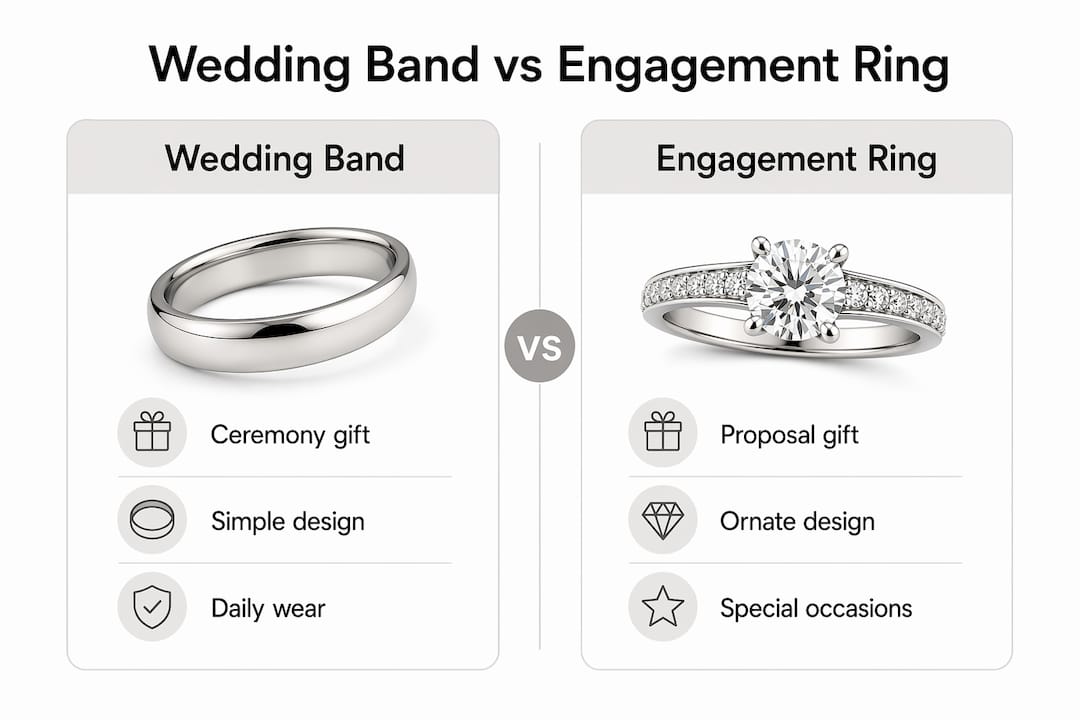
A wedding band is defined as a ring worn to signify a legally and emotionally binding marriage, exchanged during the ceremony itself. An engagement ring, by contrast, is given at the point of proposal and typically features a central gemstone, most commonly a diamond. The two serve different purposes, are worn at different times, and are usually designed with different priorities in mind.
Wedding bands are simpler and more durable than engagement rings, built for daily wear rather than display. This affects everything from the metal gauge used to how the ring sits alongside other jewellery. An engagement ring is a statement piece. A wedding band is a permanent fixture.
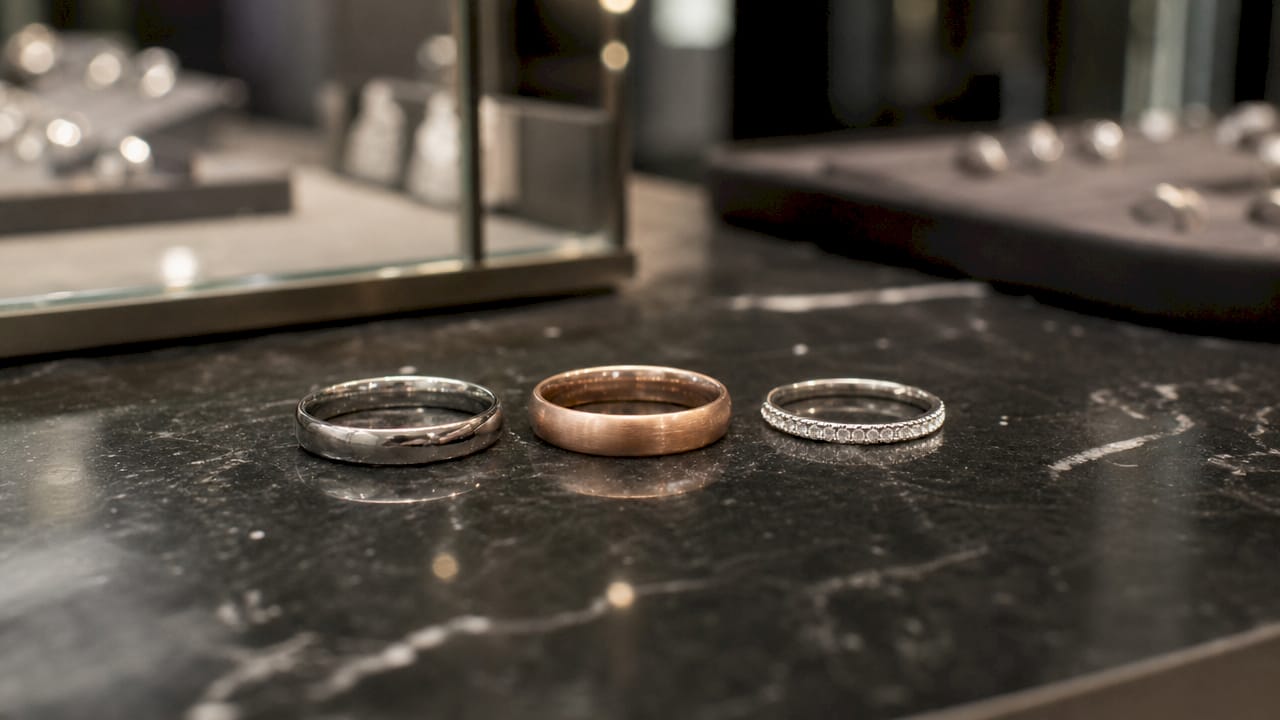
The table below shows the core differences at a glance.
| Feature | Wedding band | Engagement ring |
|---|---|---|
| When given | During the ceremony | At the proposal |
| Typical design | Plain or lightly set | Central gemstone |
| Primary purpose | Symbolises the marriage vow | Symbolises the intention to marry |
| Wearability | Built for everyday use | Often reserved or worn carefully |
| Stacking | Designed to sit alongside other rings | Worn alone or with a band |
There is also a terminology point worth knowing. In Australia and the UK, “wedding ring” and “wedding band” are used interchangeably. In the United States, “band” more specifically refers to a ring without a central stone. Neither usage is wrong. The wedding band meaning is consistent across all regions: a ring that marks the marriage itself.
A wedding band set refers to a matched pair of rings, one for each partner, designed to complement each other in metal, width, or finish. Sets are popular because they create a visual connection between two people’s rings without requiring identical designs.
What are the popular styles and options for wedding bands?
Wedding band options span a wide spectrum, from the plainest gold ring to fully custom creations set with ethically sourced stones. The right choice depends on your lifestyle, your engagement ring (if you have one), and how you want the ring to feel decades from now.
The most common metals are:
- Yellow gold (9ct, 18ct, or 22ct): warm, traditional, and easy to resize
- White gold: a cooler tone, often rhodium-plated for brightness
- Platinum: the most durable and naturally white, but heavier and more expensive
- Rose gold: a softer, warmer alternative that has grown in popularity since the 2010s
- Titanium or tungsten: modern, lightweight, and scratch-resistant options for active wearers
Beyond metal choice, the profile and finish matter. A flat band sits flush against the finger. A court profile (rounded on the inside) is the most comfortable for all-day wear. A D-shape profile is flat on the inside and domed on the outside, offering a classic look with reasonable comfort.
Timeless, simple designs hold up better over decades than trend-led styles. A heavily textured band that feels current in 2026 may feel dated by 2036. Comfort and longevity should come before aesthetics in the decision.
For those who want something more distinctive, eternity bands feature stones set all the way around the ring. Half-eternity bands have stones on the top half only, making resizing easier. Bespoke designs allow you to choose the exact stone cut, setting style, and engraving to create something entirely personal.
Pro Tip: If you wear an engagement ring, bring it to any wedding band consultation. The two rings need to sit flush together without gaps or rocking. A jeweller can shape the band to nest perfectly against your engagement ring, a process called contouring or profiling.
Ethical sourcing is an increasing priority for couples. Lab-grown diamonds, Fairtrade gold, and recycled metals are all available from specialist jewellers and carry the same quality as mined alternatives. Asking your jeweller about the origin of materials is now a standard part of the buying process, not an unusual request.
What is a wedding band rider and why does it matter?
In the context of live music, a wedding band rider is a contractual document that specifies everything a band needs to perform at your event. A band rider details technical, logistical, and hospitality requirements including sound equipment, lighting specifications, stage dimensions, catering, and rest arrangements. It is not a wish list. It is a binding part of the performance contract.
Riders typically fall into two categories:
- Technical rider: covers power supply, PA system specifications, stage size, monitor requirements, and lighting. Failure to meet power and stage requirements is one of the most common causes of sound failures or last-minute cancellations at weddings.
- Hospitality rider: covers meals, non-alcoholic drinks, a private rest area, and break scheduling. Ignoring these requirements damages your relationship with the performers and affects the quality of the performance.
For couples, the practical implications are straightforward. When you receive a rider from a live wedding band, share it with your venue coordinator immediately. The venue needs to confirm whether it can meet the technical specifications. If it cannot, you need to know before the booking is confirmed, not the week before your wedding.
Early communication about rider requirements prevents unexpected costs and avoids friction with performers. Providing meals for the band, for example, is standard practice and should be budgeted for from the start.
Pro Tip: Ask your band for their rider at the same time you receive their quote. Reviewing both together gives you a complete picture of the actual cost and logistics before you commit.
The rider also affects your wedding timeline. Bands typically need one to two hours for sound check before guests arrive. This has to be factored into your venue access schedule, particularly if you are using the same space for the ceremony and reception.
How do professional live wedding bands structure their performances?
A professional wedding ceremony band does not simply arrive and play. Live wedding bands typically perform two to three sets across an event, with each set lasting between 45 minutes and one hour. The structure is usually shaped around the wedding timeline: background music during the drinks reception, a first dance set, and a full dance floor set later in the evening.
Band size and line-up often change depending on the moment. A trio or quartet might play acoustic sets during the ceremony or canapé hour, while the full band takes the stage for the evening reception. A professional band’s flexibility with line-up and setlists is what separates experienced wedding performers from general function bands.
Key operational points to know:
- Bands require a sound check, usually one to two hours before doors open
- During breaks between sets, most professional bands provide pre-recorded playlist music to keep the atmosphere going
- Live bands often take on emcee duties, making announcements and coordinating transitions between speeches, first dances, and cake cutting
- Song requests should be discussed and agreed in advance. A clear process for requesting songs avoids confusion on the night
Wedding bands curate setlists designed to maintain dancefloor energy across the full evening, not just peak hours. A well-structured set moves through tempos and eras deliberately, reading the room and adjusting as the night progresses. This is a skill that takes years to develop and is one of the clearest markers of an experienced wedding band.
Key takeaways
A wedding band is a ring exchanged at the ceremony to mark the marriage itself, distinct from an engagement ring in design, purpose, and durability, while a wedding band rider is the contractual document that defines what a live band needs to perform.
| Point | Details |
|---|---|
| Wedding band definition | A ring exchanged during the ceremony, symbolising the marriage vow, not the proposal. |
| Band vs engagement ring | Wedding bands are built for daily wear; engagement rings prioritise display and gemstone setting. |
| Styles and materials | Gold, platinum, and titanium are the most common metals; comfort fit and profile matter as much as appearance. |
| Band rider importance | A rider is a binding contract. Share it with your venue immediately to confirm technical and hospitality requirements. |
| Live band structure | Professional bands perform two to three sets, handle emcee duties, and provide music during breaks. |
Why I’d tell every couple to read the rider before the reviews
Most couples spend hours reading band reviews online and almost no time reading the rider. That is the wrong priority. Reviews tell you whether a band is good. The rider tells you whether they will actually be able to perform at your venue.
I have seen situations where a band’s technical rider required a three-phase power supply that a heritage venue simply could not provide. Nobody caught it until two weeks before the wedding. The couple had to hire a generator at significant cost and stress. That is entirely avoidable with one conversation at the booking stage.
On the ring side, the most common regret I hear from couples is choosing a band that felt exciting in the shop but became uncomfortable within a year of daily wear. A court profile in 18ct gold is not glamorous, but it is the ring you will still want on your finger in 2046. Prioritise how it feels over how it photographs.
The two meanings of “wedding band” are more connected than they appear. Both require you to look past the surface, ask the right questions early, and make decisions built for the long term.
— Deni
Live wedding music from Brownsugarmusic
Brownsugarmusic has been performing at Sydney weddings since 2003, specialising in R&B and soul music that keeps dancefloors full from the first dance to the final song. As the resident band at Marble Bar in the Hilton Sydney for over 20 years, Brownsugarmusic brings a level of professional consistency that most wedding bands cannot match. Their sets are built for weddings specifically, with flexible line-ups, full rider transparency, and a setlist shaped around your day. For couples who want R&B soul at their wedding, Brownsugarmusic offers a proven, polished option. Visit brownsugarmusic.com.au to check availability and discuss your event.
FAQ
What is the difference between a wedding band and a wedding ring?
The terms are used interchangeably in Australia and the UK. In American usage, “band” more specifically refers to a ring without a central stone, while “ring” is the broader term.
What does wedding band set mean?
A wedding band set is a matched pair of rings designed for both partners, sharing a consistent metal, finish, or design element. Sets create a visual connection without requiring identical rings.
What is a wedding band rider?
A wedding band rider is a contractual document outlining the technical and hospitality requirements a live band needs to perform. It covers sound equipment, stage dimensions, meals, and rest arrangements.
How long does a live wedding band typically perform?
Most professional wedding bands perform two to three sets of 45 to 60 minutes each, with pre-recorded music played during breaks to maintain atmosphere throughout the evening.
How do I choose between a plain band and a diamond-set band?
Consider daily wearability first. Plain or lightly set bands are more practical for active lifestyles, while eternity or half-eternity bands suit those who want more visual impact alongside their engagement ring.