

R&B music is the most emotionally versatile genre couples can choose for a wedding, combining soulful vocals, warm harmonies, and rhythmic grooves that work equally well during quiet vows and a packed dance floor. The genre’s blend of lyrical intimacy and rhythmic motion allows it to communicate intimate, playful, or celebratory moods without changing the playlist’s character. That flexibility is the core reason why R&B popular at weddings has become a near-universal observation among wedding planners, DJs, and live bands across Australia and beyond. Where generic pop playlists flatten the emotional arc of a wedding day, R&B bends to fit each moment precisely.
Why R&B is popular at weddings: the musical case
R&B is described by music writers as the “perfect genre” for weddings, combining soft, tender chords with deeply stirring voices that create a euphoria of love suitable for both ceremony and reception. That description is not sentiment. It points to specific musical features that other genres simply do not share in the same combination.
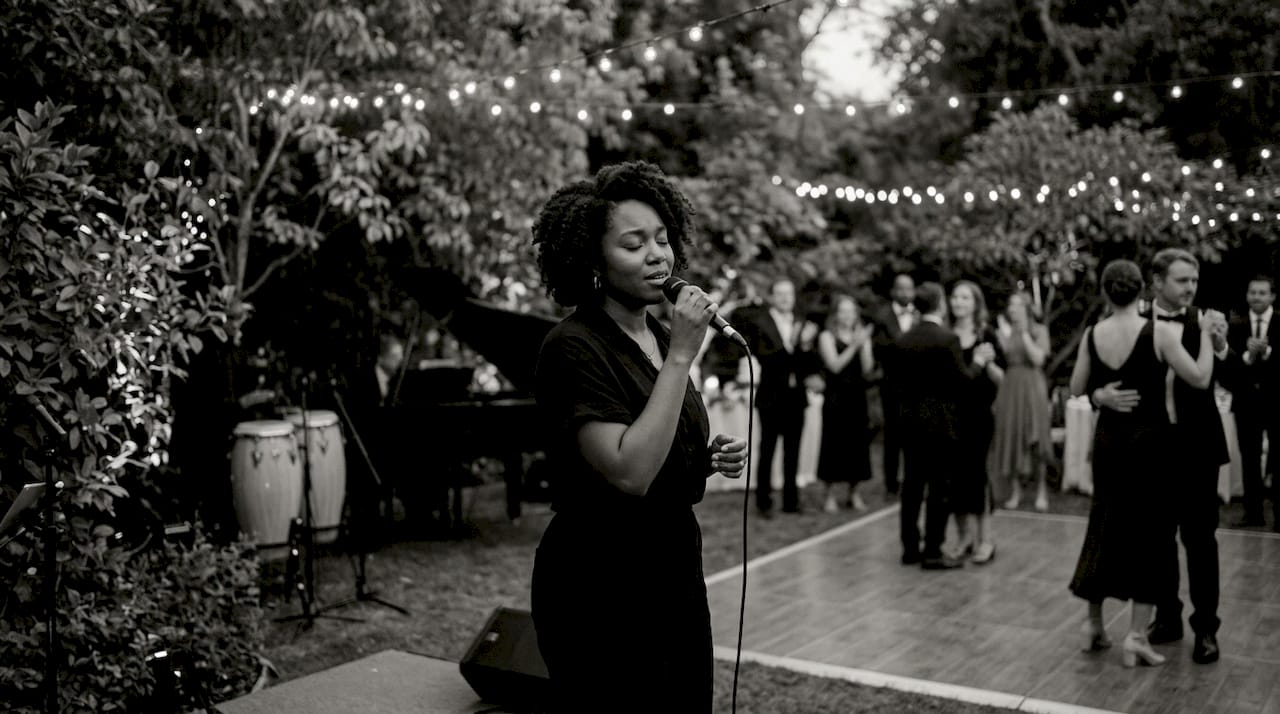
Soulful, expressive vocals are the most immediate factor. R&B singers use melisma, dynamic shifts, and tonal warmth to carry emotional weight that instrumental music alone cannot. A vocalist holding a note during a first kiss communicates something a string quartet cannot replicate.
Warm harmonic progressions are the second factor. R&B draws heavily on extended chords, including major sevenths, ninths, and suspended fourths, that create a sense of openness and longing. These chord colours sit between tension and resolution, which mirrors the emotional complexity of a wedding day itself.
Mid-tempo rhythmic grooves are the third factor. R&B’s characteristic pocket rhythm, often built around a Rhodes electric piano, a clean guitar accent, and a soft kick drum pattern, gives guests something to feel physically without demanding they dance. That quality makes it ideal for background music during a seated dinner or a slow walk down the aisle.
- Soulful vocals carry emotional nuance that generic pop production cannot match
- Extended harmonic progressions create intimacy and a sense of romantic longing
- Mid-tempo grooves engage guests physically without forcing participation
- Warm instrumentation including Rhodes keys and clean guitar accents suits both live and recorded settings
- Lyrical content in R&B directly addresses love, commitment, and celebration
Pro Tip: When selecting R&B music for weddings, prioritise songs where the vocalist is clearly audible in the mix. Heavily produced tracks with buried vocals lose their emotional impact in large venues with reverberant acoustics.
Research confirms this. Expressive audio cues such as acoustic intensity and rhythmic drive directly influence perceived emotions in listeners, even without lyrical context. R&B’s production style is built around exactly those cues.
How does tempo and musical mode shape the emotional impact?
A 2026 PLOS ONE study examining 40 musical stimuli with 1,280 participants found that faster tempos increase vitality ratings and that major mode reduces listener anxiety. This is not a minor finding. It means the tempo and key of every song on your wedding playlist is actively shaping how your guests feel, whether you plan for it or not.
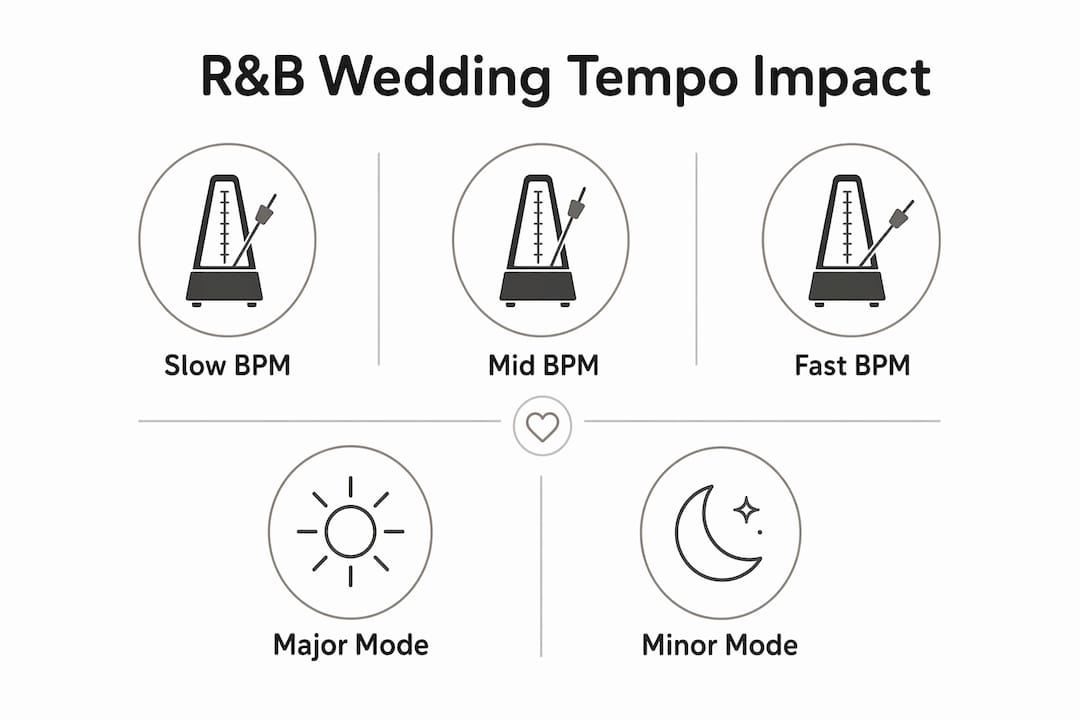
The study also found that tempo and mode systematically affect listeners’ vitality and unease, supporting the idea that nuanced playlist design produces measurably better emotional outcomes than a random selection of favourite songs.
| Wedding moment | Recommended BPM | Mode | Emotional target |
|---|---|---|---|
| Prelude and seating | 60–75 BPM | Major | Calm, warm anticipation |
| Processional | 70–85 BPM | Major | Romantic, moving |
| First kiss and vows | 50–70 BPM | Major or minor | Intimate, tender |
| Recessional | 100–120 BPM | Major | Joyful, celebratory |
| Reception entrance | 110–130 BPM | Major | High energy, festive |
R&B covers every row of that table naturally. Tracks like a slow Alicia Keys ballad sit comfortably at 65 BPM in a warm major key. An upbeat Bruno Mars or Beyoncé track pushes past 110 BPM and shifts the room’s energy immediately. The genre’s internal range is wider than most couples realise.
Minor mode R&B deserves a specific note. While research links minor keys to tension, many of the most beloved R&B wedding songs use minor modes with slow tempos to create depth rather than sadness. The emotional effect depends on tempo, vocal delivery, and lyrical content working together. A skilled band or DJ reads that combination rather than applying a rigid rule.
How R&B fits across ceremony and reception segments
Professional wedding musicians and DJs programme R&B songs in carefully selected BPM ranges per segment, ensuring the music mirrors the wedding’s pacing and emotional arcs. This approach, sometimes called tempo choreography, treats the playlist as a structured score rather than a shuffle queue.
Here is how that structure typically works across a full wedding day:
- Prelude (guests arriving and being seated). Soft, vocal-forward R&B at 60–75 BPM sets a warm, welcoming tone. Think acoustic or stripped-back arrangements rather than full production. The goal is conversation-friendly background music that signals something special is about to happen.
- Processional. The tempo lifts slightly to 70–85 BPM. Songs with a clear melodic line and moderate rhythmic pulse work best here because they give the bridal party a natural walking pace without feeling rushed. Lyrical content should reflect love and arrival rather than longing or loss.
- Vows and first kiss. This is the quietest musical moment. BPM ranges of approximately 50–70 suit this segment, and sparse arrangements with prominent vocals carry the most emotional weight. Many couples choose an instrumental version of a meaningful R&B song here to avoid lyrical distraction during spoken vows.
- Recessional. Energy jumps to 100–120 BPM. This is the moment for groove-forward R&B that signals celebration. Guests respond physically to the shift, and the transition from ceremony to reception feels natural rather than abrupt.
- Reception entrance and dinner. The reception entrance calls for 110–130 BPM tracks with strong rhythmic identity. Dinner music then drops back to 75–90 BPM to allow conversation while maintaining a warm, celebratory atmosphere.
- First dance and open dancing. Mid-tempo R&B at 75–85 BPM is ideal for a first dance because it is easier to dance to than a very slow ballad while keeping the romantic mood intact. As the dance floor opens, tracks at 100–110 BPM activate party energy and encourage sing-alongs.
Pro Tip: Ask your band or DJ to map out the BPM arc of your playlist before the wedding day. Seeing the tempo curve on paper makes it easy to spot moments where energy might plateau or drop unexpectedly.
Common misconceptions about R&B wedding playlists
The most persistent misconception is that R&B at weddings means only slow love ballads. That assumption leads couples to underuse the genre during the reception and over-rely on it during the ceremony, which flattens the emotional journey of the day.
Several other misconceptions are worth addressing directly:
- “R&B is only for certain demographics.” R&B’s influence on mainstream pop, soul, and funk means its sounds are familiar to guests across generations. Artists from Stevie Wonder to John Legend to Beyoncé span decades and audiences.
- “Live R&B bands cannot match the production quality of recorded tracks.” A skilled live R&B band adds spontaneity, crowd-reading ability, and dynamic range that no recording can replicate. The energy in the room changes when musicians respond to the moment in real time.
- “Lyrical content does not matter as long as the song sounds good.” Lyrics matter significantly during ceremony segments. A song about heartbreak or a complicated relationship lands differently when played during vows, regardless of how beautiful the melody is.
- “You need a full setlist of R&B to make it work.” A curated selection of eight to twelve well-chosen R&B tracks placed at the right moments outperforms a 40-song playlist of loosely related songs.
Mixing mid-tempo and upbeat R&B across the reception is the single most effective way to maintain energy and keep the dance floor moving. Tempo variety prevents the plateau effect that occurs when every song sits at the same BPM. The best R&B wedding playlists build, release, and rebuild energy in deliberate cycles.
Key takeaways
R&B is popular at weddings because its tempo range, harmonic warmth, and expressive vocals match every emotional moment from the processional to the last dance.
| Point | Details |
|---|---|
| Emotional versatility | R&B covers intimate ceremony moments and high-energy receptions without changing genre. |
| Tempo is a planning tool | BPM ranges from 50 to 130 map directly onto wedding segments and guest emotional states. |
| Major mode reduces anxiety | Research confirms major key songs lower listener unease, making them safer choices for ceremony music. |
| Lyrical content matters | Song lyrics should match the emotional context of each wedding moment, particularly during vows. |
| Mix tempos across the reception | Alternating mid-tempo and upbeat R&B prevents energy plateaus and keeps guests engaged. |
What 20 years of wedding performances taught me about R&B
After more than two decades performing at weddings across Sydney and around the world, the pattern is consistent. Couples who choose R&B music for weddings almost always report that the music felt personal rather than generic. That is not an accident. R&B’s vocal tradition demands that a singer mean what they sing, and audiences feel that authenticity even when they cannot articulate why.
The mistake I see most often is treating the ceremony and reception as two separate music briefs. They are one continuous emotional experience for your guests. A jarring shift from delicate acoustic R&B during the ceremony to a random pop playlist at the reception breaks the spell the ceremony created. The smarter approach is to carry R&B’s character through the entire day, adjusting tempo and energy rather than switching genres entirely.
One thing couples rarely consider is how the music will sound in their wedding video. Songs with prominent, clear vocals and mid-tempo grooves translate far better to video than heavily produced tracks with complex arrangements. The emotional memory of a wedding is partly constructed through rewatching footage, and the music on that footage matters for years after the day itself.
Working with musicians who genuinely know the genre makes a measurable difference. A band that has lived inside R&B for decades reads a room differently from one that learned the songs last week. The micro-decisions, when to extend a chorus, when to drop the arrangement back, when to lift the energy, come from experience that cannot be faked.
— Deni
Bring live R&B soul to your wedding day
Brownsugarmusic has performed at weddings, corporate functions, and some of the finest venues in Sydney and around the world since 2003. As the resident band at Marble Bar in the Hilton Sydney every Friday night for over 20 years, the band brings the kind of live R&B energy that transforms a reception from an event into a memory. Brownsugarmusic offers a live band and DJ combination through their collaboration with DJ Trey, giving couples the full spectrum from intimate ceremony music to a high-energy dance floor without switching providers. Visit Brownsugarmusic to find out more about wedding packages and availability.
FAQ
Why is R&B music so popular at weddings?
R&B combines soulful vocals, warm harmonies, and flexible tempos that suit every wedding segment from the processional to the last dance. Its lyrical focus on love and commitment makes it emotionally relevant in a way that generic pop rarely achieves.
What BPM is best for a wedding first dance in R&B?
Mid-tempo R&B at 75–85 BPM is the recommended range for a first dance. It is comfortable to dance to while maintaining a romantic atmosphere, avoiding the awkwardness of very slow ballads.
Does the musical key of a song affect how guests feel at a wedding?
Research confirms that major mode music reduces listener anxiety and increases feelings of happiness. Choosing major key R&B tracks for ceremony segments creates a calmer, more positive emotional environment for guests.
Can R&B work for the entire wedding, not just the reception?
R&B works across the full wedding day when tempo is managed deliberately. Softer, slower tracks suit the ceremony and dinner, while mid-tempo and upbeat R&B drive the reception and dancing.
Is a live R&B band better than a DJ for weddings?
A live band reads the room and adjusts in real time, which a recorded playlist cannot do. The best outcomes often come from combining both, with a live band for key moments and a DJ for extended dancing sets.