

Music is the single most powerful emotional trigger at any wedding. While flowers fade and menus are forgotten, the right song at the right moment can transport guests back to your celebration decades later. Understanding why music matters for wedding memories means understanding how sound shapes mood, anchors emotion, and turns a sequence of events into a story people carry with them for life. Brownsugarmusic has performed at countless weddings across Sydney and around the world, and the pattern is always the same: couples who invest in their music create celebrations that guests never stop talking about.
Why music matters for wedding memories: the neurological case
Music at weddings functions as neurological priming. It does not simply fill silence. It actively shapes how guests feel, what they notice, and what they remember. Tempo is the key variable: rhythms at 60–80 BPM establish reverence during the ceremony, while tempos of 120+ BPM signal celebration and drive energy during the reception. That distinction matters because the brain encodes memories differently depending on emotional state. Calm, attentive guests during a ceremony form detailed, vivid recollections. Energised guests on a dance floor form strong positive associations with the event as a whole.
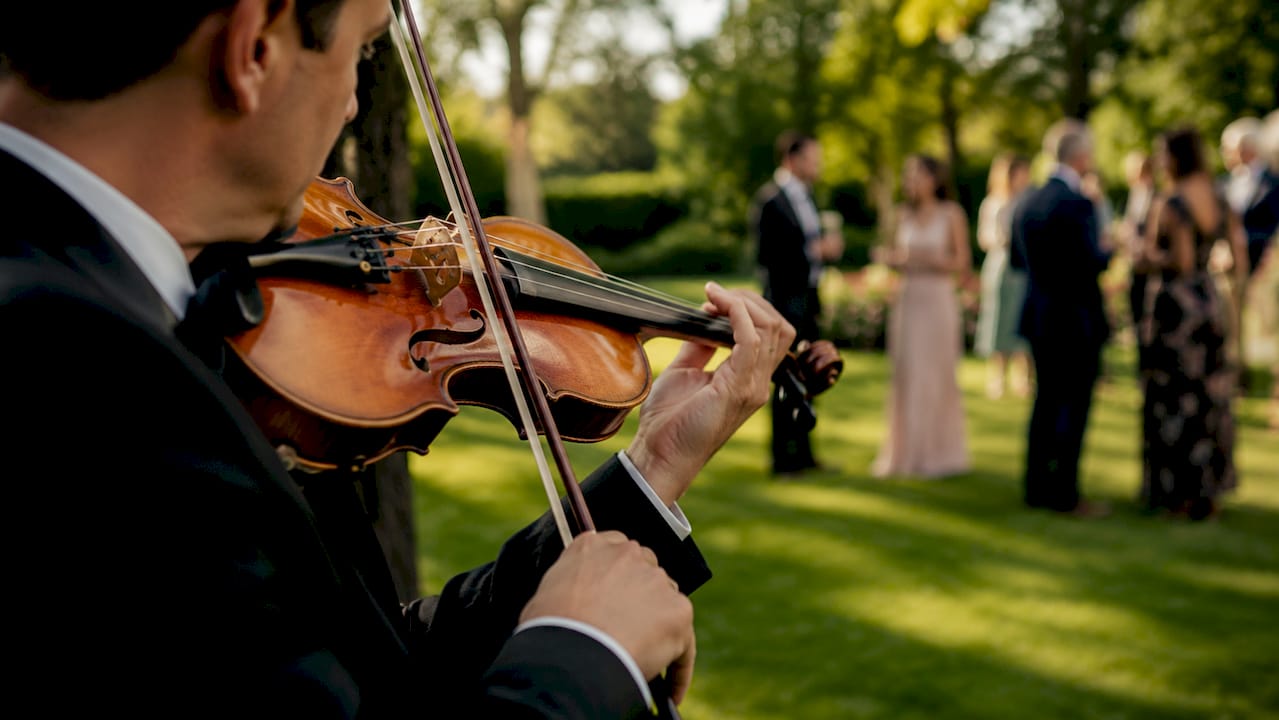
Music also provides emotional permission. It guides guests through the day’s shifting moods, calming nerves before the ceremony begins and signalling joyous release when the reception opens. Without that guidance, guests feel uncertain about how to respond. With it, they follow the emotional cues naturally and feel more present throughout.
How does tempo and timing shape the ceremony and reception?
Tempo is not a technical detail. It is the mechanism by which music communicates emotional intent to every person in the room.
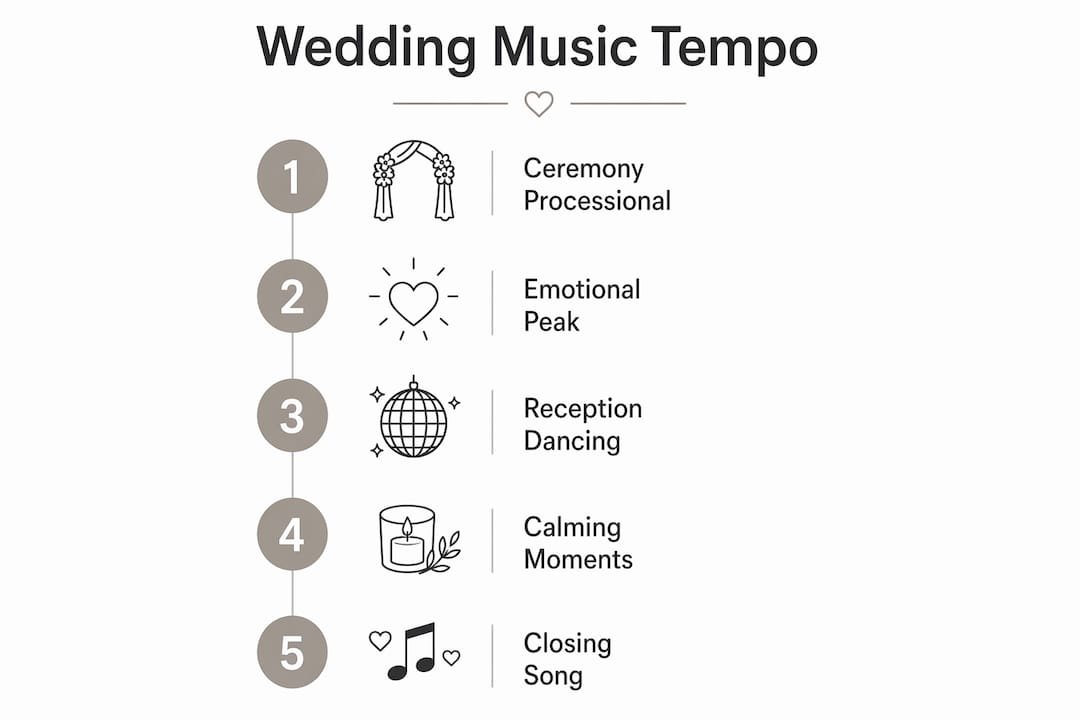
Ceremony tempo: 60–80 BPM
The processional sets the tone for everything that follows. Processional music is the single most important musical moment of the ceremony. Experts are clear: if the processional does not land, no other musical choice can recover it. A tempo of 60–80 BPM creates the sense of weight and significance that the moment deserves. It slows the room down. Guests stop talking, turn, and pay attention. That shift in attention is the foundation of memory formation.
Reception tempo: 120+ BPM
The reception requires the opposite approach. Tempos above 120 BPM signal a shift in energy and invite physical participation. Dancing is not incidental to a wedding reception. It is the primary mechanism through which guests bond with each other and with the couple. High-tempo music drives that participation and creates the shared experience that guests recall most clearly.
Key moments where tempo and timing directly affect guest memory:
- The processional: Slow, deliberate tempo creates reverence and focus.
- The first dance: Moderate tempo allows intimacy and visibility for all guests.
- The cake cutting: A musical cue here marks a transition and re-engages the room.
- The dance floor opening: A sharp tempo increase signals that formalities are over.
- The final song: The closing track shapes the emotional note guests leave on.
Pro Tip: Map each of these five moments to a specific tempo range before you choose individual songs. Tempo first, song title second.
Does live music create stronger wedding memories than recorded tracks?
Live music creates deeper emotional connections than recorded tracks. The reason is adaptability. Live musicians adjust tempo and dynamics in real time, extending interludes when a processional runs long or lifting energy when a room needs it. A playlist cannot do that. A DJ can approximate it, but a live band does it instinctively, reading the room and responding to what is actually happening rather than what was planned.
The physiological effect is also different. Live performance activates a stronger neural response than recorded sound. The visual element of watching musicians play, the slight imperfections of a live performance, and the physical presence of sound in a room all contribute to a heightened sense of occasion. Guests feel that something real is happening. That feeling is what memory latches onto.
“The biggest difference between a live band and a playlist is that a live band is having the same experience as your guests. They feel the room shift. They respond to it. That responsiveness is what makes the music feel like part of the day rather than a backdrop to it.”
Brownsugarmusic has been the resident band at Marble Bar in the Hilton Sydney every Friday night for over 20 years. That residency is not incidental. It represents thousands of hours of reading live rooms and adjusting in real time. That skill transfers directly to weddings, where the emotional stakes are higher and the timing is less forgiving. You can explore wedding ceremony music types to understand how different formats serve different moments.
How to plan wedding music as an emotional journey
The most common mistake in wedding music planning is treating each segment of the day as a separate decision. Ceremony music, cocktail hour music, dinner music, and reception music are not four separate playlists. They are four chapters of a single story. Poor rhythmic continuity causes the day to feel disjointed and fatigues guests emotionally. The fix is to plan the music as a continuous arc before selecting individual songs.
A practical approach to mapping your wedding music:
- Write down the emotional intention for each segment. Ceremony: reverent and intimate. Cocktail hour: warm and social. Dinner: relaxed and conversational. Reception: celebratory and energetic.
- Assign a tempo range to each segment based on that intention. Use the 60–80 BPM and 120+ BPM benchmarks as anchors.
- Identify the transition moments between segments and choose music that bridges them rather than jarring the room into a new mood.
- Check lyrical content, not just melody. Songs chosen for melody alone often contain lyrics that are inappropriate or distracting in an intimate wedding setting. This is a common mistake that becomes obvious the moment the song plays.
- Invest the most planning time in the processional. It is the moment with the highest memory value and the least margin for error.
| Segment | Emotional intention | Tempo range | Common mistake |
|---|---|---|---|
| Ceremony processional | Reverent, focused | 60–80 BPM | Choosing a song for personal meaning without checking tempo |
| Cocktail hour | Warm, social | 80–100 BPM | Silence or music that is too loud for conversation |
| Dinner | Relaxed, conversational | 70–90 BPM | High-energy tracks that prevent guests from talking |
| Reception | Celebratory, energetic | 120+ BPM | Starting too slowly and losing momentum |
Music functions as a rhythmic bridge linking different parts of the day emotionally. Guests rarely recall individual song titles. They remember how the room felt as the day moved forward. Planning music as a continuous arc rather than a series of isolated choices is what creates that feeling of flow.
What lasting impact does wedding music have on guests?
Wedding songs act as permanent emotional anchors. Heard years or even decades later, a single song can instantly trigger the specific emotions and images from your celebration. Physical keepsakes fade or get lost. Music does not. It lives in the nervous system, tied to the emotional state in which it was first experienced.
The implications for wedding planning are direct:
- Guests will not remember the menu six months after your wedding. They will remember singing, dancing, and the emotional atmosphere the music created.
- The first dance is not just a tradition. It is a shared focal point that every guest encodes as a memory simultaneously, creating a collective emotional experience.
- A packed dance floor at the end of the night is one of the strongest positive memories a guest can take from a wedding. It signals that the celebration was genuinely joyful.
- Music manages the emotional atmosphere of the room as a whole, not just the couple’s experience. Every guest is affected.
The significance of songs in weddings extends well beyond the day itself. Couples who hear their first dance song on the radio years later report an immediate, vivid return to the moment. That is the definition of a lasting memory. No other element of a wedding achieves that with the same reliability. You can read more about why R&B connects so strongly at weddings and why it consistently fills dance floors.
Key takeaways
Music is the most reliable memory-forming tool at a wedding, and planning it as a continuous emotional arc rather than a series of isolated choices is what separates forgettable celebrations from unforgettable ones.
| Point | Details |
|---|---|
| Tempo drives emotional tone | Use 60–80 BPM for ceremonies and 120+ BPM for receptions to guide guest mood. |
| The processional is the priority | Invest the most planning time here; it is the highest-value memory moment of the ceremony. |
| Live music adapts in real time | Live musicians respond to the room in ways a playlist cannot, creating stronger emotional presence. |
| Plan music as a continuous arc | Map emotional intentions across all segments to avoid disjointed transitions that fatigue guests. |
| Songs outlast all other details | Wedding music acts as a permanent emotional anchor, triggering vivid recall years after the event. |
Music is more than background: a view from the stage
After performing at weddings for over two decades, I have seen every possible approach to wedding music. The couples who treat music as an afterthought, something to sort out after the venue and the catering, consistently end up with the same result: a technically fine wedding that nobody talks about a year later.
The couples who get it right are the ones who understand that music is not ambience. It is the living emotional experience of the day. Every guest in that room is being guided by what they hear. The music tells them when to feel still, when to feel joyful, and when to let go and dance. When that guidance is thoughtful and well-executed, the room responds as one. That collective response is what creates the memories that last.
Live performance adds something that no recording can replicate: genuine human presence. When a band is fully engaged with a room, guests feel it. They are not watching a performance. They are part of one. That sense of shared participation is what transforms a wedding reception from an event into an experience. If you are still weighing your options, reviewing band videos before booking is the most direct way to assess whether a band can actually deliver that presence.
Prioritise your music. Not because it is the most expensive line item, but because it is the one that determines how your guests feel from the moment they walk in to the moment they leave.
— Deni
How Brownsugarmusic creates unforgettable wedding moments
Brownsugarmusic brings over 20 years of live performance experience to every wedding. The band’s R&B and soul repertoire is built for emotional engagement, from intimate ceremony moments to packed dance floors late into the night.
Every performance is shaped by what the room needs, not a fixed set list. That responsiveness is what makes the difference between music that plays in the background and music that becomes part of the memory. Explore the R&B soul wedding atmosphere guide to understand how live soul music transforms a reception, or visit the events page to check availability and make an enquiry.
FAQ
Why does wedding music affect memory so strongly?
Wedding songs act as emotional anchors tied to the neurological state guests are in during the celebration. Hearing the same song years later triggers an immediate return to those emotions and surroundings.
What tempo should ceremony music be?
Ceremony music works best at 60–80 BPM, which establishes a sense of reverence and slows the room into a state of focused attention.
Is live music better than a playlist for weddings?
Live musicians adapt tempo and energy in real time to match unfolding moments, which a playlist cannot do. That adaptability creates a stronger emotional experience for guests.
What do guests remember most about a wedding?
Guests remember the emotional atmosphere created by the music far more than menu details or décor. Singing, dancing, and the overall energy of the room are the most recalled elements.
How do I avoid disjointed music at my wedding?
Map the entire day’s music as a continuous emotional arc before selecting individual songs. Assign a tempo range and emotional intention to each segment to maintain flow and prevent guest fatigue.