

An outdoor wedding band is a live musical group adapted to perform at open-air venues, requiring specific infrastructure including a flat stable surface, a reliable power supply, and protective cover from the elements. Unlike indoor bands, an outdoor group must plan for sound dissipation, weather risks, and generator power rather than venue electricity. Brownsugarmusic has performed at outdoor weddings across Sydney and beyond, and the difference in planning complexity is significant. Getting these details right separates a memorable reception from a logistical headache.
What is an outdoor wedding band and how does it differ from indoor?
An outdoor wedding band is defined by its ability to perform in open-air conditions where standard venue infrastructure does not exist. Indoor bands plug into venue power and rely on room acoustics to carry sound. Outdoor bands must bring or arrange their own power, manage sound that disperses freely into open air, and protect instruments from sun, wind, and rain.
The core challenge is infrastructure. Outdoor setups require a flat, stable surface for instruments and equipment, a reliable commercial generator, and a covered performance area. Without these three elements, even the most talented band will struggle to deliver a consistent performance.
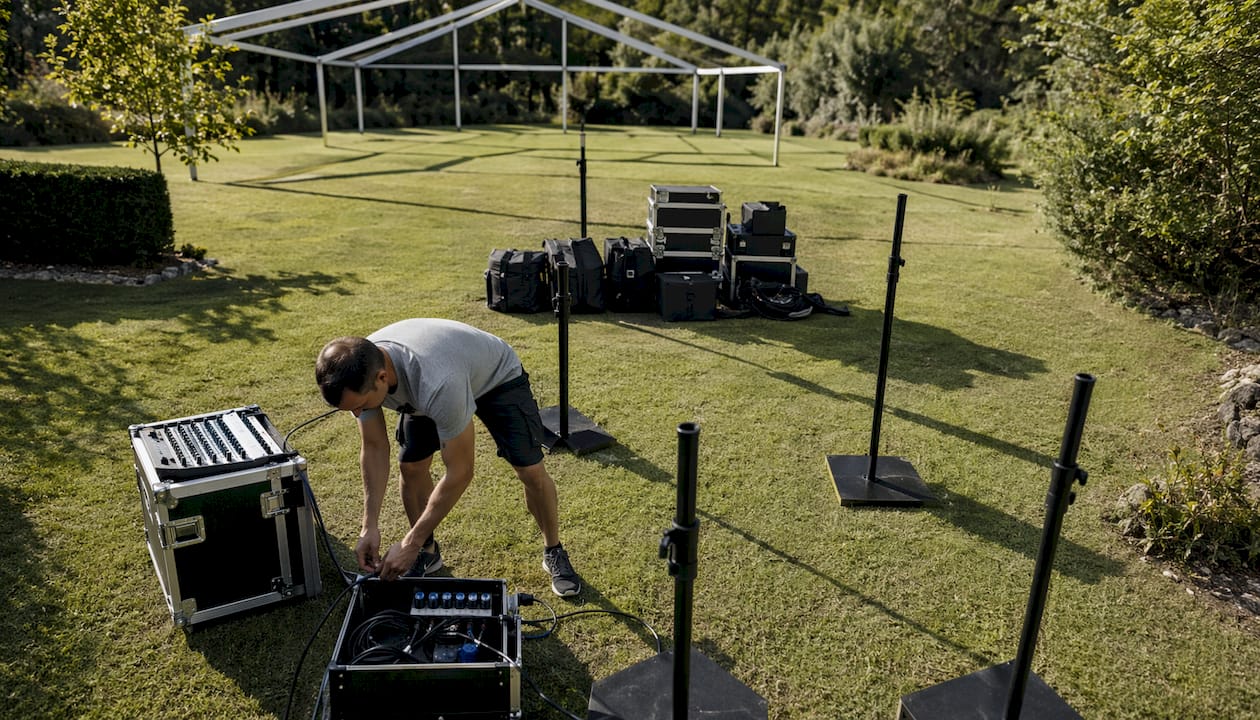
Sound behaviour changes completely outdoors. Walls and ceilings in indoor venues reflect sound back towards guests, creating natural volume and warmth. Outside, sound travels outward in all directions and loses energy quickly. This means outdoor bands need larger PA systems and more speakers than their indoor equivalents.
What types of wedding bands perform best outdoors?
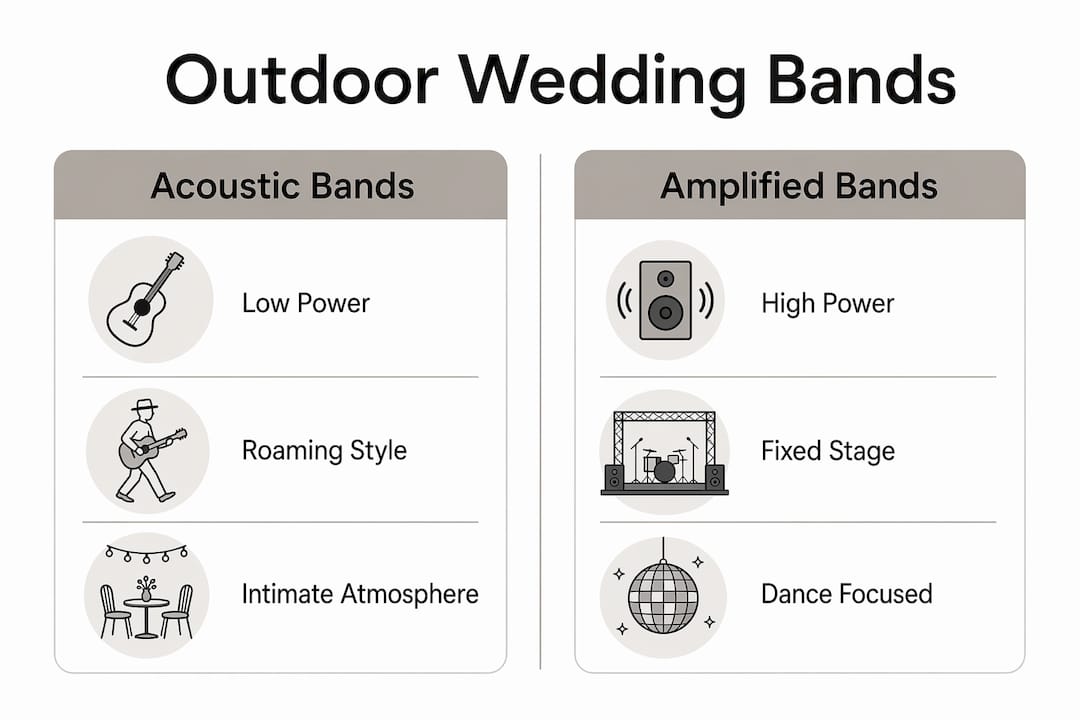
Two distinct performance styles suit outdoor weddings, and each serves a different part of the day.
Roaming and acoustic bands are best suited to daytime ceremonies, cocktail hours, and garden receptions. They carry minimal equipment, move freely among guests, and require little or no amplification. A duo or trio playing acoustic guitar, violin, or brass instruments can perform on grass, paving, or a terrace without a generator or stage. Roaming bands create intimate guest interactions that a fixed stage simply cannot replicate. Guests feel part of the music rather than an audience watching from a distance.
Amplified evening party bands are suited to the reception and dancing portion of the night. These groups require a fixed covered stage, a commercial power source, a full PA system, and a soundcheck period before guests arrive. The payoff is significant. A full band with brass, keys, and rhythm section can energise a garden reception in a way that a playlist never matches.
- Roaming acoustic bands: no generator needed, mobile, ideal for ceremonies and cocktail hours
- Small amplified duos or trios: light PA system, suitable for intimate outdoor dinners
- Full party bands: require generator, covered stage, and full PA setup for evening receptions
- Specialist acoustic bands for weddings: designed specifically for outdoor settings with weather-ready equipment
Pro Tip: Ask any band you consider whether they have performed at outdoor venues specifically. Experience with outdoor acoustics and setup logistics is not the same as general wedding experience.
What technical setup does an outdoor wedding band need?
Technical setup is the area couples most frequently underestimate. Outdoor performances require more powerful sound equipment than indoor performances because sound dissipates in open air. A PA system that fills a function room will sound thin and quiet in a garden.
Power is the single most critical requirement. Garden power outlets are not sufficient for a full band setup. Commercial generators rated between 2,000 and 10,000+ watts are standard for outdoor wedding bands, depending on the size of the group and the equipment they carry. Even when a band brings its own sound system, a dedicated and adequate power source is non-negotiable.
The performance surface must be flat and stable. Uneven ground creates safety risks for equipment stands, speaker towers, and drum kits. Bands performing on grass may need staging boards or a temporary platform to create a level surface. Setup times run longer outdoors than indoors due to equipment transport across uneven ground and the need for thorough soundchecks.
| Band type | Power requirement | Surface needed | Cover required |
|---|---|---|---|
| Acoustic roaming duo/trio | None | Any stable surface | Optional |
| Small amplified band (2–4 piece) | 2,000–4,000 watts | Flat, level ground | Recommended |
| Full party band (5–8 piece) | 6,000–10,000+ watts | Flat stage or platform | Required |
Pro Tip: Always ask the band for a technical rider before booking. This document lists every power, space, and equipment requirement. Sharing it with your venue coordinator early prevents last-minute surprises.
How to plan for weather and environmental challenges
Weather is the most unpredictable variable in outdoor wedding planning, and it affects bands more than almost any other supplier. All outdoor performance contracts must include weather contingency clauses. These clauses allow bands to stop performing or refuse to set up if conditions threaten instruments or equipment.
Temperature extremes matter as much as rain. Performance quality degrades significantly above 29°C or below 15°C, and musicians’ contracts commonly cover heat and cold alongside wet weather. Fans, portable heaters, or shaded staging areas may be needed depending on the season and location.
A 10×10 pop-up marquee is the most practical and cost-effective solution for protecting a band from rain and direct sun. Natural shade from trees is unreliable. Trees shift with the sun, and branches can drip sap or drop debris onto equipment. A marquee provides predictable, controlled shelter that protects both the band and their gear.
Key weather planning steps for couples:
- Confirm the band’s weather clause before signing any contract
- Arrange a marquee or covered stage area regardless of the forecast
- Plan a wet weather backup location for the entire reception, not just the band
- Check local noise restrictions, as wind can carry amplified sound further than expected
- Discuss temperature management with the band, particularly for summer weddings in warm climates
What should couples consider when booking an outdoor wedding band?
Booking an outdoor wedding band requires more preparation than booking an indoor act. The following steps reduce the risk of problems on the day.
Involve the band early. Share venue details, site maps, and access information as soon as possible. Early communication and venue walkthroughs allow bands to identify power access points, acoustic dead zones, and logistical challenges before the wedding day.
Confirm power arrangements. Establish whether the venue provides generator hire or whether the band or couple must arrange it independently. Never assume garden power outlets will be sufficient.
Check noise restrictions. Many outdoor venues, particularly in residential areas, have council-imposed noise limits and finish times. Confirm these with the venue and share them with the band before signing contracts.
Budget for additional costs. Outdoor weddings carry extra expenses beyond the band fee. Marquee hire, generator hire, staging boards, and extended setup time can all add to the total cost. Factor these in early.
Sign a contract that covers everything. The contract must include technical requirements, setup times, weather contingency clauses, and cancellation terms. A verbal agreement is not sufficient for an outdoor event.
Request a pre-event venue walkthrough. Walking the site with the band or their production manager identifies problems that no amount of email correspondence will reveal.
For couples planning outdoor wedding travel logistics, coordinating guest transport to remote outdoor venues adds another layer of planning that is worth addressing alongside the music booking.
How does outdoor wedding music affect the guest experience?
Live outdoor music creates an atmosphere that no indoor venue can replicate. The combination of natural surroundings, open sky, and live sound produces an experience that guests remember long after the day. Outdoor live music blends natural surroundings with acoustic or amplified sound in a way that feels genuinely special.
The key is matching the music style to the moment. Acoustic and roaming bands suit the relaxed, social atmosphere of a garden cocktail hour. Guests move freely, the band moves with them, and conversations happen naturally around the music rather than over it. This format works particularly well for wedding ceremony music and pre-reception drinks.
Amplified bands shift the energy entirely for the evening reception. A full band with a strong rhythm section and brass creates a physical, visceral experience that a DJ or playlist cannot match. The benefits of live band receptions are well documented: guests dance longer, engage more, and rate the entertainment higher.
Musical styles that work particularly well outdoors include:
- R&B and soul: warm, groove-driven, and suited to both relaxed and high-energy moments
- Jazz and swing: ideal for cocktail hours and garden ceremonies
- Acoustic pop: versatile and accessible for mixed-age guest lists
- Funk and Motown: high-energy and reliable for evening dancing
Key takeaways
An outdoor wedding band requires specific infrastructure, weather planning, and early booking coordination to deliver a performance that matches the occasion.
| Point | Details |
|---|---|
| Define the band type early | Choose between acoustic roaming bands and amplified party bands based on your venue and schedule. |
| Secure power and cover | Commercial generators and a marquee or covered stage are non-negotiable for amplified outdoor performances. |
| Include weather clauses | All outdoor band contracts must address rain, heat, and cold to protect instruments and performance quality. |
| Involve the band in planning | Venue walkthroughs identify power access, acoustic issues, and logistical problems before the wedding day. |
| Budget for extra costs | Generator hire, marquee hire, and extended setup time add to the total cost of outdoor live music. |
What I have learned booking bands for outdoor weddings
The biggest mistake couples make is treating an outdoor wedding band booking the same as an indoor one. They focus on the music style and the price, then discover on the day that the venue has no generator, the stage is on a slope, and the band’s contract has a weather clause that nobody read. That is a stressful situation that is entirely avoidable.
The technical requirements are not optional extras. Power, cover, and a flat surface are the foundation. Without them, the best band in the world cannot perform well. Couples who treat these as logistics to sort out later almost always face problems.
My strongest advice is to choose a band with genuine outdoor experience. Ask for specific examples of outdoor venues they have played. Ask how they handle generator failures or sudden rain. A band that has worked outdoors before will have clear, confident answers. One that has not will hesitate.
The reward for getting this right is real. There is nothing quite like a live band performing under the open sky at sunset. The sound, the setting, and the energy combine in a way that stays with guests for years. It is worth the extra planning.
— Deni
Brownsugarmusic and outdoor wedding music
Brownsugarmusic has been performing at weddings, corporate events, and live venues since 2003, including outdoor settings across Sydney and beyond. The band brings experience with outdoor acoustics, generator setups, and weather contingencies that removes the guesswork from your planning.

Whether you are planning a garden ceremony, a rooftop reception, or a beachside celebration, Brownsugarmusic offers practical guidance on technical requirements alongside live music that genuinely moves a crowd. Their soul band reception expertise covers everything from set lists to stage setup. For couples who want to understand the full picture before booking, the live band reception guide is a useful starting point. Contact Brownsugarmusic directly to discuss your outdoor venue and get specific advice on what your event needs.
FAQ
What is an outdoor wedding band?
An outdoor wedding band is a live musical group equipped to perform at open-air venues, requiring a flat surface, commercial power supply, and weather protection. They differ from indoor bands in their need for larger PA systems and contingency planning for weather.
How much power does an outdoor wedding band need?
Full party bands typically require between 6,000 and 10,000+ watts from a commercial generator. Smaller acoustic or semi-amplified groups may need as little as 2,000 watts, depending on their equipment.
Do outdoor wedding bands need a marquee or cover?
A covered performance area is required for any amplified outdoor band. A 10×10 pop-up marquee is a practical minimum, as natural shade is unreliable and can damage equipment through sap or debris.
What should a wedding band contract include for outdoor events?
The contract must cover technical requirements, setup times, noise restrictions, and a weather contingency clause addressing rain, heat, and cold. Verbal agreements are not sufficient for outdoor events.
What music styles work best for outdoor weddings?
R&B, soul, jazz, acoustic pop, and Motown all suit outdoor settings. Acoustic styles work well for ceremonies and cocktail hours, while amplified R&B and funk are best for evening receptions.