

A function band is a professional live group hired to perform covers at private events, with the sole purpose of entertaining guests and managing the atmosphere of the occasion. The term describes a role, not a genre. Function bands are defined by their event-specialist repertoire and adaptability, not by the style of music they play.
- Best suited to: weddings, corporate functions, private parties and bar residencies where live energy, guest interaction and a dancefloor are priorities.
- Less suited to: events requiring continuous, seamlessly mixed playlists or late-night club-style transitions.
- Professional standards: reputable function bands in the UK carry public liability insurance, hold PAT-tested equipment, and operate under written contracts. The Musicians’ Union provides guidance on both hiring and operating function bands professionally.
Brownsugarmusic, Sydney’s long-running R&B and soul act, is one example of a band that crosses all these categories, performing at weddings, corporate events and long-term venue residencies.
Table of Contents
- What is a function band and how does it differ from other live acts?
- Where do function bands typically perform?
- How do band sizes and line-ups scale for different budgets?
- What does a function band supply on the day?
- What songs do function bands play?
- How much does hiring a function band cost in the UK?
- What contracts and safety checks are required in the UK?
- Practical tips for musicians starting or joining a function band
- How do function bands keep dancefloors full?
- Key takeaways
- The part most guides leave out
- Useful sources
- Brownsugarmusic: live R&B and soul for events that need a real dancefloor
What is a function band and how does it differ from other live acts?
A function band’s defining characteristic is service orientation. The band’s job is to read the room, keep guests engaged and deliver a setlist shaped around the audience, not around the musicians’ personal taste. Function bands specialise in event-specific performance with a broad repertoire tailored to the theme and audience, which separates them clearly from original acts where the artist’s own material takes centre stage.
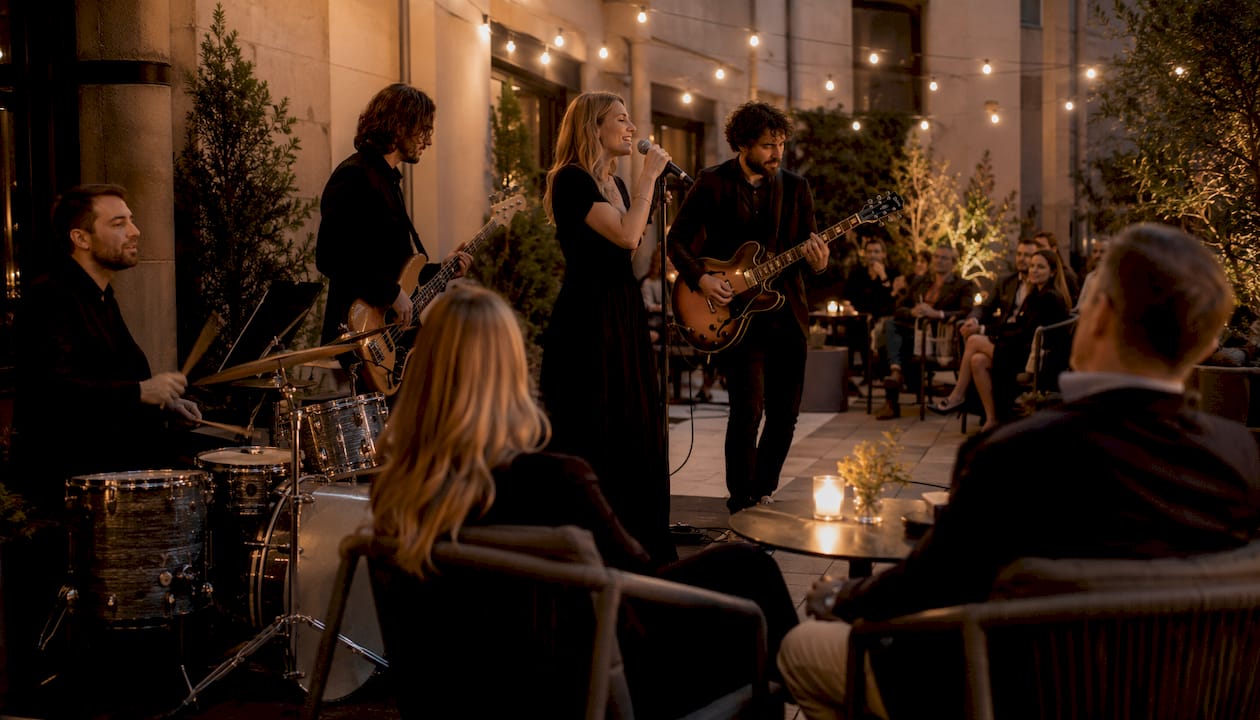
Compare that to a DJ, who offers seamless recordings, a broader catalogue and easier late-night transitions between genres. A DJ can pivot instantly to any track; a band cannot. A pub cover band, by contrast, plays covers too, but the set is typically built around what the band enjoys playing, with the venue’s regulars as a secondary consideration. A function band inverts that priority entirely: the client’s guests come first, always.
The live, immersive experience a function band provides is the main reason planners choose one over a DJ when atmosphere and guest interaction matter most. You cannot replicate a first dance with a live vocalist, or the moment a horn section lifts a room, with a playlist.
Pro Tip: Choose a live band over a DJ when the event has a defined emotional peak, such as a first dance, a corporate awards moment, or a milestone birthday toast. Those moments land differently with live musicians in the room.
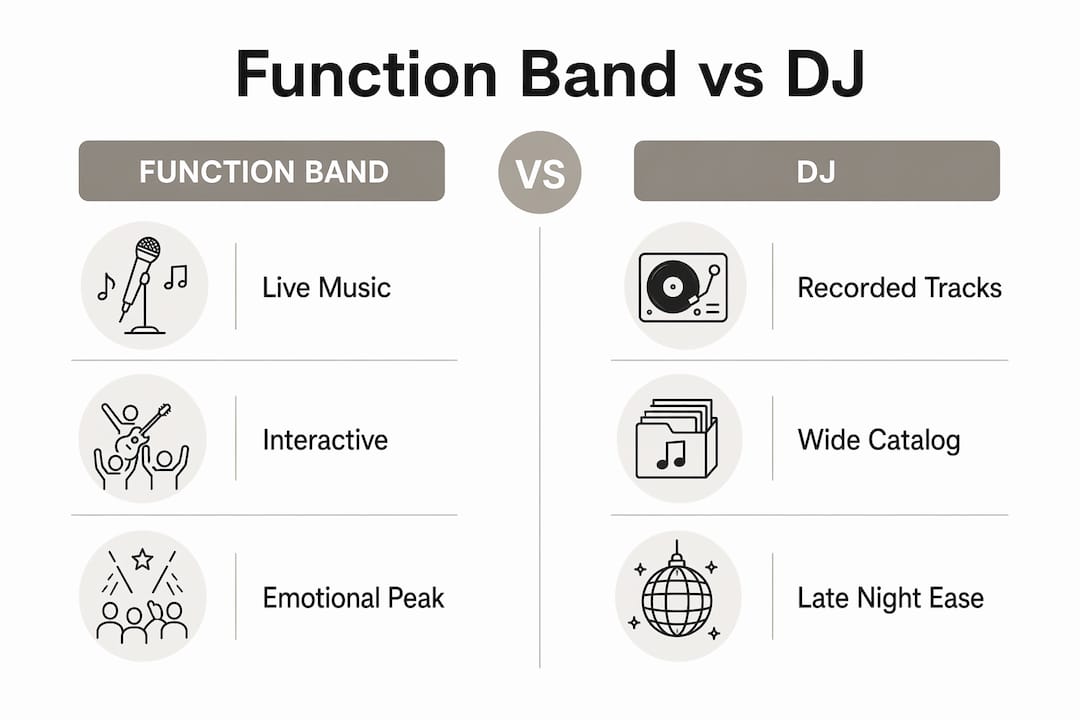
For a direct comparison of the two options, live band vs DJ breaks down the practical trade-offs for event planners.
Where do function bands typically perform?
Function bands work across a wide range of occasions. Each event type comes with its own expectations around repertoire, dress code and logistics.
- Weddings: the most common booking. Bands are typically asked to cover the wedding breakfast, evening reception and first dance. Multi-generational repertoire is standard. See the benefits of a live band at a wedding reception for a fuller breakdown.
- Corporate events: product launches, award ceremonies, staff parties and client dinners. Punctuality and scripted timing are non-negotiable; bands are often given a precise start and finish time and expected to stick to it.
- Private parties: milestone birthdays, anniversaries and house parties. More flexibility on repertoire and dress code; the host usually has strong opinions on song choices.
- Charity events and galas: similar to corporate in terms of formality, but often with a more relaxed atmosphere once the fundraising programme ends.
- Bar and venue residencies: shorter sets, a repeat audience, and a different dynamic. Bands playing weekly residencies need to rotate material regularly to keep regulars engaged.
The Musicians’ Union notes that reputation and agent relationships are particularly important for securing high-profile corporate and venue work. Corporate clients tend to book through agencies rather than searching independently, so a band’s professional track record carries more weight than it does in the wedding market.
For events that run late, an after-party band format is a separate consideration, with different set lengths and energy requirements.
How do band sizes and line-ups scale for different budgets?
Band line-ups commonly range from compact acoustic duos to large eight to ten piece ensembles. Scalability is one of the function band’s commercial strengths: the same core group can expand or contract to match a client’s budget and the venue’s physical constraints.
| Size | Typical instruments | Ideal venue |
|---|---|---|
| Duo / acoustic | Vocals, acoustic guitar (or keys) | Intimate rooms, ceremonies, cocktail hours |
| Trio | Vocals, guitar, bass or keys | Small function rooms, pub residencies |
| Quartet | Vocals, guitar, bass, drums | Mid-size function rooms, most weddings |
| Five-piece | Quartet + keys or second vocalist | Hotel ballrooms, corporate dinners |
| Six to eight piece | Quartet + keys, brass, backing vocals | Large receptions, gala events |
| Eight to ten piece | Full band + horn section, multiple vocalists | Ballrooms, festival stages, prestige events |
The quartet (vocals, guitar, bass, drums) is the most common starting point for function work. From there, the first addition that delivers the most noticeable uplift is usually a keyboard player, who fills harmonic space and can cover organ, piano and synth textures simultaneously. A lead vocalist with strong stage presence is the other high-impact addition for bands building from a rhythm section up.
For a detailed look at what changes between an acoustic setup and a full band, the acoustic vs full band comparison covers the practical differences in sound, space and cost.
Pro Tip: When budget is tight, prioritise the rhythm section and a strong lead vocalist over additional instruments. A tight four-piece with a compelling frontperson will outperform a loose six-piece every time.
What does a function band supply on the day?
Clear expectations prevent most day-of disputes. Here is a typical split of responsibilities.
What the band usually supplies:
- PA system (speakers, amplifiers, mixing desk, microphones and stands).
- Stage monitors so musicians can hear themselves during the performance.
- Basic stage lighting (often LED wash lights or a simple par-can rig).
- All instruments and backline (unless a backline rider is agreed separately).
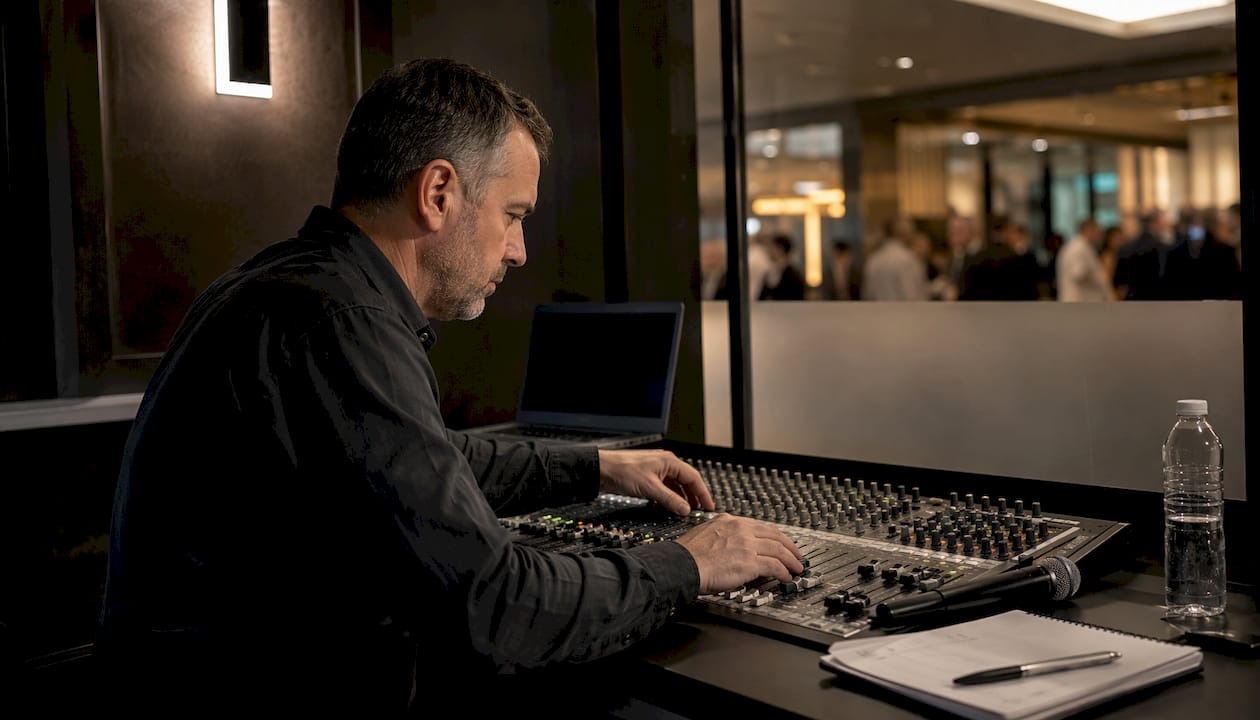
- A dedicated sound engineer or a band member who doubles as FOH operator.
- Background music via a playlist during set breaks.
- MC duties between sets if agreed in advance.
What the organiser typically provides:
- Adequate power supply (usually two or more 13-amp sockets, or a dedicated 32-amp supply for larger rigs).
- Secure load-in access, ideally level and close to the stage area.
- A hospitality rider (water, soft drinks, a meal for longer engagements).
- A clear stage area of agreed dimensions, free of obstructions before the band arrives.
Sample timetable for a wedding reception:
- 3:00 PM — Band arrives, load-in begins.
- 4:00 PM — Soundcheck. Venue must be clear of guests during this period.
- 6:00 PM — Band available for background/acoustic set during drinks reception (if included).
- 7:30 PM — First set begins (45–60 minutes).
- 8:30 PM — Set break; background playlist runs.
- 9:00 PM — Second set begins (45–60 minutes).
- 10:00 PM — Set break.
- 10:30 PM — Final set (30–45 minutes, ending before curfew).
- 11:00 PM — Curfew / last song.
- 11:30 PM — Load-out complete.
Travel charges, overtime rates and curfew penalties should all be agreed in writing before the event. For a full breakdown of stage and power requirements, the specifics vary by band size and venue type.
What songs do function bands play?
Repertoire is where a function band’s skill shows most clearly. The goal is multi-generational coverage: a setlist that pulls guests in their 60s onto the floor alongside guests in their 20s. That usually means drawing from several decades and multiple genres within a single evening.
A typical function band setlist draws from:
- Motown and soul classics: Stevie Wonder, Aretha Franklin, Marvin Gaye.
- Disco and funk: Earth, Wind & Fire, Chic, Kool & the Gang.
- 80s pop and rock: Michael Jackson, Prince, Bon Jovi, Fleetwood Mac.
- 90s and 2000s floor-fillers: Robbie Williams, Amy Winehouse, Daft Punk.
- Modern chart hits: sample setlists for function bands commonly include Arctic Monkeys, Avicii, Bastille and Bruno Mars to cover younger guests.
For a wedding reception, the first set often opens with recognisable, mid-energy tracks to draw people to the floor without demanding full commitment. The second set typically builds to the highest-energy material. An after-party set, if included, shifts toward club-friendly tracks and extended grooves.
Requests and dedications are handled differently by different bands. The most practical approach is a pre-approved request list shared with the client before the event, with limited live requests taken during set breaks rather than mid-set. This keeps the performance tight while giving the client a sense of involvement. For guidance on building and structuring a setlist, what is a band set list covers the process in detail.
How much does hiring a function band cost in the UK?
Function band pricing in the UK is not standardised. Several variables shape the final quote, and understanding them helps both planners negotiate and musicians price their services fairly.
Main factors affecting cost:
- Line-up size. More musicians means higher fees, more travel costs and a larger equipment rig.
- Day and date. Friday and Saturday evenings, bank holidays and peak wedding season (May to September) command higher rates.
- Set length and number of sets. A two-set evening costs more than a single set; adding a ceremony or drinks reception set adds further.
- Travel. Bands typically charge travel costs beyond a set radius, sometimes including overnight accommodation for distant venues.
- Equipment. If the band supplies a full PA and lighting rig, that is usually included in the quote or itemised separately. Hiring additional equipment adds cost.
- Additional services. MC duties, a DJ service between sets, or a bespoke learning of a first-dance song all attract additional fees.
No single published rate applies across the UK market. Quotes vary significantly by region, band profile and season. When requesting a quote, ask for an itemised breakdown covering the performance fee, travel, equipment, and any overtime rate. Confirm whether VAT is included.
Running a function band is effectively running a small entertainment business, and professional bands price accordingly. A deposit on booking, with the balance due before or on the day, is standard practice.
What contracts and safety checks are required in the UK?
Both organisers and musicians benefit from clear paperwork. A verbal agreement is not sufficient for a professional function booking.
Essential contract clauses:
- Deposit amount and payment schedule.
- Cancellation terms for both parties (and what triggers a refund or retention of deposit).
- Force majeure clause covering illness, extreme weather or venue closure.
- Precise performance times, set lengths and curfew.
- Equipment responsibility: who owns what, and who is liable for damage.
- Noise limiter or sound restriction details if the venue has them.
Safety and compliance:
- Public liability insurance: professional operation requires public liability cover. Most venues require a minimum of £5 million cover; some corporate clients ask for £10 million. Bands without it will be turned away.
- PAT testing: all electrical equipment used at public or private events should be PAT tested and carry a current certificate. Venues increasingly ask to see PAT records before allowing load-in.
- Music licensing: venues are responsible for holding a PRS for Music and PPL licence covering live performances. Bands do not need their own licence for covers, but it is worth confirming the venue’s licence is in place before the event.
The Musicians’ Union provides template contracts and guidance on standard terms for function bookings. Using their resources is a straightforward way for both new and established bands to ensure their paperwork is fit for purpose.
This article provides general information only. For advice specific to your situation, consult a qualified professional or the relevant primary source.
Practical tips for musicians starting or joining a function band
Starting a function band takes time to generate a steady diary of paid work. The bands that build quickly tend to be the ones that treat it as a business from the outset.
- Build a core repertoire first. Aim for 40–50 songs across multiple genres before approaching any bookings. A band that can only cover one era will struggle to fill a dancefloor at a mixed-age event.
- Get your equipment PAT tested. Do this before your first paid gig, not after a venue turns you away.
- Take out public liability insurance. Cover is available through the Musicians’ Union membership or independently through specialist music insurers.
- Record a professional promo video. Event planners and couples book on the basis of video evidence. A well-shot live performance clip is more persuasive than any written description.
- Price travel and setup time correctly. Quote a flat travel rate or a per-mile rate beyond your home radius, and include soundcheck time in your minimum booking window. Bands that undercharge for travel quickly find distant gigs are not worth taking.
- Use agents and booking platforms. Agencies take a commission, but they provide a consistent pipeline of work and lend credibility to newer bands. Build direct relationships alongside agency work, not instead of it.
- Develop a repeatable setlist structure. A reliable set order that you know works lets you focus on performance rather than logistics on the night.
Reviewing wedding band videos before booking is standard practice for clients, so the quality of your promo material directly affects your conversion rate.
How do function bands keep dancefloors full?
Well-run function bands focus on reading the crowd and pacing the set rather than showcasing personal artistry. That is the commercial differentiator. A band that plays its favourite songs in its preferred order will entertain itself; a band that maps the room’s energy and responds to it will fill the floor.
The practical approach is energy mapping: planning the set in three phases. An opening phase of recognisable, mid-tempo tracks draws people in without demanding full commitment. A building phase raises the tempo gradually, using call-and-response moments (a vocalist asking the room to clap, a brief instrumental break that invites audience participation) to increase engagement. The peak phase delivers the highest-energy material once the floor is already moving.
Adjusting tempo, swapping in a known floor-filler and timing short audience interactions are documented tactics that reliably increase dancefloor engagement. A concrete example: a band playing to a sparse floor at the start of a second set can often turn the room within two songs by dropping to a universally known track at a slightly higher tempo, then following it immediately with something the older guests recognise. The floor fills in layers, not all at once.
Transitions between songs matter as much as song choice. A dead stop between tracks breaks momentum; a brief drum groove or a held chord that resolves into the next song’s intro keeps the energy continuous. Mashups serve a similar function, compressing two familiar hooks into a single moment that rewards attentive listeners.
Pro Tip: For a mixed-age crowd, anchor the set with one universally known track per decade from the 1970s to the present. Those anchor tracks act as permission slips: once guests hear something they recognise, they feel comfortable joining the floor.
Key takeaways
A function band is a professional covers act hired to serve the event, not to showcase original material, and its commercial value lies in repertoire breadth, crowd-reading and reliable logistics.
| Point | Details |
|---|---|
| Function band definition | A professional covers act hired to entertain guests at private events, prioritising audience engagement over artistic expression. |
| Scalable line-ups | Band sizes range from acoustic duos to ten-piece ensembles; quartet is the standard starting point for most bookings. |
| Legal and safety must-haves | Public liability insurance, PAT-tested equipment and a written contract with deposit and cancellation terms are non-negotiable in the UK. |
| Repertoire strategy | Multi-generational setlists covering Motown, disco, 80s pop, 90s hits and modern chart tracks give the broadest dancefloor appeal. |
| Brownsugarmusic | Sydney’s resident R&B and soul act since 2003, performing at weddings, corporate events and private parties with a repertoire built for dancefloors. |
The part most guides leave out
The function band market is full of competent musicians who underestimate how much the job is about service design rather than musicianship. A band can be technically excellent and still clear the floor by playing the wrong song at the wrong moment, or by ignoring the visual cues that tell you the room needs a tempo change.
The bands that build long-term reputations, the ones that get re-booked for corporate clients year after year or hold a venue residency for two decades, are the ones that treat every gig as a brief to solve. The brief is always the same: keep this specific group of people engaged and on their feet for this specific duration. Everything else, genre, instrumentation, personal preference, is secondary to that.
What that means practically is that the best function musicians are also the most self-effacing. They know when to drop a song they love because the room does not want it. They know when a slower groove will hold the floor better than a high-energy peak. That skill is not taught in music college. It comes from repetition, from playing the same types of events enough times to recognise the patterns.
For planners, the implication is straightforward: ask a prospective band how they handle a slow floor, not just what songs they play. The answer tells you more about their professional quality than any setlist.
Useful sources
- Musicians’ Union: functions and residencies guidance — the UK’s primary professional body for musicians; covers contracts, insurance, agents and standard terms for function work.
- Last Minute Musicians: how to form a function band — practical five-step guide covering line-up, gear, costs, PAT testing and public liability requirements.
- Function Central: how to start a function band — startup advice on promotion, rehearsal discipline and building a paid gig diary.
- Alive Network: function band setlist ideas — concrete song examples across genres and decades for building multi-generational setlists.
- Wikipedia: cover band — background on the cover band format and how function, wedding and party bands fit within it.
Brownsugarmusic: live R&B and soul for events that need a real dancefloor
If you have read this far and you know live music is the right choice for your event, the next question is which band fits the occasion.
Brownsugarmusic has been performing R&B and soul at weddings, corporate functions and private parties since 2003. The band holds a long-term Friday night residency at Marble Bar in the Hilton Sydney, which means the live-performance consistency that event planners rely on is built into how the band operates, not just promised in a brochure. The repertoire spans classic soul, Motown, funk and contemporary R&B, covering the multi-generational range that keeps mixed-age dancefloors moving. For couples wanting a specific genre fit, the R&B and soul wedding atmosphere guide explains exactly what that sounds like in practice.
For corporate clients, the band brings the same punctuality and scripted timing that professional events require. For private parties, the setlist adapts to the host’s brief.
Check availability and book your event directly through the Brownsugarmusic events page.