

Briefing a wedding band means giving them precise details about your schedule, music preferences, guest requests, and technical requirements before the event. This process, known in the industry as an artist brief or performance brief, is the single most effective way to prevent avoidable problems on your wedding day. A well-briefed band arrives prepared, sets up without confusion, and performs exactly what you want. Skip the brief, and you risk timing clashes, wrong songs, and a dancefloor that never quite gets going.
How to brief a wedding band: timing and scheduling
Scheduling is the foundation of any good wedding band brief. Allow at least 60–90 minutes for load-in, setup, and soundcheck before the band plays a single note. That window is not negotiable. A band arriving at 6:00pm needs until at least 7:30pm before they are performance-ready.
A practical sample schedule looks like this:
- 6:00pm — Band arrives, load-in begins
- 6:00–7:30pm — Setup and soundcheck
- 7:30–8:30pm — Background music during dinner
- 8:30–9:30pm — First dance and first live set
- 9:30–10:00pm — Break, then second set follows
The biggest scheduling risk is letting speeches or a late-running meal cut into the band’s soundcheck window. Once that time is lost, it cannot be recovered. Build a 15-minute buffer around every key moment, including the first dance, cake cutting, and speeches.
Share venue access details in writing. The band needs to know the load-in entrance, available parking for a van or trailer, lift dimensions if the venue is multi-storey, and who to contact on arrival. Vague instructions waste time and raise stress levels for everyone.
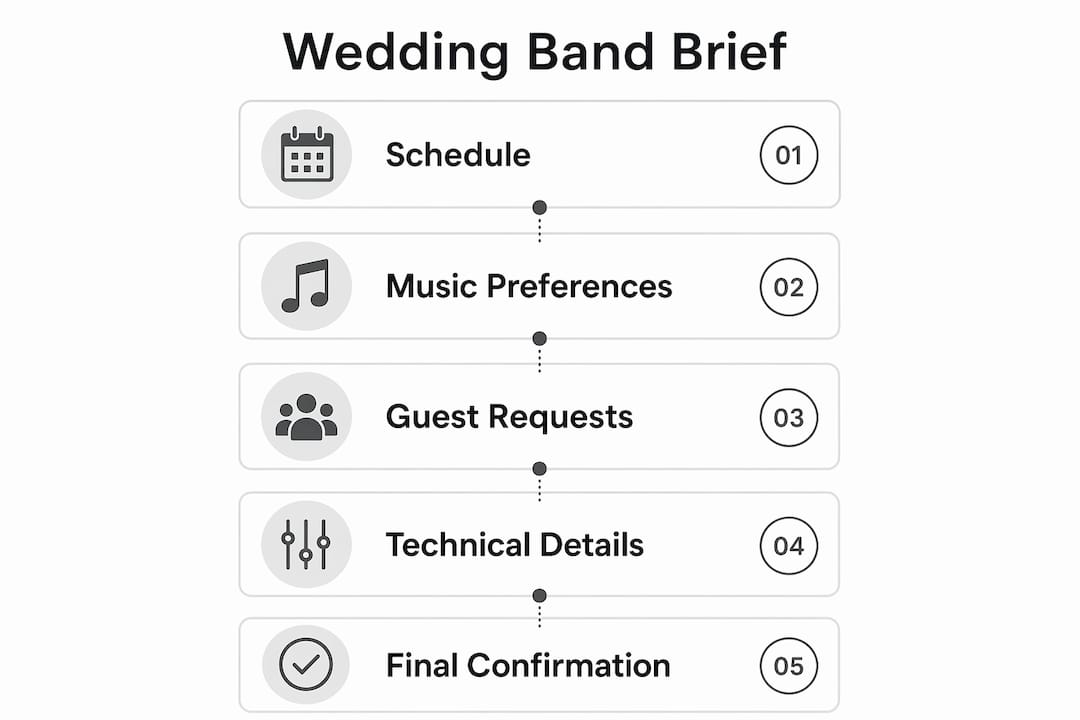
Pro Tip: Send a wedding performance checklist to your band at least two weeks before the event. Last-minute schedule changes are far harder to absorb than early ones.
What music preferences should you tell your wedding band?
Musical alignment starts with clear boundaries. Tell the band which genres are welcome and which are not. If you want R&B, soul, and Motown but no heavy rock or country, say so explicitly. Vague guidance like “we like most things” leaves the band guessing and risks a set that misses the mark.
Provide two lists:
- Must-play songs — specific tracks you want performed, including the first dance, parent dances, and any personal favourites
- Do-not-play songs — tracks that are off limits, whether for personal reasons or because they simply do not fit your crowd
Address the clean versus explicit question directly. If your guest list includes children or elderly relatives, request clean versions of songs with strong language. Most professional bands carry both versions in their repertoire. Failing to specify this upfront is one of the most common oversights couples make.
Think about music by section of the day. Ceremony music, cocktail hour background sets, dinner background music, and the main dancefloor set each call for a different energy. A good brief maps the mood you want for each phase. Brownsugarmusic, for example, routinely receives briefs that specify a relaxed soul groove for dinner and a high-energy R&B set for the dancefloor. That level of detail makes the difference between a good night and a great one.
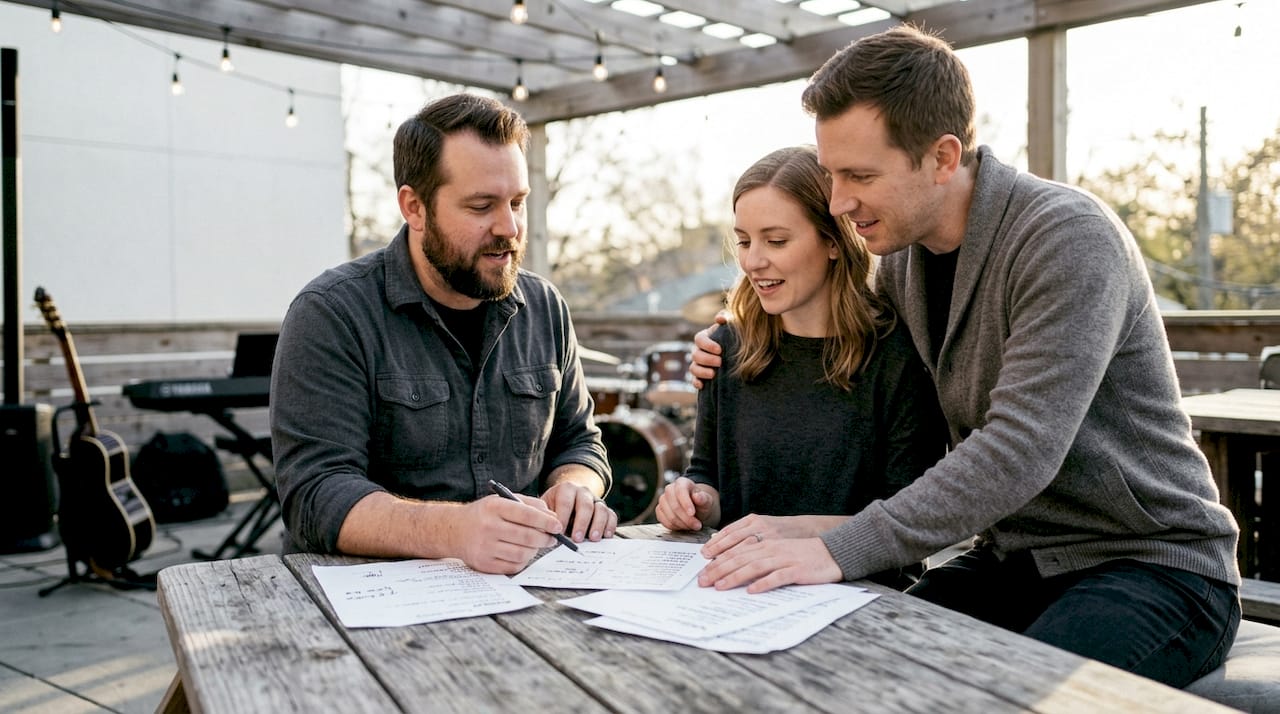
Communicating music boundaries clearly to both the band and your guests means fewer surprises and a more consistent atmosphere throughout the evening.
How should you manage guest song requests at your wedding?
Random requests shouted at the stage or scrawled on Post-it notes are the fastest way to disrupt a live performance. A managed request system protects both the band and your guests. QR codes placed at the bar, tables, and entrance allow guests to submit requests digitally. The band reviews them between songs without breaking flow.
Platforms like Rekwest handle this process specifically for live music events. Guests submit requests through a phone-friendly interface. The band sees a queue and can accept or decline without stopping to have a conversation mid-set. Digital request queues let bands maintain artistic control while still engaging guests.
Include these points in your brief:
- Nominate the bandleader as the sole request handler. Guests should not approach other band members during a set.
- Agree on a shortlist of songs the band can slot in easily without extra rehearsal. Keeping a shortlist of ready-to-play tracks means last-minute requests do not derail the performance.
- Set a cut-off time for requests, for example, no new requests after 10:30pm so the final set can run as planned.
- Communicate the request rules to guests via signage or a note in the wedding programme.
Pro Tip: Rather than rejecting requests outright, channel them through a clear system so guests feel involved without the band losing control of the setlist. A well-managed request process is a guest experience win, not a compromise.
The guest music requests guide from Brownsugarmusic covers this in detail for couples who want a full walkthrough of setting up a request system at their venue.
What technical details does your wedding band brief need?
A technical rider is a written document that lists everything the band needs from the venue to perform. A detailed stage plot and input list helps the venue provide the correct mixer channels, monitor placement, and power supply. Without one, the sound engineer is guessing, and guesses cause problems.
Technical riders should include mic and DI requirements, monitor and power location preferences, and any riser or elevated platform needs. Ask your band for their rider early and pass it to the venue coordinator at least two weeks before the wedding.
| Technical detail | What to include |
|---|---|
| Stage plot | Diagram showing position of each band member and equipment |
| Input list | Number of microphones, DI boxes, and instrument channels required |
| Power requirements | Number of power points and their locations on stage |
| Monitor needs | Number of floor monitors and which band members need them |
| Hospitality | Hot meal per band member, changing room, and water on stage |
Hospitality details matter more than most couples realise. A band working a full wedding day, from soundcheck at 6:00pm to pack-down at midnight, needs a hot meal and a private space to change and rest. Including this in the brief shows professionalism and keeps the band performing at their best.
Pro Tip: Specificity in the technical rider reduces uncertainty for venues and avoids last-minute soundcheck problems. Send the rider as a PDF attachment alongside your written brief, not as a verbal mention.
Key takeaways
A complete wedding band brief covers scheduling, music preferences, guest request management, and technical logistics. Leaving any one of these out creates avoidable problems on the day.
| Point | Details |
|---|---|
| Allow setup time | Schedule 60–90 minutes for load-in, setup, and soundcheck before the first set. |
| Define music boundaries | Provide must-play and do-not-play lists, and specify clean versus explicit versions. |
| Manage requests formally | Use QR codes or platforms like Rekwest to channel requests through the bandleader. |
| Submit a technical rider | Share a stage plot, input list, and power requirements with the venue in advance. |
| Include hospitality details | Confirm a hot meal, changing room, and water on stage for the band. |
Deni’s take: what couples get wrong when briefing a band
The most common mistake I see is couples treating the brief as a formality rather than a working document. They send a rough email a week before the wedding, mention a few song titles, and assume the band will fill in the gaps. Professional bands can adapt, but they perform at their best when the brief is specific, early, and complete.
The second mistake is forgetting the venue side of the equation. The band and the venue need to be in sync. If the venue coordinator has not seen the technical rider, the sound engineer shows up without the right gear. That is a fixable problem at 2:00pm on a Thursday. At 6:30pm on your wedding day, it is a crisis.
Flexibility and clear expectations are not opposites. A detailed brief does not box the band in. It gives them the confidence to read the room and make good decisions. Brownsugarmusic has been performing at weddings since 2003, and the events that run most smoothly are always the ones where the couple took the brief seriously. Not because the band needed hand-holding, but because clear information removes friction and lets everyone focus on the performance.
One more thing: send the brief to a single point of contact at the band. Multiple emails to multiple people create version confusion. One document, one contact, one confirmation. Keep it simple.
— Deni
Brownsugarmusic: briefed, prepared, and ready to perform
Brownsugarmusic has performed at weddings across Sydney and around the world since 2003. Every booking includes a structured briefing process covering timing, music preferences, technical requirements, and hospitality. The band’s experience as the resident act at Marble Bar in the Hilton Sydney means they understand how professional venues operate and what it takes to deliver a flawless night.
Couples who want a band that arrives prepared and performs exactly what was agreed will find Brownsugarmusic’s approach straightforward. Their soul band wedding reception guide covers what to expect from the full briefing process. For couples still deciding on musical style, the R&B soul wedding atmosphere guide explains how the right genre choice shapes the entire evening.
FAQ
How far in advance should I brief my wedding band?
Send the full brief at least two to four weeks before the wedding. This gives the band time to prepare setlists, confirm technical requirements with the venue, and flag any issues early.
What is a technical rider for a wedding band?
A technical rider is a written document listing the band’s equipment, microphone, power, and monitor requirements. It is shared with the venue so the sound engineer can prepare the correct setup in advance.
How do I handle guest song requests at my wedding?
Use a digital request platform like Rekwest or place QR codes at tables and the bar. Direct all requests to the bandleader and set a cut-off time so the final set runs as planned.
Should I provide a do-not-play list to my wedding band?
Yes. A do-not-play list is as important as a must-play list. It prevents the band from performing songs that are off limits for personal, cultural, or audience-related reasons.
What happens if the band’s soundcheck runs over time?
Late soundchecks compress the performance schedule and reduce dancefloor time. Build a 15-minute buffer around the soundcheck window and confirm the schedule in writing with both the band and the venue coordinator.