

A wedding music consultation is a dedicated planning session between a couple and their music professional. It covers two core areas: logistics and music programming. The goal is a personalised soundtrack that fits the wedding day from start to finish.
What does a wedding music consultation involve?
A wedding music consultation is a structured meeting where couples and music professionals align on every musical element of the day. Logistics and music programming are the two main pillars. Bespoke song services go further, with extended sessions to gather personal stories and emotional anchors.
The consultation covers:
- The wedding day timeline and key moments requiring music
- Venue acoustics, amplification needs, and technical requirements
- Lists of songs that must or must not be played
- Guest demographics and energy expectations
- Coordination with other vendors such as the celebrant and photographer
- Instrumentation choices suited to the space and guest numbers
- The overall musical direction and mood for each segment
The session produces a clear brief that the music professional works from on the day. Nothing is left to guesswork.
What happens during a typical wedding music consultation?
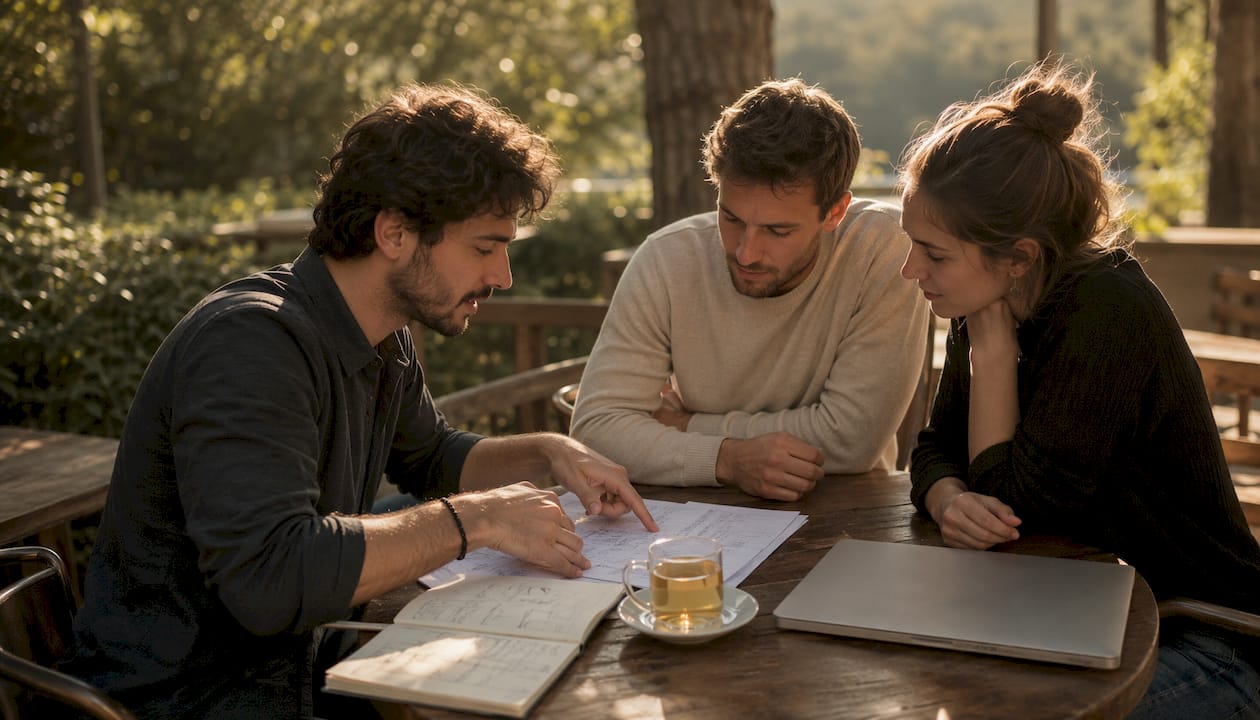
The consultation follows a logical sequence. It starts with the event timeline, then moves through each segment of the day, and finishes with technical and logistical details.
Key topics covered include:
- Event timeline review: Confirming ceremony start time, cocktail hour duration, dinner, and reception end time
- Moment-by-moment music planning: Prelude, processional, recessional, first dance, parent dances, and last dance all require individual song decisions
- Must-play and do-not-play lists: Providing these lists gives the professional clear boundaries and creative direction
- Guest context: Age range, energy level, and music preferences help the professional read the room
- Announcement script: How the couple will be introduced, wedding party names, and any dedications
- Acoustic and technical review: Venue size, PA requirements, and any restrictions on volume or equipment
- Vendor coordination: Confirming cue points with the celebrant, photographer, and venue coordinator
A full-day wedding playlist covers roughly 150–200 songs across all segments. The consultation determines which of those moments need specific selections and which can be left to the professional’s judgement.
Pro Tip: Bring a rough timeline of the day to your consultation. Even an approximate schedule helps the music professional map songs to moments accurately.
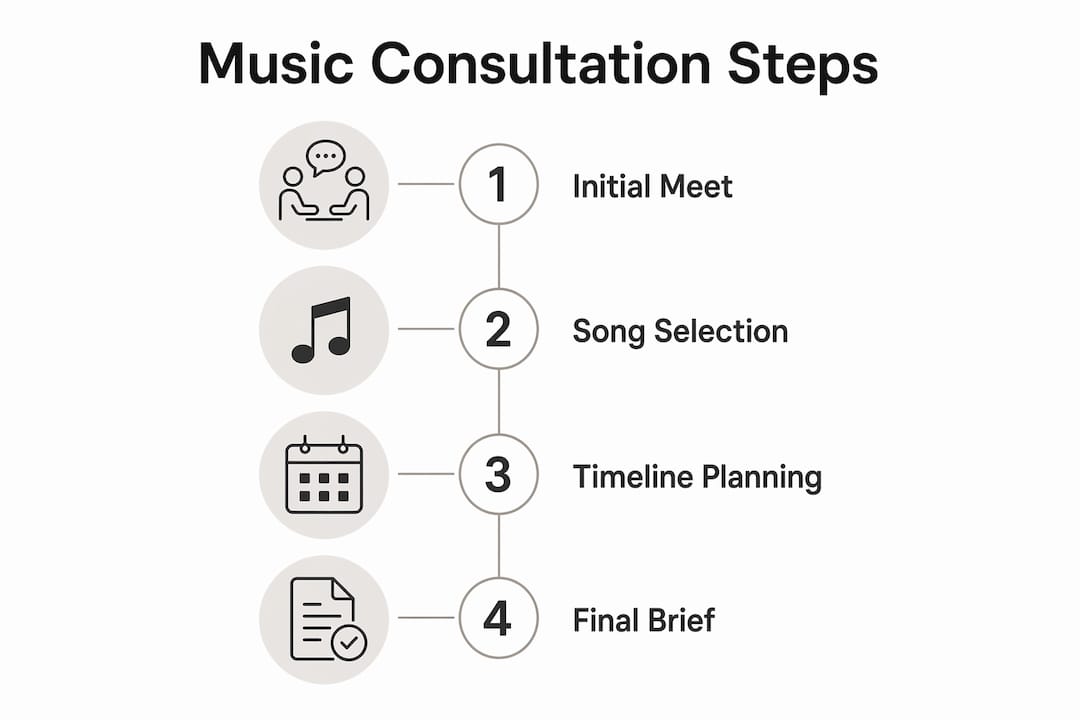
How do you build a personalised wedding playlist with a professional?
Effective collaboration starts with articulating a musical direction, not a rigid tracklist. Defining broad musical themes rather than controlling every song gives the professional the flexibility to respond to the room’s energy.
Practical steps for building the playlist together:
- Share three to five artists or songs that represent your taste as a couple
- Identify the mood for each segment: relaxed and conversational for cocktail hour, energetic for the dance floor
- Flag any songs with personal significance, such as the track playing when you first met
- Note guest considerations, including older relatives who may prefer familiar classics
- Agree on a “vibe word” shortlist such as “soulful and warm” or “upbeat and fun”
The professional brings expertise in song flow, tempo transitions, and crowd reading. Your role is to provide the emotional context. Together, those two inputs produce a playlist that feels personal rather than generic.
Pro Tip: Do not self-censor. Share everything you like and let the professional decide where it fits best in the day’s programme.
For couples exploring wedding music curation, this collaborative approach is the foundation of a cohesive soundtrack.
What factors shape music selection and instrumentation?
Several practical factors influence which instruments and songs work for a given wedding. Getting these right during the consultation prevents problems on the day.
- Venue size and acoustics: A large brass ensemble in a small chapel overwhelms the space. Acoustic considerations should be discussed early, including amplification needs and any venue-imposed volume limits.
- Guest-to-musician ratio: A quartet suits a ceremony of around 200 guests. Smaller gatherings work well with a duo or trio, often supplemented by a sound person.
- Outdoor versus indoor settings: Outdoor venues may rule out traditional pianos. Electric alternatives or acoustic instruments with amplification become the practical options.
- Cultural and religious traditions: Some venues prohibit certain songs. Religious ceremonies may have strict guidelines on secular music.
- Event segment requirements: Each part of the day calls for a different tempo and energy. Dinner music sits at a mellow background level; the dance floor demands something with drive.
- Technical requirements: Guitars and string instruments resonate well when amplified. Some instrument combinations, such as a violin-cello duo, can lack fullness in a live setting without additional support.
The guest-to-musician ratio is one of the most overlooked factors in wedding music planning. Getting it wrong affects sound balance and guest comfort throughout the event.
How should you prepare for your wedding music consultation?
Preparation makes the consultation more productive. Couples who arrive with a clear picture of their day get more out of the session.
Steps to take before the meeting:
- Map the day’s key moments: Write down the ceremony start time, cocktail hour, dinner, first dance, and reception end. Even rough timings help.
- Draft a must-play list: Ten to fifteen songs that must be included, no exceptions.
- Draft a do-not-play list: Ten to twenty songs that would disrupt the mood or upset guests.
- Gather emotional anchors: Songs tied to specific memories, places, or people. These are especially useful for bespoke song consultations, where personal stories shape the musical narrative.
- Note your venue’s restrictions: Check whether the venue has volume limits, equipment rules, or music curfews.
- Think about your guests: Consider the age range and energy level of the people attending.
Finalising special songs and detailed preferences at least 4–6 weeks before the wedding gives the professional time to source unusual requests. A follow-up meeting 1–2 weeks out confirms all final details.
A wedding music brief is a useful document to prepare in advance. It captures everything the professional needs in one place.
Expert insights for getting the most from your consultation
Experienced music professionals share a consistent set of observations about what separates a productive consultation from a frustrating one.
- Avoid micromanaging the tracklist. Allowing professionals to maintain energy flow through broad musical directions produces better results than specifying every song in sequence.
- Trust the room-reading skill. A professional DJ or band leader reads the crowd in real time and adjusts accordingly. That skill only works when they have creative latitude.
- Discuss acoustics early. Venue-specific sound characteristics affect every instrumentation decision. Raising this at the start of the consultation saves time later.
- Use vibe words. Phrases like “soulful and warm” or “classic and celebratory” communicate mood more effectively than a list of songs.
- Coordinate with other vendors. The music professional needs cue points from the celebrant and photographer. Sharing contact details during the consultation simplifies this.
- Plan for the emcee role. Many professional DJs and band leaders also manage announcements and keep the event running to schedule. Clarifying this during the consultation avoids gaps in the programme.
- For bespoke songs, share stories freely. Intimate story-gathering sessions produce the most personalised musical outcomes. The more context the songwriter has, the more specific and meaningful the result.
Couples considering the choice between formats can find a useful breakdown in this DJ versus live band guide covering the key practical differences.
Key takeaways
A wedding music consultation is the single most effective step couples can take to ensure their soundtrack reflects their vision and runs smoothly on the day.
| Point | Details |
|---|---|
| Two core pillars | Every consultation covers logistics and music programming; bespoke song services add a story-gathering phase. |
| Preparation accelerates results | Bring a day timeline, a must-play list, and a do-not-play list to make the session productive from the start. |
| Direction over micromanagement | Defining broad musical themes gives professionals the flexibility to read the room and maintain energy. |
| Acoustics and ratio matter | Venue size, guest numbers, and amplification needs shape instrumentation choices and should be discussed early. |
| Finalise details early | Lock in special songs and preferences at least 4–6 weeks before the wedding, with a final check 1–2 weeks out. |
Why the consultation matters more than the playlist
Most couples spend hours choosing songs and very little time briefing the professional who will actually play them. That imbalance is where weddings go wrong musically. A carefully chosen tracklist means nothing if the professional does not know the room layout, the venue’s curfew, or which guest is likely to request something disruptive.
The consultation is where that context gets transferred. It is not a formality. It is the mechanism by which personal taste becomes a workable brief. Couples who treat it as a creative conversation rather than an admin task consistently report a more cohesive musical experience on the day.
There is also a practical reality worth stating plainly: professionals who have been briefed well make better decisions in the moment. When something unexpected happens, such as a ceremony running late or a dance floor that takes time to warm up, a well-briefed professional adapts. One who has only a playlist cannot.
Brownsugarmusic has been performing at weddings, corporate events, and live venues since 2003. The pattern is consistent. The couples who invest time in the consultation get a day that sounds intentional. The ones who skip it often notice the gaps.

Brownsugarmusic brings over two decades of live performance experience to every wedding consultation. As Sydney’s resident R&B and soul band at the Hilton’s Marble Bar every Friday night, the band understands how to read a room and build energy across a full event. For couples who want a soulful wedding atmosphere built around R&B and soul, Brownsugarmusic offers a consultation process that covers every moment of the day. View upcoming events and availability to start planning.