

Reading band testimonials is the process of evaluating written or recorded client feedback to assess whether a band will deliver the right quality, professionalism, and energy for your specific event. Most people skim testimonials for a thumbs-up or a five-star rating. That approach misses the detail that separates a genuinely great band from one that looks good on paper. Knowing how to read band testimonials properly means looking for specificity, event context, and operational detail. Brownsugarmusic, Sydney’s resident R&B and soul band at the Hilton’s Marble Bar since 2003, is the kind of act whose testimonials contain exactly that level of detail. This guide gives you a clear framework to evaluate any band’s reviews before you commit.
How to read band testimonials: what makes them trustworthy?
A trustworthy testimonial does more than say “they were amazing.” It tells a story with a beginning, a problem, and a resolution. Strong reviews include problem-solution narratives rather than one-line praise. That matters because event entertainment rarely goes perfectly. A testimonial that describes how a band handled a late catering delay, a sound restriction, or a last-minute song request tells you far more than “the dance floor was full all night.”
The most credible testimonials share four qualities:
- Specific event context. The reviewer names the event type, venue, and approximate guest count. Vague praise like “great for any occasion” signals a generic or templated response.
- Operational detail. References to punctuality, sound checks, communication before the event, and how the band managed transitions between sets.
- Problem-solution narrative. A description of a challenge and how the band resolved it. This is the single strongest trust signal in any testimonial.
- Named individuals. Mentions of a specific band member, song, or moment. Generic praise rarely includes names.
References from event planners or venue managers carry more weight than standard client reviews. A venue manager sees dozens of bands per year. Their feedback on punctuality, sound level management, and adaptability is grounded in direct comparison. A couple writing their first wedding review has no such benchmark.
Pro Tip: Ask the band directly whether you can contact a venue manager or event planner from a recent booking. A confident, professional band will say yes without hesitation.

Red flags to watch for include testimonials that lack any mention of the event type, reviews that focus entirely on emotional outcome (“we cried, we danced”) without a single logistical detail, and a cluster of reviews posted within a short window that all use similar phrasing. Testimonials without event specifics may be marketing material rather than genuine client feedback.
How do you verify band testimonials with supporting evidence?
Testimonials alone are not enough. Cross-referencing written reviews with video footage, setlists, and documentation gives you a complete picture.
- Watch uncut live footage. Cross-reference testimonials with uncut live wedding footage to validate consistency and authenticity. Look for real dancefloors, natural crowd reactions, and ambient venue sound rather than studio-quality audio that suggests heavy post-production editing.
- Check short on-site clips. Short, simple 30-second clips recorded immediately after performances often surpass lengthy written reviews in trustworthiness. Authentic audience reactions cannot be faked in the moment.
- Review the setlist and repertoire. A band claiming versatility should demonstrate it. Ask for a full song catalogue and check whether it matches the genres and eras mentioned in their testimonials.
- Request logistics documentation. Ask to see a sample contract and tech rider. A band with a clear, professional rider signals they have managed real events at scale.
| Evidence type | What it confirms | Red flag |
|---|---|---|
| Uncut live video | Authentic crowd reaction and sound quality | Heavily edited clips with studio audio |
| Short on-site clips | Immediate audience response | Only polished promotional reels available |
| Setlist and catalogue | Genre range and versatility | Thin list that contradicts testimonial claims |
| Contract and tech rider | Logistical professionalism | No documentation available on request |
Understanding how music storytelling spans platforms helps explain why a band’s adaptability shows up across multiple evidence types, not just in written reviews. A band that performs consistently across different venues and event formats will leave a consistent trail of evidence.
Step-by-step approach to analysing testimonials for your event
Analysing music testimonials works best when you match the review to your specific event type. A corporate function and a wedding reception have different demands. A testimonial praising a band’s ability to keep a dance floor moving until midnight is relevant for a reception but less so for a seated gala dinner.
- Define your event type first. List your priorities: background music during dinner, high-energy dancing, MC duties, or a mix. Then filter testimonials by events that match your format.
- Prioritise planner and venue references. Request references from event planners and venue managers who can provide critical insights about a band’s logistical professionalism and adaptability. Prepare three targeted questions: How did the band handle the sound check? Did they communicate clearly before the event? Did they adapt when the schedule changed?
- Look for timing and transition detail. Strong band testimonials describe how a band manages timing, transitions, and sound challenges at real events. A review that mentions a smooth transition from dinner music to first dance is a concrete signal of professionalism.
- Use a comparison checklist. Score each band’s testimonials on three criteria: professionalism (communication, punctuality, documentation), flexibility (adapting to schedule changes or song requests), and energy (crowd engagement and dancefloor activity). Checklist criteria for trustworthy testimonials include professionalism, flexibility, and event-specific energy levels.
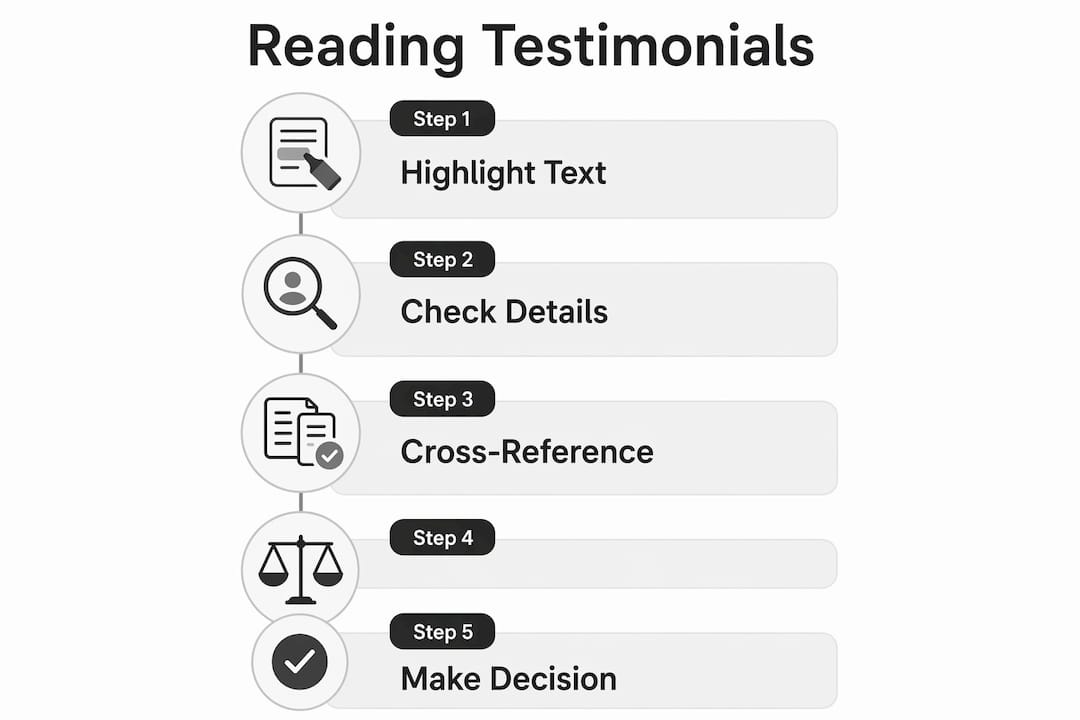
Pro Tip: When reading concert reviews or wedding testimonials, copy the text into a document and highlight every sentence that mentions a specific action or outcome. If fewer than half the sentences are highlighted, the testimonial is too vague to be useful.
Reviewing wedding band videos before booking alongside written testimonials gives you a far more complete picture than either source alone. Video confirms what words describe.
What are the most common pitfalls when reading band testimonials?
Most people make at least one of these mistakes when interpreting band feedback. Recognising them early saves you from a costly booking error.
- Overvaluing one-line praise. “They were incredible” tells you nothing about logistics, timing, or adaptability. The best testimonials emphasise operational details over emotional result statements. A review that lacks process and outcome details should be treated as branding, not evidence.
- Missing coded criticism. Many publicly available testimonials are cautiously worded and require reading beyond surface praise to detect subtle criticism. Phrases like “the band gave it their all” or “they were enthusiastic” can signal a performance that fell short of polished. Reviewers often soften criticism to avoid discouraging artists while still hinting at flaws.
- Relying only on posted reviews. Posted reviews on a band’s own website are curated. The band selects what appears. Independent verification through a venue manager or event planner removes that filter entirely.
- Ignoring logistical adaptability. A band that receives glowing praise for musical talent but no mention of how they handled a venue’s noise curfew or a delayed start is an unknown quantity. Logistical adaptability is as important as musical skill for a live event.
Reading testimonials like campaign data helps separate genuine operational success signals from mere marketing claims. Treat each review as a data point, not a verdict.
Key takeaways
The most reliable way to evaluate a band is to combine specific, event-detailed testimonials with uncut video footage and direct references from venue managers or event planners.
| Point | Details |
|---|---|
| Specificity signals credibility | Testimonials naming event type, logistics, and named moments are far more reliable than vague praise. |
| Video confirms written claims | Uncut live footage showing real crowd reactions validates what written reviews describe. |
| Planner references outrank client reviews | Venue managers and event planners offer benchmark comparisons that first-time clients cannot provide. |
| Coded language hides criticism | Phrases like “enthusiastic” or “gave it their all” often signal a performance that did not fully deliver. |
| Match testimonials to your event type | Filter reviews by events that match your format before drawing any conclusions about suitability. |
What I’ve learned from reading band testimonials for weddings
Reading testimonials for weddings taught me one thing quickly: the most revealing detail is almost never in the headline sentence. It is buried in the third or fourth line, where the reviewer mentions something specific that they did not expect. “They noticed our guests weren’t dancing and switched to a slower groove without being asked.” That one sentence tells you more about a band’s professionalism than a hundred five-star ratings.
I have also seen how vague testimonials protect bands rather than clients. A review that says “the night was magical” gives the band a marketing asset and gives you nothing. The bands that actively encourage detailed, honest feedback from clients and venue managers are the ones confident enough in their performance to welcome scrutiny.
The other pattern I have noticed is that bands with long, consistent track records at the same venues accumulate testimonials with a very different texture. The language becomes more specific over time because the reviewers have seen the band multiple times and can compare. Brownsugarmusic’s two-decade residency at the Marble Bar in the Hilton Sydney produces exactly that kind of layered, comparative feedback. It is a different quality of evidence from a band that played three weddings last year.
If you are planning a wedding and want to understand what live band benefits actually look like in practice, start by reading testimonials that describe specific moments rather than general impressions. Those are the reviews worth trusting.
— Deni
Brownsugarmusic: testimonials backed by two decades of live performance
Brownsugarmusic has performed at weddings, corporate functions, and private events across Sydney and internationally since 2003. Every testimonial on the Brownsugarmusic website reflects a real event, a real venue, and a real client experience.
Couples planning their reception can read event-specific reviews that describe exactly how Brownsugarmusic handled timing, crowd energy, and last-minute changes. For anyone researching soul band wedding reception options in Sydney, the depth of Brownsugarmusic’s testimonial record is a practical starting point. Browse the full event history and client feedback at brownsugarmusic.com.au to see what two decades of consistent performance looks like in writing.
FAQ
What should a good band testimonial include?
A strong band testimonial includes the event type, specific logistical details, and at least one example of how the band handled a challenge. Vague praise without operational context is not a reliable indicator of performance quality.
How do you spot a fake or misleading band testimonial?
Look for reviews that lack event specifics, use generic phrasing, or appear in clusters with similar wording. Cross-reference written testimonials with uncut live video footage to confirm authenticity.
Are venue manager references more reliable than client reviews?
Yes. Venue managers see multiple bands per year and can compare punctuality, sound management, and adaptability directly. Their feedback carries more weight than a client writing their first event review.
What does coded language in a testimonial mean?
Phrases like “the band gave it their all” or “they were enthusiastic” often soften criticism. Reviewers use careful wording to avoid discouraging artists while hinting that the performance did not fully meet expectations.
How many testimonials should I read before booking a band?
Read at least five to ten testimonials that match your specific event type. Prioritise reviews from events with a similar format, guest count, and venue type to your own booking.