

A wedding band stage requirements guide covers the precise space, power, and technical preparations necessary for a flawless live band performance. Stage and equipment planning is the most overlooked part of wedding entertainment logistics. Get it wrong and you risk feedback, delays, or a band squeezed onto a surface too small to perform safely. Get it right and the music carries the whole reception.
What are the ideal stage size and space requirements for a wedding band?
Minimum stage dimensions range from 2×1.5 metres for solo acts to 7×4 metres for bands of seven or more musicians. That range matters because a five-piece band forced onto a three-piece footprint cannot move freely, and restricted movement affects both safety and energy on the floor.
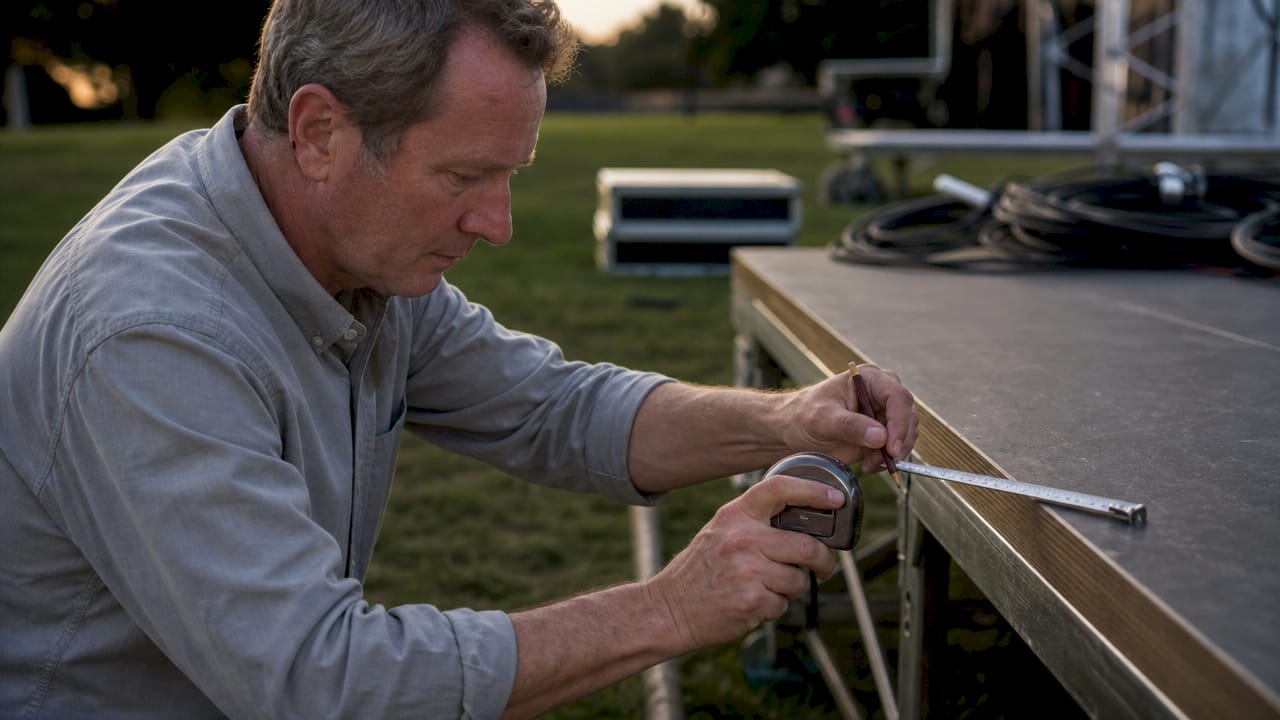
Modular stage sections typically come in 1×1 metre blocks. Rounding up to the nearest metre when calculating space is standard practice. A four-piece band, for example, needs roughly 4×3 metres as a working minimum, but 5×4 metres gives the drummer, bassist, and vocalists room to breathe without knocking into each other.
The table below gives a clear reference for band size versus stage space:
| Band size | Minimum stage dimensions | Recommended power sockets |
|---|---|---|
| Solo act | 2×1.5 metres | 2 sockets |
| Duo or trio | 3×2 metres | 4 sockets |
| Four to five piece | 4×3 metres | 6 sockets |
| Six piece | 6×3.5 metres | 8 sockets |
| Seven piece or more | 7×4 metres | 10+ sockets |
Risers add another layer of planning. Drum kits almost always sit on a riser for visibility and sound projection. Any riser must be level and locked before the band loads equipment onto it. A surface that shifts mid-performance is a safety hazard, not just an inconvenience.
Pro Tip: Oversizing the stage by half a metre on each side gives musicians room to move and reduces the risk of cables becoming trip hazards during the performance.
How to coordinate power supply and technical equipment setup
Bands need dedicated power circuits, typically two 13-amp sockets per musician as a baseline. Sharing circuits with high-draw equipment such as catering appliances or lighting rigs causes breaker trips. A tripped breaker mid-set is not recoverable in the moment.
Generators are a common solution at outdoor venues or marquee receptions. Most generators supply 16-amp sockets, which require suitable adapters for standard band equipment. Confirm adapter availability with the band or their sound engineer before the wedding day.
Two documents govern the technical setup for any professional band:
- Stage plot: A visual map showing where each musician, instrument, and monitor sits on stage. It tells the sound engineer exactly what goes where before a single cable is run.
- Input list: A written list of every microphone, direct input, and monitor feed required. Stage plots and input lists allow the venue and sound engineer to prepare the mixing desk and signal routing before the band arrives.
Without these documents, the sound engineer is guessing. Guessing costs time, and time is the one thing a wedding schedule cannot spare.
Pro Tip: Send the stage plot and input list to the venue coordinator and sound engineer at least two weeks before the wedding. Early sharing of the band rider prevents critical surprises on the day, including inadequate power or staging space.
What logistical and timing considerations ensure smooth setup and soundcheck?
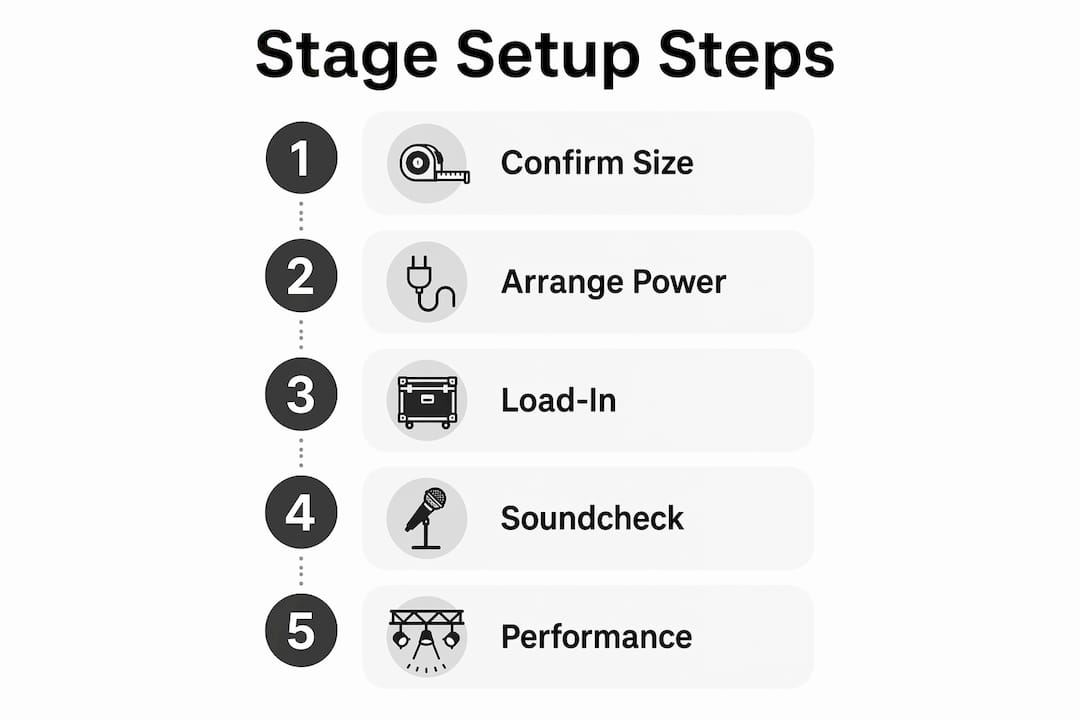
Professional load-in and soundcheck requires 2–4 hours before guests arrive. The soundcheck itself should run for 60–90 minutes to tune the setup to the room’s acoustics. Scheduling soundcheck too close to guest arrival risks delays and poor sound quality on the night.
The soundcheck process follows a clear sequence. Soundchecks split into stages: load-in and equipment assembly first, then cabling and stage plot assembly, then level dialling for each channel. Rushing any phase leads to feedback and unstable levels during the performance.
Backstage geography is an underestimated factor. Vendor entrances, parking proximity, elevator dimensions, and route clearance all affect how quickly a band can load in. A band carrying heavy speaker cabinets through a narrow service corridor adds 30–45 minutes to setup time without anyone realising it until it is too late.
Confirm the following with the venue coordinator before the wedding day:
- Load-in and load-out routes, including door widths and stair counts
- Dedicated parking for the band vehicle or van
- Lift or elevator dimensions if the performance space is above ground level
- Noise restrictions and venue curfew times
- Backup contact person on the day in case the main coordinator is unavailable
- Power access points and their location relative to the stage area
Scheduling soundcheck less than 90 minutes before guest arrival is the single most common mistake in wedding band logistics. Build a buffer into the timeline and protect it.
How to prepare the stage area and venue for a wedding band performance
Stage floor type and stability directly affects both musician safety and sound quality. Uneven floors cause instrument instability and create performance risks, particularly for drum kits and keyboard stands. A level, solid surface is non-negotiable.
Key checks for the performance space include:
- Floor surface: Confirm whether the floor is timber, concrete, or carpet. Carpet absorbs low frequencies and affects monitor sound. Timber can resonate with bass frequencies.
- Ceiling height: Low ceilings trap sound and cause unwanted reflections. A minimum of 3 metres is standard for live band performances.
- Room clearance: Remove furniture and decorative items from the stage area before the band arrives. A clear path from the load-in point to the stage saves significant time.
- Noise restrictions: Check whether the venue has a noise limiter fitted. Noise limiters cut power to the PA system when sound levels exceed a set threshold. This affects the band’s ability to perform at full volume.
Bands also require a green room or a private space near the stage for breaks and pre-performance preparation. A dedicated room helps musicians focus and store personal belongings safely. Without one, musicians end up in corridors or guest areas, which creates an awkward dynamic for everyone.
A raised stage is optional for smaller venues but recommended for receptions with more than 100 guests. Elevation improves sightlines and helps the sound travel evenly across the room. For a soul band wedding reception, where visual energy is part of the performance, a raised platform makes a clear difference to how the band connects with the room.
What common pitfalls should you avoid in wedding band stage setup?
Underestimating power needs is the most frequent technical error. Couples and coordinators often assume the venue’s existing power supply is sufficient. It rarely is without prior confirmation. Always request a written confirmation from the venue that dedicated circuits are available and tested.
Venue access difficulties are the second most common problem. A band that cannot get their equipment to the stage on time cannot perform on time. Confirming load-in logistics including vendor entrances, parking, and elevator access early prevents schedule slippage on the wedding day.
Best practices for a clean setup include:
- Share the full technical rider with the venue at least two weeks before the event
- Verify all technical specifications in writing, not just verbally
- Assign one point of contact at the venue who has authority to resolve issues on the day
- Build 30 minutes of contingency time into the setup schedule for unexpected delays
Last-minute venue changes do happen. A room swap, a furniture rearrangement, or a delayed previous event can compress the band’s setup window. The band should always carry a simplified setup option: a reduced monitor configuration or a stripped-back input list that allows them to perform with less than ideal conditions if necessary.
Pro Tip: Ask the band for a ‘minimum viable setup’ list alongside their full rider. This gives you a fallback plan if the venue cannot meet every technical requirement on the day.
Key takeaways
A successful wedding band setup depends on confirming stage dimensions, power supply, and load-in logistics well before the wedding day, with soundcheck scheduled at least 90 minutes before guests arrive.
| Point | Details |
|---|---|
| Stage size by band size | Minimum dimensions range from 2×1.5m for solos to 7x4m for seven-piece bands. |
| Dedicated power circuits | Two 13-amp sockets per musician prevents breaker trips during performance. |
| Stage plot and input list | Share both documents with the venue and sound engineer at least two weeks in advance. |
| Soundcheck timing | Allow 2–4 hours for full load-in and 60–90 minutes for soundcheck before guests arrive. |
| Venue logistics | Confirm load-in routes, parking, ceiling height, noise limits, and curfew in writing. |
What I have learned from two decades of wedding band setups
After more than 20 years performing at weddings, corporate events, and residencies including Marble Bar at the Hilton Sydney, the pattern is always the same. The receptions that run smoothly are the ones where someone confirmed the details weeks in advance. The ones that do not are the ones where everyone assumed someone else had checked.
The detail that catches people out most often is not the stage size or the power supply. It is the load-in route. I have seen a band spend 45 minutes trying to navigate a narrow service corridor with a full PA system because nobody measured the door width beforehand. That 45 minutes came directly out of soundcheck time.
The other thing worth saying plainly: soundcheck is not optional. It is not a formality. Soundcheck verifies signal routing, stage layout, and monitor levels in the specific room you are performing in. Every room sounds different. A band that skips soundcheck is gambling with the quality of your reception.
My advice to any couple or coordinator is this: treat the technical rider as seriously as the catering order. Both affect the guest experience. Only one of them gets blamed when something goes wrong.
— Deni
Brownsugarmusic: live wedding band performance, handled properly
Brownsugarmusic has performed at weddings across Sydney and beyond since 2003. The band brings over two decades of live event experience to every booking, including full technical coordination, stage plot preparation, and soundcheck management.
Every Brownsugarmusic booking includes a complete technical rider, stage plot, and input list delivered well in advance. The band works directly with venue coordinators to confirm power, access, and timing before the wedding day. For couples who want the energy of a live R&B soul wedding atmosphere without the logistical stress, Brownsugarmusic handles the technical side so you do not have to. View upcoming live events and bookings to check availability.
FAQ
What is the minimum stage size for a wedding band?
Minimum stage dimensions start at 2×1.5 metres for a solo act and reach 7×4 metres for a band of seven or more musicians. Always round up to the nearest metre when calculating space.
How many power sockets does a wedding band need?
Bands require dedicated power circuits, typically two 13-amp sockets per musician as a baseline. Sharing circuits with catering or lighting equipment risks tripping the breaker during the performance.
How long does a wedding band soundcheck take?
A full load-in and soundcheck requires 2–4 hours before guests arrive, with the soundcheck itself running for 60–90 minutes to calibrate levels to the room.
What documents should a wedding band provide in advance?
Every professional band should supply a stage plot and an input list. Stage plots and input lists allow the venue and sound engineer to prepare the desk and signal routing before the band arrives on the day.
What should couples confirm with the venue before the wedding?
The venue checklist includes stage size, load-in routes, parking, ceiling height, noise restrictions, curfew times, and dedicated power access. Confirm all of these in writing at least two weeks before the event.